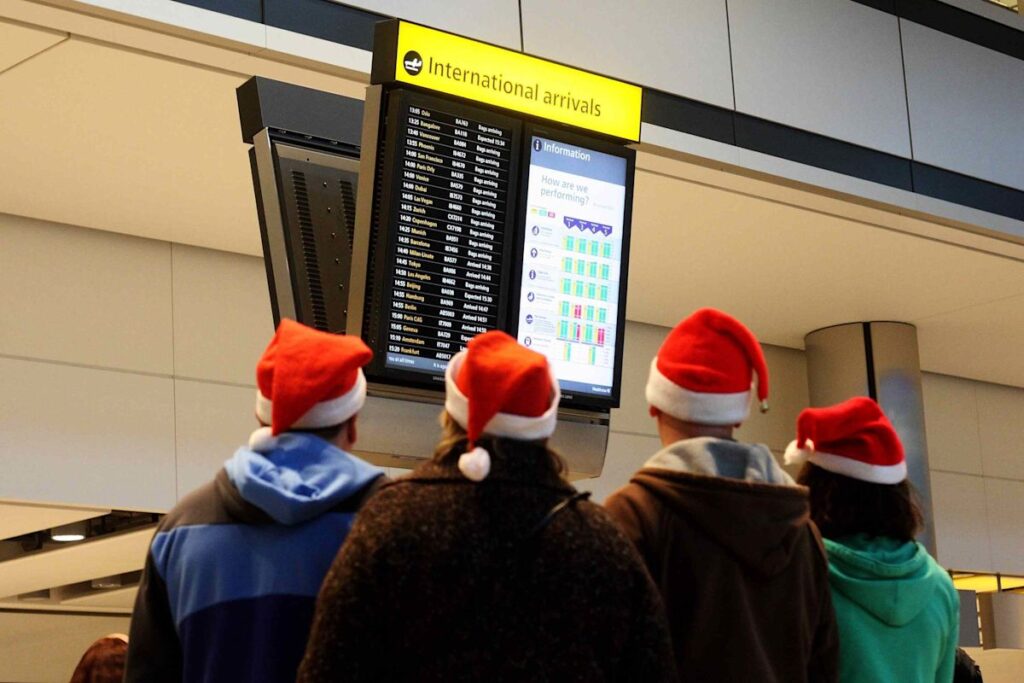


The holidays may be the most wonderful time of the year, but getting to your destination? That’s another story. Between packed airports, unpredictable winter weather, and flights filled with travelers eager to reunite with loved ones, flying during the holidays can feel like an endurance sport. And when something goes wrong, the stakes are especially high: A missed connection or canceled flight could mean missing Thanksgiving or Christmas dinner and spending the holiday stranded hundreds of miles from home.
Few people understand the challenges of holiday air travel better than flight attendants, who witness everything from missed connections to luggage mishaps firsthand. To help you avoid some of the most common travel headaches, we asked two experienced flight attendants to share what they’d never do when flying during the busiest time of year—and what they’d recommend doing instead.
Booking the Last Flight of the Day
A plane taking off as the sun goes down.
Credit: Daniel Garrido/Getty Images
Flight attendant Cici, known as Cici in the Sky, recommends booking the earliest flight possible when traveling during the holidays. “I would always book the first flight of the day, because rolling delays during holiday flying can lead to cancellations by evening,” she says.
Advertisement
Advertisement
Aura E. Martinez, a flight attendant with nearly two decades of experience, agrees. “I would never book the last flight of the day if I had another reasonable option.” She continues, telling Travel + Leisure, “If that flight is delayed or canceled, there may be very few alternatives left that evening, and flights around the holidays are often already full.”
Cutting It Close With Connections
A short layover might get you to your destination faster, but it leaves little room for delays. Cici says she would “never book too close of a connection.” She adds, “At the holidays, there is no room for error, and a missed connection the week of Christmas can mean days, not hours, before there is another open seat.”
Martinez agrees. “I would also never book a very tight connection during the holidays,” she says. “Airports are busier, boarding can take longer, winter weather may affect operations, and even a small delay can cause someone to miss the next flight.” To be safe, aim for at least two hours between domestic flights.
Also, when booking a connection, Cici suggests avoiding northern airports if possible, since snowstorms can throw flight schedules off, though bad weather can cause delays anywhere.
Flying the Day of a Big Event
A large crowd at an airport during Christmas.
Credit: Ying Tang/NurPhoto via Getty Images
If you’re flying home for Thanksgiving, Christmas, New Year’s Eve, or another special occasion, Cici recommends arriving at least a day before the festivities begin. The same goes for weddings and cruises, where a delayed or canceled flight could mean missing the event altogether. Martinez agrees that it’s best to leave some time between your scheduled arrival and any big plans. Sure, arriving a day early might mean paying for an extra night at a hotel, but it’s better than missing an event you’ve been looking forward to.
Checking Essentials or Packing Wrapped Gifts
If you’re checking a bag, Martinez says to keep medication, identification, keys, important documents, and anything valuable or sentimental with you. “I would also keep chargers, basic toiletries, and at least one change of clothes in my carry-on,” she says. “Checked bags can be delayed, especially when flights are disrupted, and passengers should be able to manage for at least a day without immediate access to their luggage.” She prefers to travel with just a carry-on, since it makes changing flights easier if something goes wrong.
Advertisement
Advertisement
As for holiday gifts, Cici recommends shipping them ahead of time or bringing them in your carry-on, especially if they’re expensive or have sentimental value. She also suggests skipping the wrapping paper until you arrive, or using gift bags that are easier to open at security. Martinez agrees, noting that “security officers may need to inspect wrapped gifts, so I would avoid doing elaborate gift wrapping until reaching the destination.”
Forgetting a Portable Charger
A man uses a portable charger while waiting in an airport.
Credit: shisheng ling/Getty Images
Between checking your boarding pass, keeping up with flight updates, and staying in touch with family, you’re probably using your phone more than usual when traveling. But finding an available outlet at a crowded airport isn’t always easy, especially during the holidays. And if your flight gets delayed or canceled, the last thing you need is a dead phone.
That’s why Cici would never head to the airport without a fully charged portable power bank in her personal item. Just remember that power banks containing lithium batteries belong in carry-on baggage, not checked luggage, and must comply with airline and FAA restrictions.
Booking Separate Tickets
Booking two separate flights on different airlines might save you money, but Cici warns that it can backfire during the holidays. If your first flight is delayed or canceled and you miss the second flight on a separate reservation, the second airline generally isn’t obligated to rebook you for free. You could end up paying for another ticket, assuming you can even find an available seat during the busy holiday season. Whenever possible, book connecting flights on a single ticket instead, so the airline is generally responsible for rebooking you if a disruption causes you to miss your connection.
Arriving at the Airport Late
A long line of passengers waiting to check their luggage.
Credit: Zhu Ziyu/VCG via Getty Images
Even frequent fliers who have their airport routines down to a science should allow extra time during the holiday rush. “Holiday crowds can affect check-in, baggage drop, security, transportation, and even the time it takes to find parking,” Martinez says. “This is not the season to cut the timing close.” Cici also notes that the holidays bring more travelers who aren’t used to flying, which can mean longer lines and slower boarding as people figure out where to go and what to do.
Advertisement
Advertisement
Additionally, once you’re at the gate, Martinez recommends getting everything you’ll need during the flight ready before boarding starts. That way, you won’t hold up the line while digging through your bag. She also suggests checking your airline’s carry-on size limits ahead of time and waiting until your boarding group is called instead of crowding around the gate.
Failing to Plan for Disruptions
Martinez recommends downloading your airline’s app and turning on flight notifications so you’ll know about any schedule changes. Cici also suggests checking the weather forecast along your route in the days leading up to your trip. If a major storm is expected, consider switching to an earlier flight or a different travel day before cancellations start piling up.
That said, don’t assume a delayed flight means you can leave for the airport later than planned. “A delayed flight can sometimes return to an earlier departure time, and passengers should still be at the airport and prepared to board,” Martinez explains. She also recommends bringing snacks and an empty refillable water bottle in case you get stuck waiting around or don’t have time to grab food between flights.
Finally, Martinez reminds travelers to be patient with airline employees, especially when flights are delayed or canceled. “Most employees are trying to manage circumstances they did not personally create, including weather, air traffic, and full flights,” she says. Taking your frustration out on gate agents or flight attendants won’t get you there any sooner.
Advertisement
Advertisement
Read the original article on Travel & Leisure
Source link