


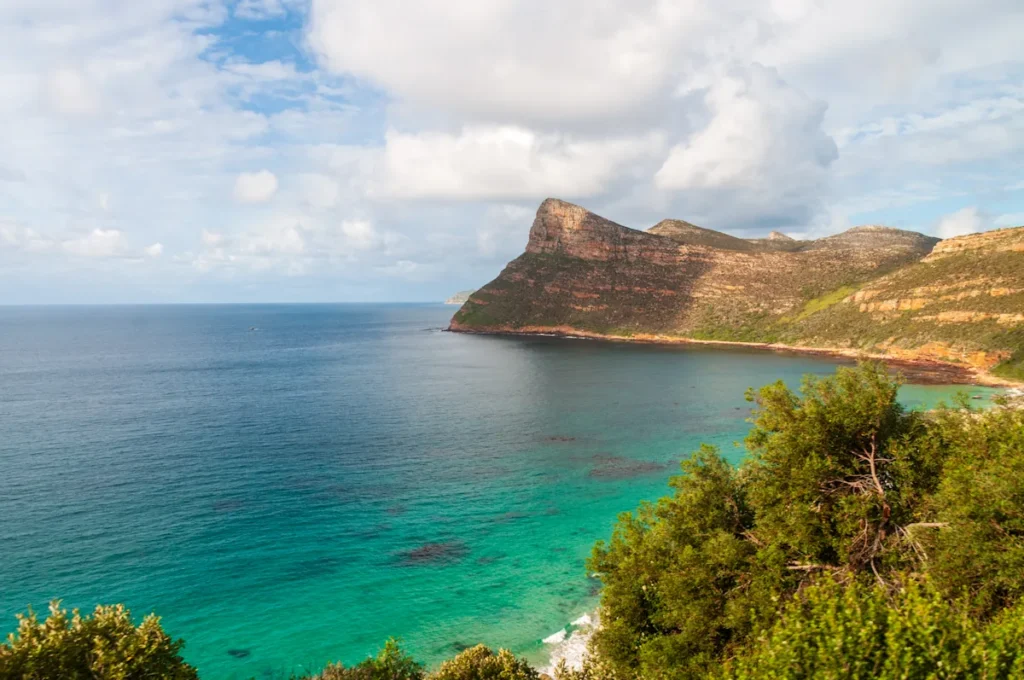
Southern Africa is one of the most rewarding regions in the world for families, especially when you choose properties that understand how to welcome children, teens, and multi-generational groups. Over the years, I’ve traveled across the region as both a journalist and a mom, and I’ve noticed how specific lodges go far beyond the typical idea of a family holiday. These aren’t resorts with kids’ clubs and buffet lines; they are places where children are invited into real landscapes, authentic culture, and wildlife experiences that feel meaningful rather than manufactured.
For families planning for 2026, four places stand out for very different reasons. They span two countries and several ecosystems, yet all offer something special for parents who want nature, culture, coastline, and a sense of adventure without sacrificing comfort or ease. Some are ideal for young children, while others work beautifully for families with teens. And all of them allow kids to feel like explorers rather than spectators.
The journey begins in Cape Town, a city that naturally anchors almost any Southern Africa itinerary, whether you spend two nights or an entire week. From there, guests usually branch out into the Eastern Cape or KwaZulu-Natal, or cross the border into Zimbabwe. The properties below shine in those landscapes, each with its own personality and way of making a family feel not only welcome but understood.

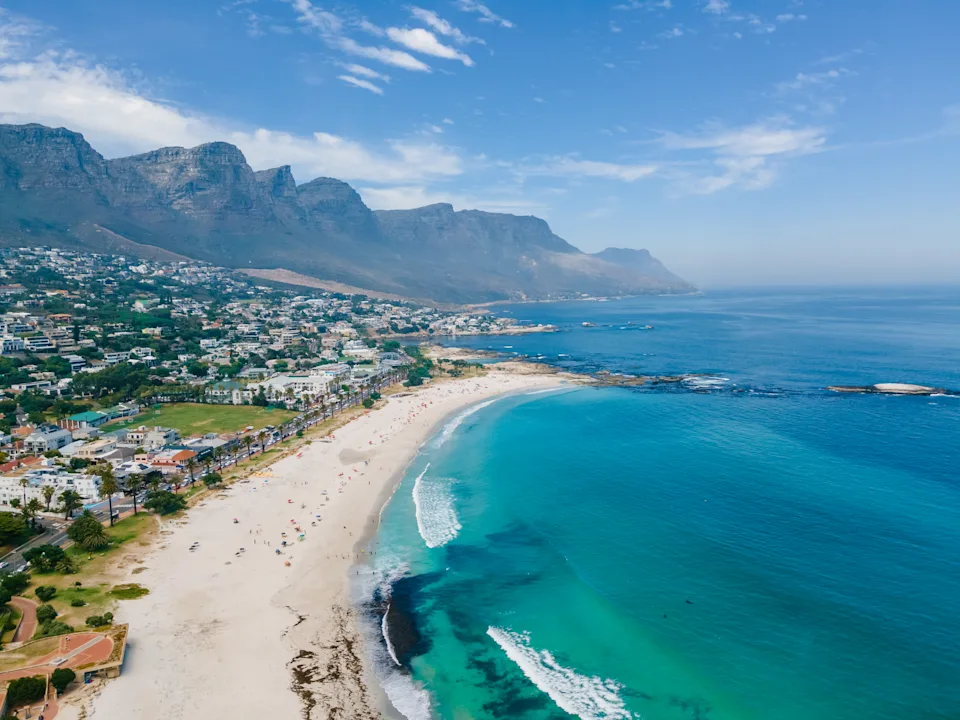
Aerial drone view of Camps Bay Beach in Cape Town, South Africa, captured during the summer season.
(fokkebok via Getty Images)
Starting in Cape Town
Cape Town is often described as one of the world’s great city-meets-nature destinations, and it genuinely works for families. Parents appreciate the easy mix of coastline, food, soft adventure, and walkable neighborhoods, and kids respond instantly to the dramatic landscapes. Standing at the V&A Waterfront watching the seals pop up in the harbor is often enough to reset everyone’s jet lag. The cableway to Table Mountain remains the classic outing, but equally memorable are simpler moments, like the afternoon light hitting the Twelve Apostles, or a walk through Kirstenbosch Gardens, where children weave between the trees and stone paths.
Cape Town also serves as a convenient gateway to the rest of the region. Its international airport offers direct flights from the U.S. and Europe, and the city functions as a natural starting point for families adjusting to new time zones. Parents traveling with young children often find that a few days in Cape Town helps everyone settle into the rhythm before continuing to the wild reserves and coastal regions. This is also where the new air shuttle comes in, dramatically changing how families reach the Eastern Cape.

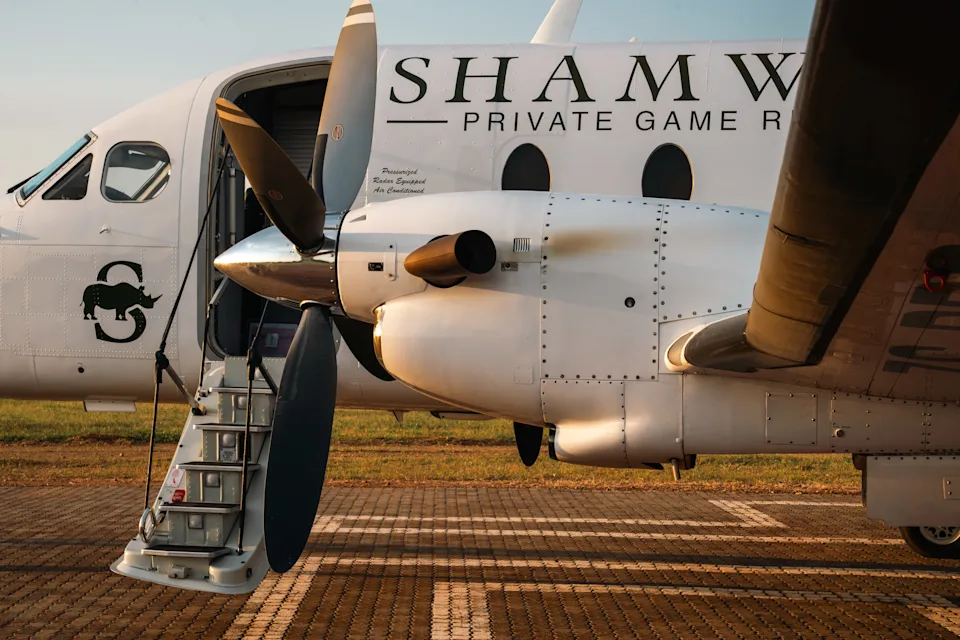
The new Shamwari air shuttle provides direct, scenic flights to the reserve’s private airstrip, making the journey to this South African safari destination faster and easier than ever.
(Shamwari Private Game Reserve)
The new way families reach the Eastern Cape
Shamwari Private Game Reserve recently launched its own air shuttle connecting Cape Town and Johannesburg directly to its private airstrip. The flight takes just under two hours from Cape Town and a little over two hours from OR Tambo in Johannesburg, cutting what used to be up to four hours of transfers, layovers, and ground logistics. For families, especially those with young children, this matters more than it sounds.
Instead of navigating multiple flights or long drives, the journey now becomes part of the experience. The aircraft is a 16-seat Beechcraft 1900D, which feels personal rather than crowded. Children often press their faces to the window as the plane passes over mountain ridges and then descends into the Eastern Cape’s vast, open wilderness. Upon landing, guests are collected directly from the airstrip and driven through the reserve to their lodge, usually spotting wildlife within minutes. It turns a transfer into a soft game drive and removes the fatigue that sometimes hits families before a safari has even begun.
Shamwari’s CEO, Joe Cloete, described it perfectly when he said the shuttle “gives people their time back.” That’s precisely what it feels like. Instead of losing an entire day to logistics, families begin their trip the moment they step off the plane. With that, the first destination emerges: Shamwari Private Game Reserve.

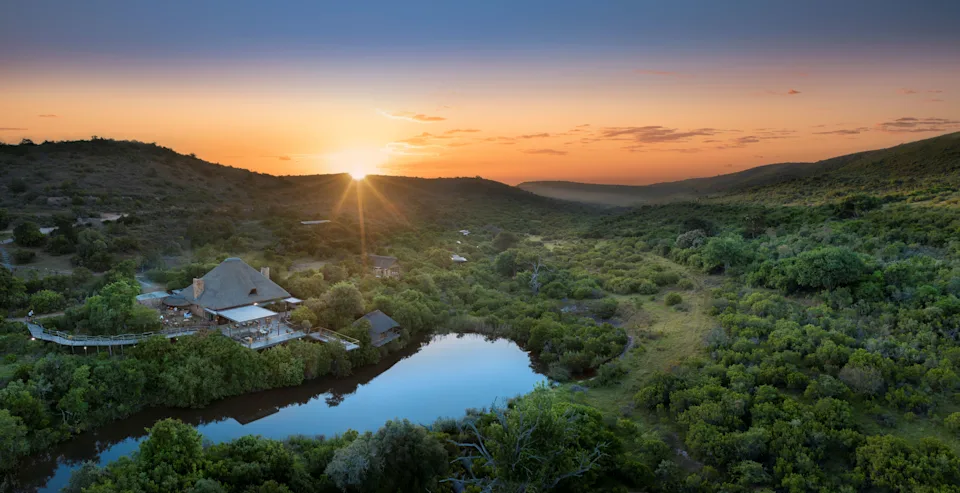
A wide view of one of Shamwari’s luxury lodges, surrounded by the Eastern Cape’s sweeping landscapes and wildlife-rich terrain.
(Dook Photography)
Shamwari Private Game Reserve
Shamwari is one of South Africa’s largest private Big Five reserves and has spent more than three decades restoring the land and its wildlife. Families respond to Shamwari for reasons beyond the sightings, though the sightings are extraordinary. What sets it apart is its very intentional balance of luxury, conservation, and education, all presented in ways that bring children into the narrative rather than speaking over their heads.
Each lodge has its own personality. Riverdene is designed with families in mind, offering spacious rooms and a feeling of belonging from the moment children arrive. Kids notice the small touches first — the pool shaped for both swimmers and splashers, the easy access to lawns where they can play between game drives, the warmth of staff who remember names within minutes. Parents appreciate the lodge’s calm rhythms, which allow children to be curious without feeling overwhelmed.
Shamwari’s refurbishments over the past few years have elevated every corner of its hospitality. Long Lee Manor received a Michelin Key, and properties across the reserve — from Eagles Crag to Bayethe and the new Sindile tented lodge — blend modern styling with the sense of place that families seek when they travel halfway across the world. But it’s Shamwari Foundation and its on-the-ground impact that makes the stay feel more than beautiful.
The Foundation’s work includes the Wildlife Rehabilitation Centre, Born Free Big Cat Sanctuaries, and the Vulture Breeding Programme. When children visit these programs, they understand the difference between entertainment and genuine conservation. They learn why a rescued leopard might be rehabilitated for months before release, or how Cape vultures are prepared for reintroduction into the wild. These experiences stay with them longer than any perfect photograph.
Despite being a wilderness reserve, Shamwari feels unintimidating for families, especially those traveling with younger children. Guides know how to read energy and pace the days so curiosity never turns into exhaustion. Vehicles feel open and safe without isolating parents. And because the reserve is malaria-free, families can relax without the added stress of medication schedules or health considerations.
Shamwari works beautifully for children of all ages, though families with kids under ten often gravitate toward Riverdene specifically. For older children and teens, the Explorer Camp and more elevated lodges create a sense of adventure that doesn’t feel staged.

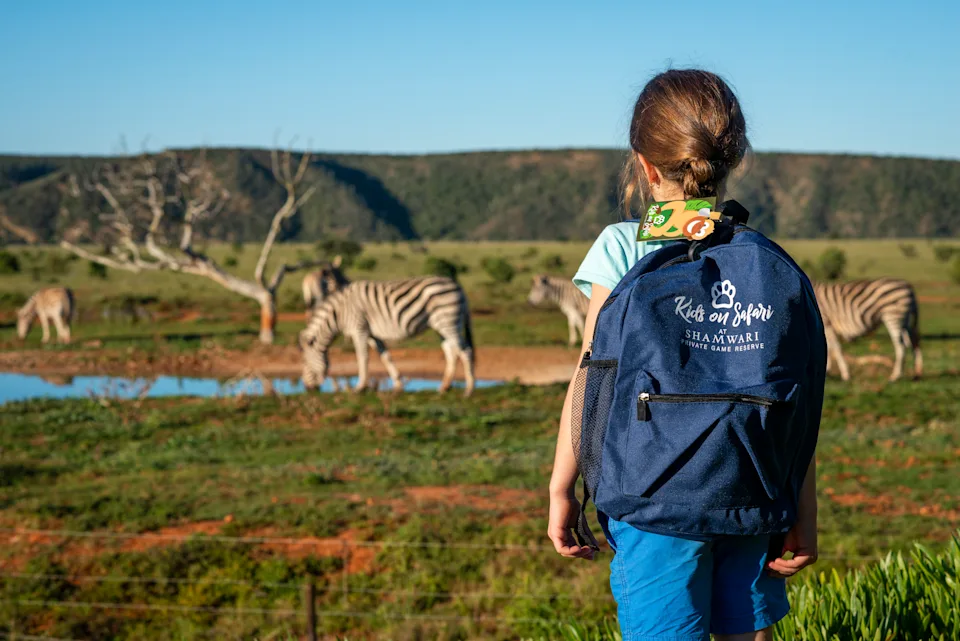
A young guest watches zebras grazing at Shamwari Private Game Reserve, a family-friendly safari experience in South Africa’s Eastern Cape.
(Shamwari Private Game Reserve)
Drostdy Hotel
Drostdy Hotel sits in the heart of Graaff-Reinet, one of the oldest towns in South Africa and a cultural anchor in the vast Karoo region. Families who stay here often describe it as the most unexpected highlight of their trip. It’s not a safari lodge and not a resort; it’s a heritage property woven into a deeply historic landscape, and that combination allows parents and children to travel through time as well as space.
The hotel itself blends restored Cape Dutch architecture with modern comfort. Rooms open onto quiet courtyards, shaded verandas, and pools that feel like oases in the desert heat. When traveling with young children, parents appreciate the hotel’s sense of calm. There’s space to wander safely and staff who move at a gentle pace, helping families find their rhythm after days of travel.
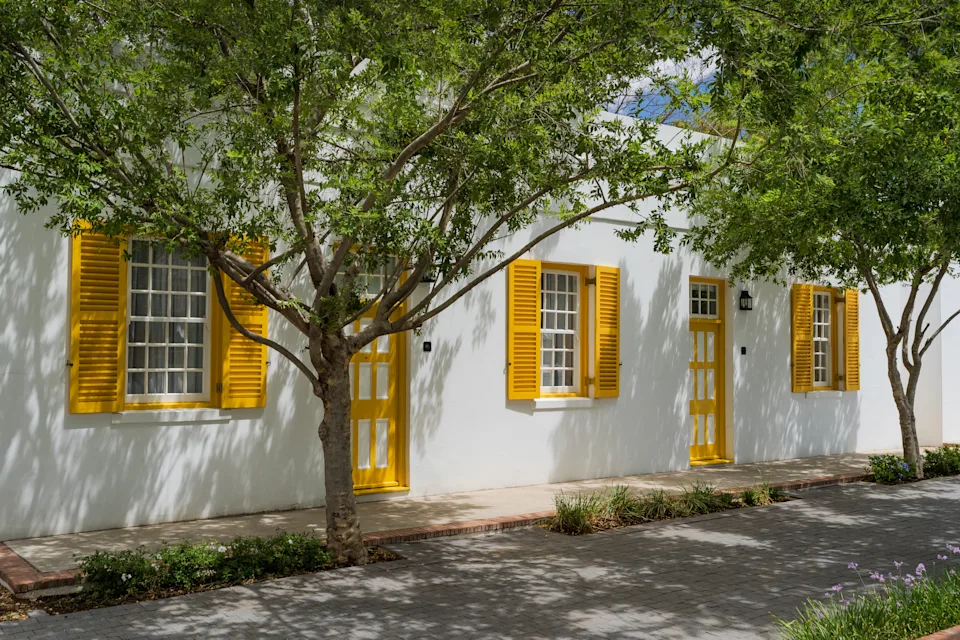
Drostdy Hotel blends restored Cape Dutch architecture with modern comfort, showcasing one of South Africa’s most elegant heritage stays in Graaff-Reinet.
(3Sixty Photography)
Outside the hotel doors, Graaff-Reinet reveals why so many travelers return to the Karoo. The Camdeboo National Park surrounds the town, and its dramatic Valley of Desolation is one of the most striking geological formations in the country. Families often drive up at golden hour, watching the cliffs shift colors as the sun dips behind them. Children instinctively whisper, not out of fear but out of awe, as they take in the landscape’s silence.
Parents also appreciate the educational value of a stay here. Graaff-Reinet’s museums and galleries introduce children to South African culture in ways that feel accessible rather than academic. The newly developing Fossil Centre adds another layer, connecting kids to the prehistoric history of the Karoo and giving them a sense that this is more than a stopover; it’s an immersion.
Drostdy works exceptionally well for families with young children because the pace is slower and the environment is enveloping rather than overwhelming. But parents traveling with teens also find that the town’s culture and landscape give older kids space to form their own impressions and explore a part of South Africa that feels different from the coastline and reserves. From the Karoo, families often move toward the Indian Ocean, where the next property merges wilderness and coastline in one of the country’s most beautiful coastal forests.
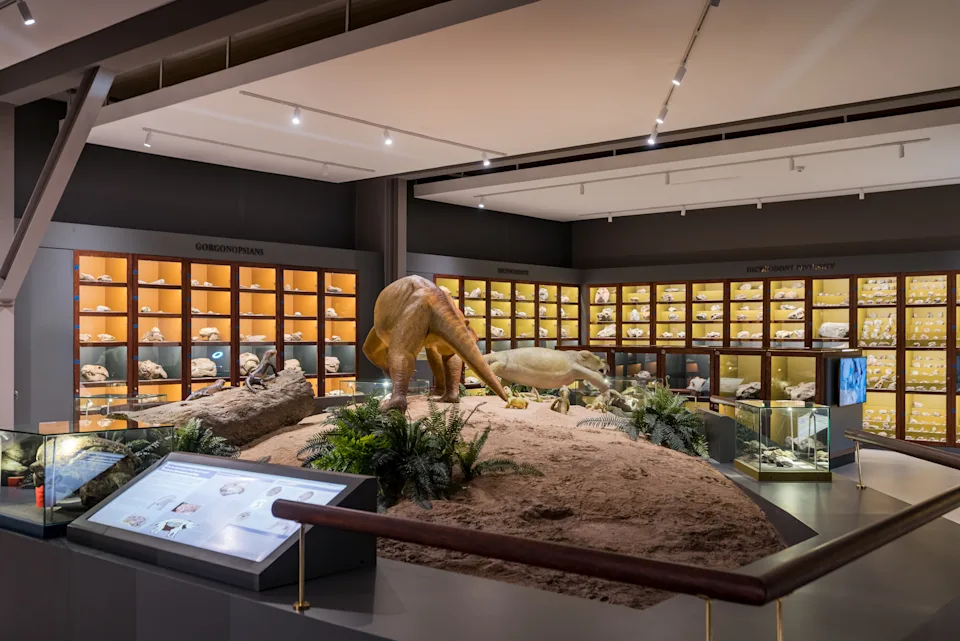
Graaff-Reinet’s museums and the new Fossil Centre help kids connect with South African culture and the prehistoric history of the Karoo.
(3Sixty Photography)
Thonga Beach Lodge
Thonga Beach Lodge lies along the iSimangaliso Wetland Park in KwaZulu-Natal, a UNESCO World Heritage Site known for its dune forests, coral reefs, and warm, translucent ocean. For families, Thonga feels like the coastal counterpart to a safari — wild but gentle, adventurous but accessible. The landscape does the work, and the lodge frames it rather than intruding on it.
Children respond instantly to the beach, which stretches for miles, free of crowds and commercial activity. Parents often describe the mornings here as some of the most peaceful of their entire trip. The Indian Ocean is warm and inviting, and the lodge offers snorkeling suitable for confident swimmers, as well as shallow wade-in areas for younger kids. During turtle nesting season, families can witness one of nature’s most unforgettable scenes, guided by experts who ensure the experience remains respectful and sustainable.
Thonga’s design subtly caters to families. Rooms are spacious, pathways wind through the indigenous forest, and the overall pace suits both energetic children and parents craving stillness. The food is fresh and unfussy, and staff know how to speak to children in a way that feels natural rather than rehearsed.
Many families come here after a safari because it provides a decompression period — something that is often overlooked in multi-stop African trips. Young kids can run freely, teens can surf or snorkel, and parents can exhale while still feeling connected to nature and local culture. Thonga also sits within a malaria-free area, which simplifies things for families traveling with babies or toddlers.
The final property takes families beyond South Africa’s borders into Zimbabwe, to a private island offering one of the most intimate landscapes in the region.

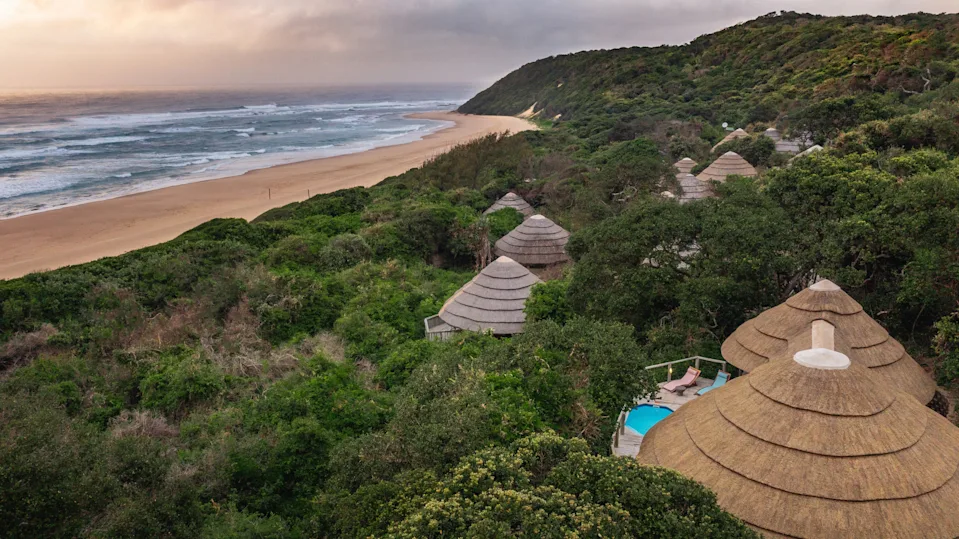
Thonga Beach Lodge sits along a pristine stretch of the Maputaland coast, offering barefoot luxury, warm hospitality, and easy access to one of South Africa’s most untouched marine environments.
(Thonga Beach Lodge)
Tsowa Safari Island (Zimbabwe)
Tsowa Safari Island is set in the Zambezi River, surrounded by the wild beauty of Zambezi National Park. The property only allows children aged twelve and above, which naturally places it in a different category for family travel. Instead of being a classic family lodge, Tsowa works best for parents traveling with teens or for multi-generational groups seeking something extraordinary.
The island is small, private, and serene. Teens immediately notice the shift in atmosphere, as the quiet, the river light, the sound of birds, and the thrill of being somewhere that feels almost untouched. Game drives and river activities feel more exploratory than structured, and older kids often appreciate the independence that comes with a place like this.
Tsowa is also ideal for exclusive use. Hiring out the island for a family gathering transforms the experience into something deeply personal. It becomes a place where grandparents, parents, teens, and young adults can reconnect without distraction. Meals happen at long tables under the trees, conversations stretch late into the night, and days unfold naturally around the river, wildlife, and guided outings. For parents, it’s the kind of setting that encourages older children to look up from devices, engage with the environment, and feel genuinely present.
Although Tsowa feels remote, it is run by seasoned professionals who understand how to create a sense of ease in the wilderness. The experience feels adventurous but not intimidating, and parents traveling with teens appreciate that balance. Activities like river kayaking, guided walks, and game viewing hold young adults’ attention while still allowing for quiet moments along the riverbank.
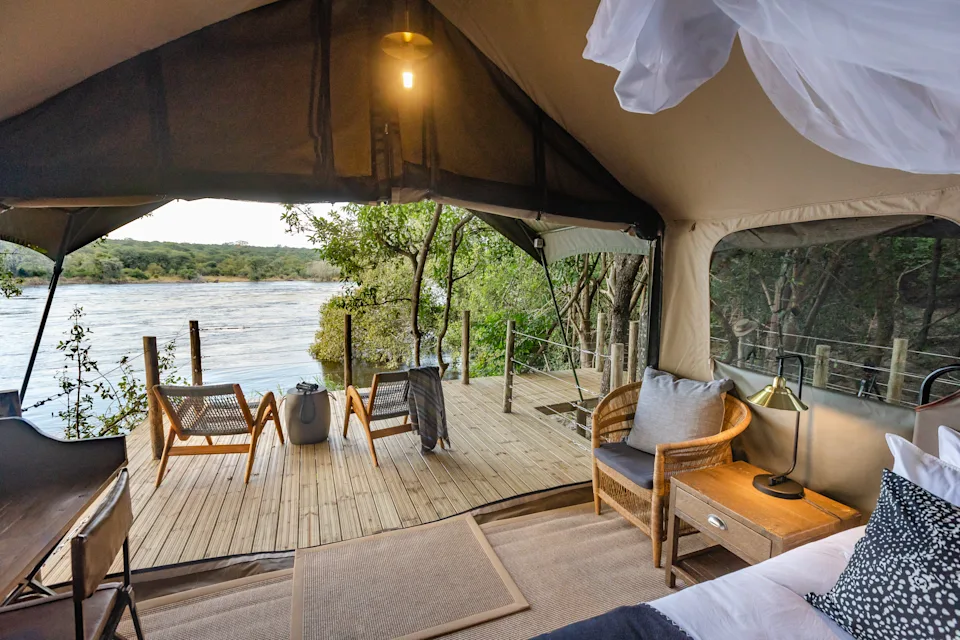
Tsowa Safari Island sits in the Zambezi River, offering a serene, private setting surrounded by Zambezi National Park—an ideal escape for parents traveling with teens or multi-generational families seeking something extraordinary.
(Tsowa Safari Island)
Planning a family trip across Southern Africa
One of the reasons these four properties work so well for families is that they complement each other. Cape Town eases you into the region. Shamwari introduces wildlife and conservation in an accessible way. Drostdy opens a window into history and culture. Thonga brings families into the coastal wilderness. Tsowa deepens the sense of adventure for older kids or multi-generational groups.
Each property offers its own version of what family travel can look like, being gentle, adventurous, educational, and reflective, and each gives children a meaningful connection to the region without overwhelming them. Parents can relax knowing they are in the hands of trusted teams who understand families’ needs, whether that means pacing activities around nap schedules, introducing teens to conservation projects, or creating enough space for adults to enjoy the moment, too.
A trip to Southern Africa often becomes the trip families talk about for years afterward. These properties, spread across coastlines, deserts, savannas, and islands, offer not just a holiday but a series of experiences that shape how children understand the world. In 2026, as families look for trips that feel both grounding and unforgettable, this region remains one of the most inspiring choices.