

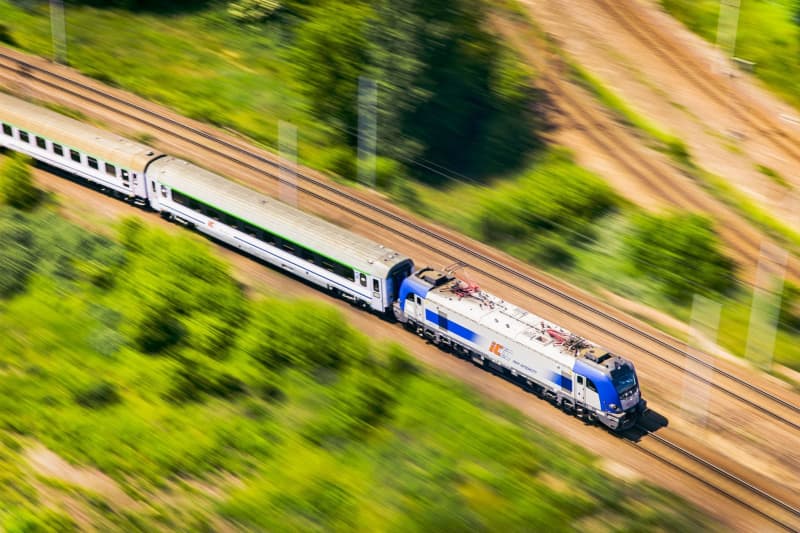
From the Baltic to the Mediterranean, a rail trip is a great way to explore Europe.
But train services in each different country have their own quirks. It is worth knowing whether you need to arrive ahead of time at the station, say, or if reserving a seat is mandatory.
Local knowledge concerning what to bear in mind when booking tickets, train etiquette and travelling with children can help. Here is a series of tips for some popular destinations.
FRANCE
In France, the main thing is that travellers arrive early when it comes to departures, as according to the French railway company SNCF, access to TGV, Intercité and TER trains is only guaranteed up to 2 minutes before departure. So if you arrive at the platform right on time, you may find yourself standing in front of closed doors. In large stations, there are platform barriers with automatic ticket checks – it’s a good idea to allow extra time here.
Travellers should also book tickets early, as express trains on certain routes can be fully booked on popular days, forcing some to choose a different day. An SNCF spokeswoman recommends reserving tickets as soon as they go on sale. This can be up to nine months in advance. You will be assigned a seat directly when you book.
On French trains, luggage must always be labelled with the owner’s name. “Simply enter your surname, first name, postal address, telephone number and/or email address,” says the SNCF. Labelling also serves as a security measure, as unlabelled suitcases left behind are perceived as a threat.
French trains are generally quiet during journeys. Parents and guardians often remind their children to be quiet. Passengers are asked to use the corridor for telephone calls.
SPAIN
Spain has the second largest high-speed train network in the world. Only China has more rapid trains. The 500-kilometre journey from Barcelona to Madrid takes only two hours and 44 minutes.
Spain has four major providers: the Spanish state railway company Renfe, its low-cost subsidiary Avlo, the French company Ouigo and the Italian company Iryo.
Trains in Spain are highly punctual, very clean, comfortable and comparatively quiet. Telephone calls are permitted, but should be kept to a minimum, as should eating sandwiches or any snacks you bring with you. Most Spanish passengers are pleasingly tolerant towards children. But those who value absolute peace and quiet should book a seat in a Coche de Silencio y la Lectura (quiet and reading carriage).
Most trains have a cafeteria offering small meals. In some, you can also book a meal online together with your ticket.
Buy tickets at ticket offices or online, and the mandatory seat reservation can also be made at the same time. As in France, it is generally advisable to book as early as possible.
ITALY
First time train travellers in Italy may be surprised to find that tickets are often surprisingly cheap. Also, trains are pretty punctual.
Your options range from regional trains to express trains operated by Trenitalia (“le Frecce” – the arrows) or Italo. For example, a trip from Florence to Siena costs around $10 and takes an hour and a half. Prices vary depending on occupancy and time of day, so it is worth booking in advance.
You can buy tickets online via the website, via app or at ticket machines. If you want to be flexible, choose tickets with a rebooking option. In general, tickets are available in several comfort levels: from standard to executive, often with a seat and extras such as free refunds.
Travellers can make phone calls and Italians do talk loudly and animatedly. Children are welcome; it is not uncommon for fellow passengers to entertain them. If you prefer peace and quiet, book a seat in the Area Silenzio.
Eating at your seat is normal, whether it is a box of pasta from the on-board restaurant (not available on regional trains) to panini, the typical Italian sandwiches, that you buy before getting on board. You might also have a glass of wine but don’t get drunk and act foolishly in Italy, especially as a tourist as that doesn’t make for a “bella figura.”
There are no strict restrictions on suitcases on Italian trains, but passengers are expected to be able to carry their own luggage. Bicycles are welcome, especially on regional trains, often for an additional charge, but on long-distance trains this is only possible with a reservation.
GERMANY
With German railway company Deutsche Bahn, you can book a range of tickets with reduced options available for high-speed and the slower regional trains if you book early. Head to the company website for a range of options online. You can also buy tickets at most major train stations from red machines or at a ticket office – but not on the train itself.
Contrary to stereotypes, German trains are not always punctual. And if your train is cancelled, so too is your reservation and the following train is likely to be crowded.
During your journey you can make calls and talk unless you are in the quiet cars, in which case you should keep chat to a minimum or risk being asked to pipe down.
You can eat at your seat and also get meals, hot and cold drinks in the dining car.
You can take bikes on regional trains but not the high-speed ICE trains. Buy a ticket for your bike before you get on, and head for the car with pictures of bikes on the outside.
SCANDINAVIA
When travelling long distances in Scandinavia, it is customary for seat reservations to be included free of charge when booking. In Sweden, this makes train travel more relaxed because no one checks if you are sitting in your reserved seat. The disadvantage is that if all seats are taken, the train can no longer be booked.
If you are travelling through Sweden with your children, you should look out for family offers from the rail operator SJ, which can save you a lot of money if you book early. And if you like to travel overnight and want to get to the north more cheaply, the Snälltåget company is a good alternative, also offering services from Germany, including from Hamburg and Berlin.
On Danish DSB trains, stock up on snacks in advance, as you can only get food on board from vending machines or a service attendant. Swedish trains, on the other hand, usually have an inviting on-board bistro.
Bear in mind there have been frequent delays on the railway line between Hamburg and Copenhagen for some time partly due to border controls between the countries. Any one travelling from Germany to Denmark may have to wait longer at the border town of Padborg.
POLAND
With Polish railway company PKP, you can generally book tickets at the earliest 30 days before departure. Ideally, do this online as those who book early get the best prices.
During the train journey, it is important to note that Poles value discretion and politeness and do not like loud conversations or phone calls. As a rule, you can make phone calls, although polite Poles usually do not do so in the compartment, but in the corridor.
You can eat anything at your seat, and there is also an app that allows you to have food from the dining car brought to your seat. Many trains have dining cars. It is worth visiting them because the food is good and pretty affordable.
There are no luggage restrictions in Poland. However, bicycle spaces are rare and constantly booked out. If you want to travel from Warsaw to Gdańsk to cycle the Baltic Sea Cycle Route, you have to fight for four bicycle spaces per express train. Cycling tourists therefore lie in wait 30 days in advance to snap up tickets as soon as they go on sale.
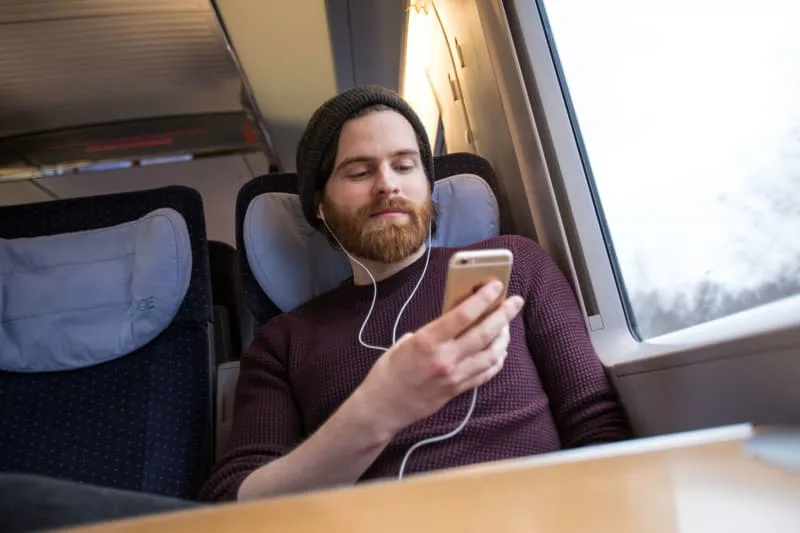
In Germany, spot a quiet carriage by the “shhh” symbol and image of a phone with a line through it. Christin Klose/dpa-tmn/dpa