

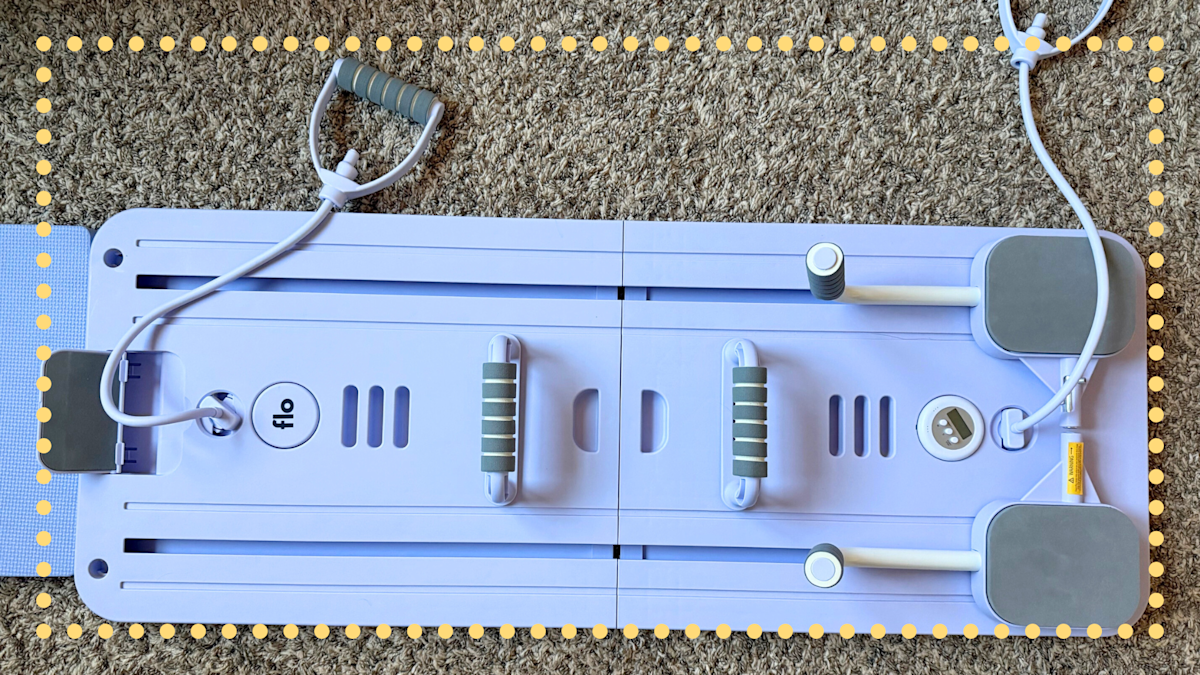
Want a Pilates workout at home without dropping $1,000+ on a giant reformer that takes over your living room? Same. That’s why the Flo Portable Pilates Reformer — a simple, bright-purple board you can fold up, stash in a closet or toss in your trunk — immediately caught my eye. It’s gone viral on Instagram and TikTok as an affordable, portable way to get a reformer-style workout. But does it actually live up to the hype?
As a single working mom, my free time (and free cash) are both… limited. Most of my “gym sessions” happen while my kids watch Paw Patrol before dinner or during a quick pre-bedtime yoga flow. And even though my youngest is two, I’m still undoing the combo impact of pregnancy and divorce: a weaker core, tight hip flexors and posture that could definitely use a tune-up.
Enter: Pilates. I used to take classes back in college and still stream YouTube workouts when I’m craving something low-impact that hits those three trouble spots. The Flo Pilates Reformer Board seemed like the perfect way to add a little extra challenge to my home routine without splurging on a full-size reformer.
So I put it to the test, using it two to three times a week for one month. And while there were definitely things that impressed me, I’m still hesitant to call it a true reformer replacement. Here’s why.
Kelli McGrane, MS, RD
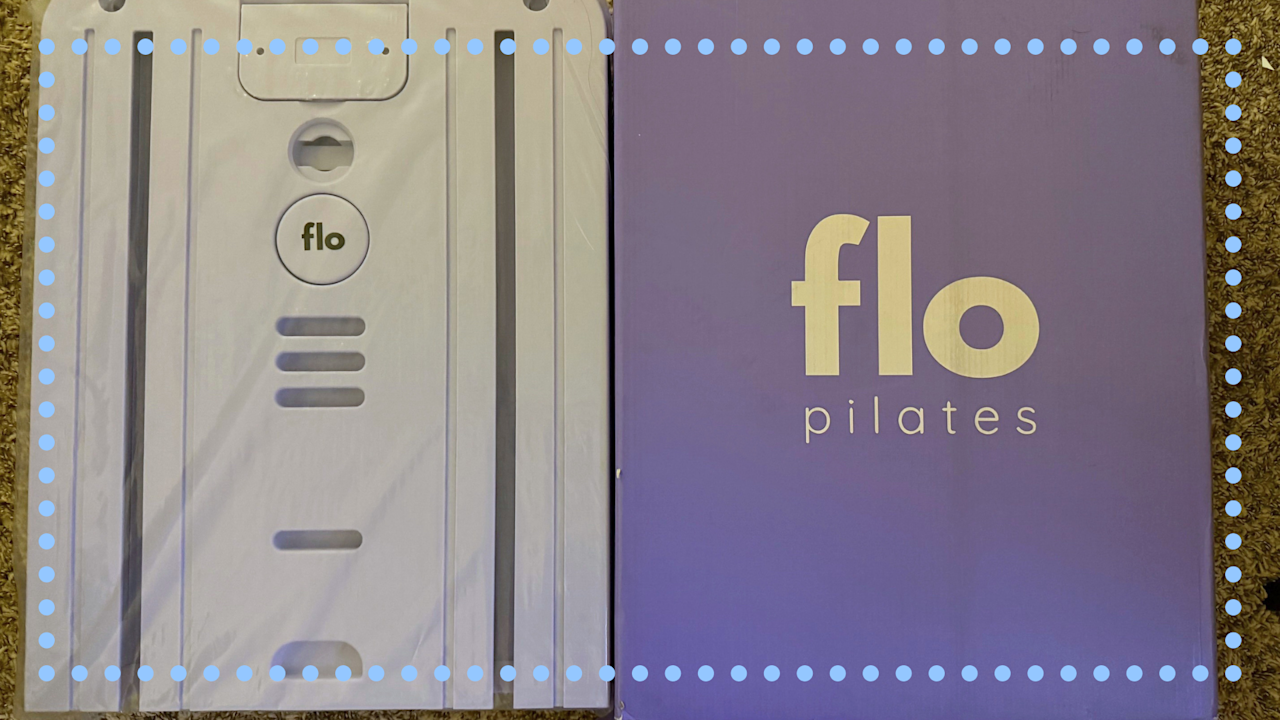
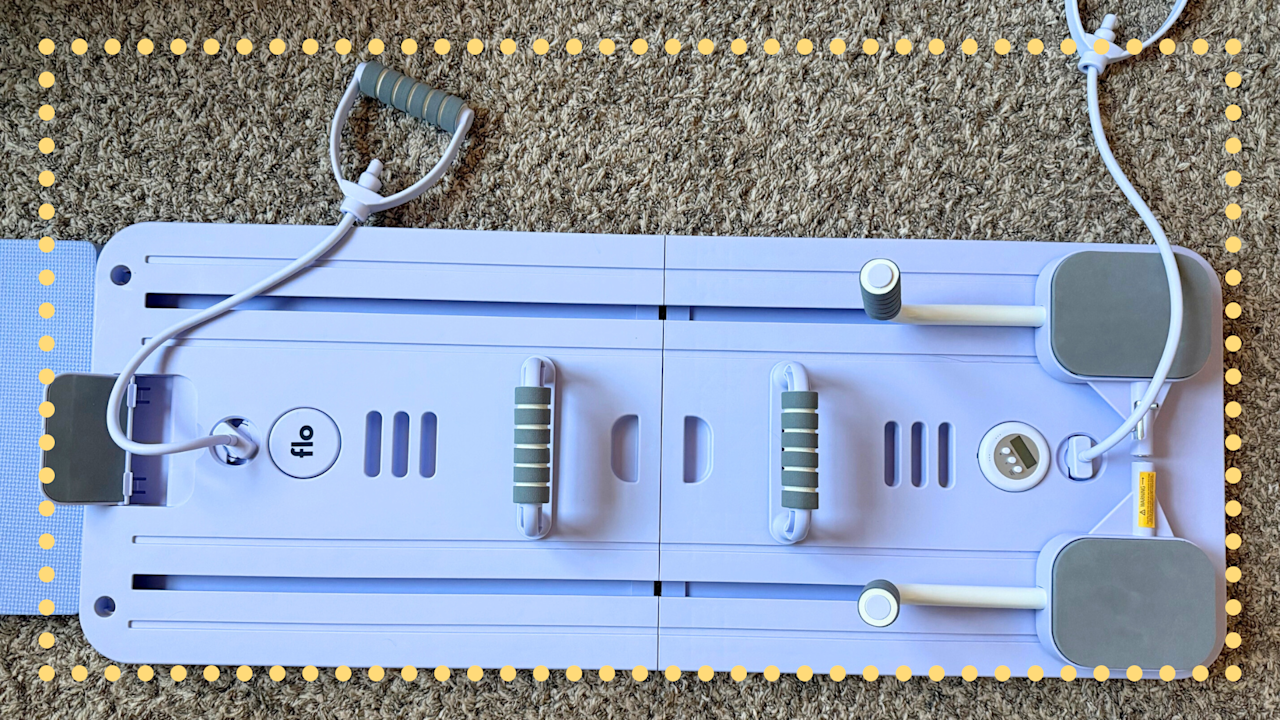
Size (folded): 20.75″ L x 15.5″ W x 3.6″ H | Size (unfolded): 41.5″ L x 15.5″ W x 1.8″ H | Weight: 10.9 lb. | Weight limit: 300 pounds | Included accessories: Non-slip socks, countdown timer, push-up attachments, resistance band, knee cushion mat, phone holder
- Portable and space-saving design
- No assembly required
- Good for beginners
- Convenient way to add instability to your workouts
- Not a full Pilates reformer replacement
- App classes are short and not as helpful or as challenging as hoped
- Light level of resistance
$150 at Flo Pilates
It’s pretty much ready right out of the box
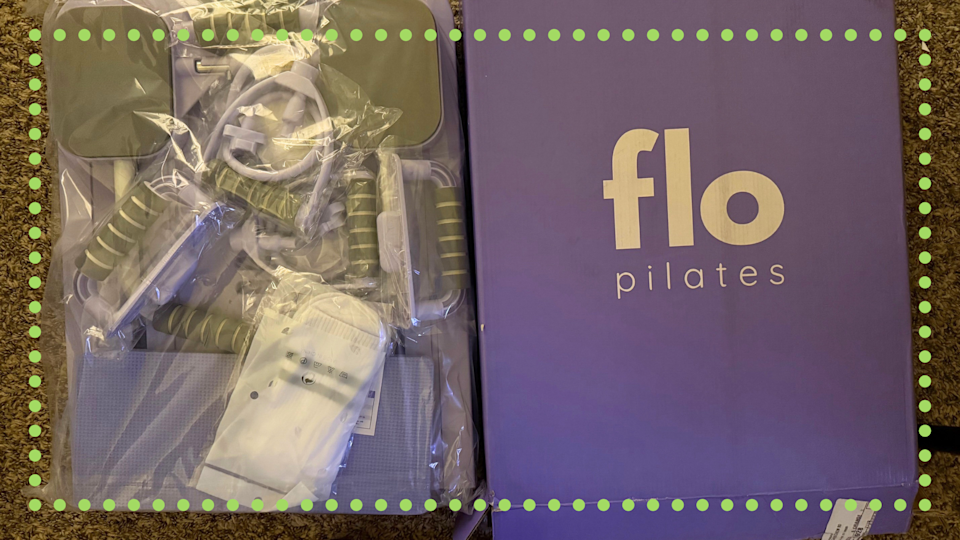
The Portable Pilates Refomer takes just one or two minutes to unfold and set up. (Kelli McGrane, MS, RD)
One of the biggest perks (besides the budget-friendly price) is that the reformer board requires almost zero assembly. Seriously — just pull it out of the box, unfold it, and you’re basically good to go. From there, you can snap on whatever accessories you want for your workout, whether that’s the resistance bands, the push-up handles, or anything else included.
Another win: it’s incredibly beginner-friendly. Traditional reformers can feel a little intimidating at first — there’s a learning curve and a whole system of springs, straps, and resistance settings to figure out. The Flo Portable Pilates Reformer, on the other hand, is super intuitive. Instead of dealing with pulleys and tension adjustments, the challenge comes from the board’s natural instability and light resistance, making it easy to jump in whether you’re brand-new to Pilates or getting back into it like me.
There’s an accompanying app, but I’m not sold on it
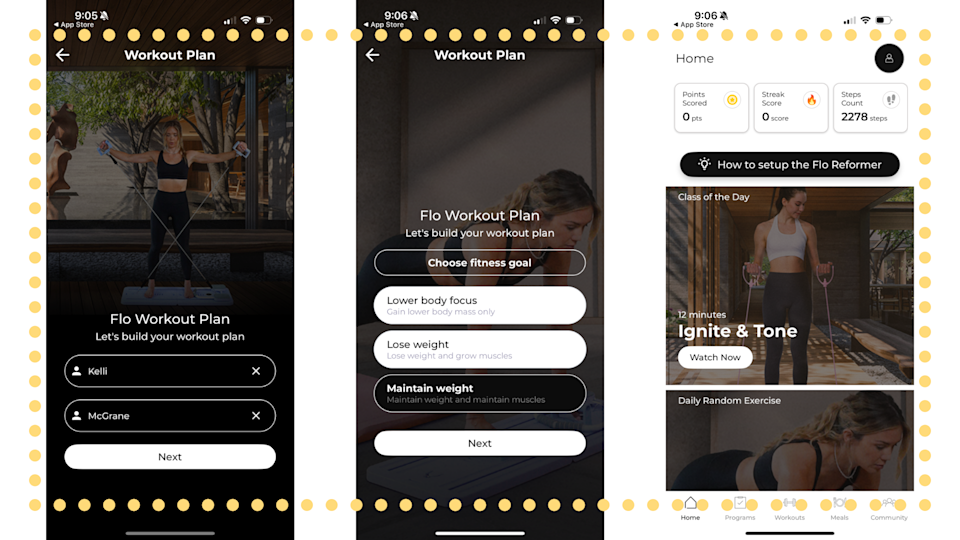
The Flo app is easy to navigate, but I didn’t find the workouts as helpful or as challenging as I’d hoped. (Kelli McGrane, MS, RD)
When you buy the Portable Reformer Board, you get 14 days of unlimited access to the Flo app. It’s pretty standard as far as workout apps go: you set your fitness goals, it builds a plan and once you’re in, you’ll see a “class of the day” plus a bonus daily exercise if you want to squeeze in extra movement.
The best part of the app is the beginner tutorials. They do a nice job introducing the board and giving some basic posture tips. That said, if I hadn’t done Pilates before, I’m not convinced these tutorials alone would teach me how to properly engage my core or find neutral spine. (For reference, in Pilates, your lower back should keep its natural curve — meaning a small space between your back and the mat or reformer — not be pressed flat.)
Beyond the tutorials, the app offers quick workouts designed for the Portable Reformer Board, as well as some off-the-board sessions. Most are 15 minutes or less, which is convenient… but also part of the problem. I really wanted a few longer, 30-minute reformer-board workouts. Sure, I could stack two shorter classes, but the flows just didn’t feel challenging or cohesive enough when combined.
My other frustration: The instructor doesn’t tell you when to switch sides. You have to glance at your phone to keep track — not ideal, especially when your phone is in the holder and the movement has you facing away from it. There’s a timer feature, but stopping and resetting it felt clunky and pulled me out of the workout.
The good news? Because the Flo Pilates Reformer Board is so popular, I was able to find plenty of YouTube workouts that worked much better for me. And if you already have a solid fitness routine and simply want the board for added instability or core work, you likely won’t feel the need to spend $9.99 a month on the app anyway.
How does it compare to traditional reformers or Pilates classes?
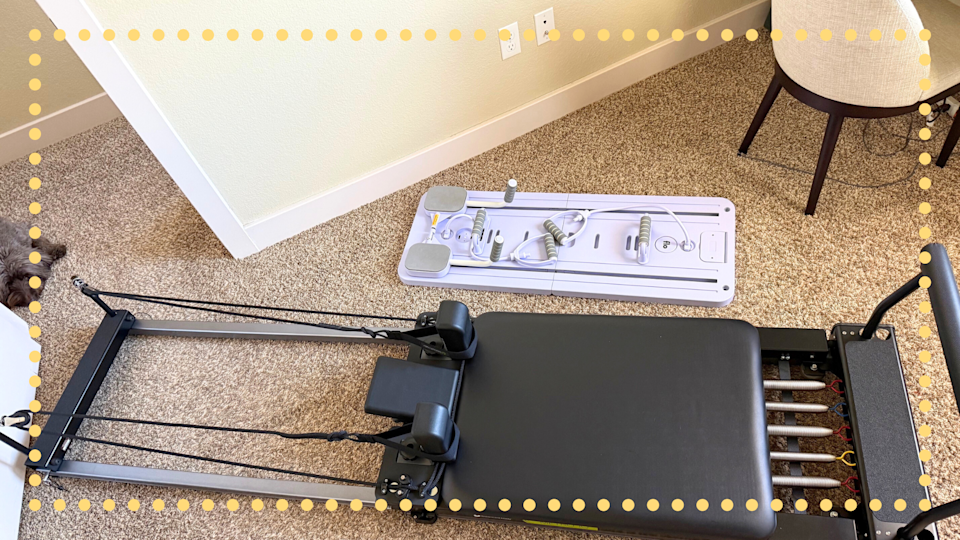
The Portable Pilates Reformer differs significantly from a standard Pilates reformer. (Kelli McGrane, MS, RD)
If you’re buying the Flo Portable Reformer Board as a full-on replacement for a traditional Pilates reformer class, you’ll probably end up disappointed — and honestly, that shouldn’t come as a shock. A classic reformer utilizes a full system of springs, straps and a moving carriage, whereas the Flo board relies on a simple sliding mechanism. It definitely adds instability and light resistance (which has its own benefits), but it’s nowhere near the same experience as working on a real reformer.
Because the design is so different, the workouts are different too. Sure, you can still do lunges, planks, and plenty of core-focused movements on both. But without straps, you miss out on the huge variety of lower-body exercises that make reformer classes feel so dynamic. And for upper body work, the board’s push-up handles and resistance bands are useful and surprisingly effective — they’re just a different vibe than pulling on reformer straps.
In short: it’s a great Pilates tool, but not a true reformer stand-in.
How much does it cost?
The Flo Portable Pilates Reformer Board theoretically retails for $310, but I’ve never seen it listed for more than $150. Shipping is free, and your purchase includes a 1-year warranty, as well as a generous 99-day free return window. You’ll also get a 14-day free trial of the companion app — after that, it’s $9.99 per month if you choose to keep it.
Is the Flo Portable Pilates Reformer worth it?
Kelli McGrane, MS, RD
Honestly, it depends on what you’re hoping to get out of it. If you usually stick to floor Pilates or bodyweight workouts, the Flo Portable Pilates Reformer is a convenient, space-saving and relatively affordable way to add a new challenge and a bit of instability to your routine. But if you’re trying to replace your studio reformer classes, I’d recommend saving up for a traditional reformer instead. Yes, it’s pricier and bulkier — but if that’s the experience you want, you’ll be happier making the investment.
If you do pick up the Portable Reformer, I’d definitely make the most of the free 14-day trial of the app. Try the tutorials, get a feel for the board, and see whether the workout style and class library are worth adding another $9.99 subscription to your monthly budget. Personally, I didn’t find the app necessary — YouTube workouts and incorporating the board into my existing routine worked better for me — but I can see the appeal if you love quick, 15-minute, all-in-one-place classes.
$150 at Flo Pilates
Our health content is for informational purposes only and is not intended as professional medical advice. Consult a medical professional on questions about your health.