


“Hearst Magazines and Yahoo may earn commission or revenue on some items through these links.”
You know that FitTok is a huge fan of buzzphrases. But seasoned gym girls know that not all social media trends are created equal—let alone worthy of replicating IRL. One that’s having a moment as of late? Corrective exercises.
In the physical therapy realm, corrective exercises aren’t a new thing at all—they’re a longstanding tool that therapists use to correct any movement issues, like flexibility inhibitions, pains, and more. But now, the term is being advertised by TikTokers and fitfluencers as fixes for back pain, strength imbalances, posture issues, and more. It sounds like a cure-all—but can these moves really solve all your aches and pains?
We asked physical therapists to weigh in.
Meet the experts: Dan Ginader, DPT is the clinical director at Mimis Method PT in New York City. Syd Young, PT, DPT, FAAOMPT, is the founder of OutWellness ATX in Austin, Texas. Lara Heimann, DPT, E-RYT 500, is physical therapist, yoga instructor, and founder of LYT Yoga Method.
What are corrective exercises?
“’Corrective exercises’ is a catch-all term to describe movements that are meant to ‘fix’ a strength asymmetry or movement deficiency,” says Dan Ginader, DPT, clinical director and physical therapist at Mimis Method PT in New York City.
These exercises are usually designed to address limitations in how you move—like joint stiffness, muscle weakness, poor balance, or difficulty controlling motion, says Syd Young, PT, DPT, FAAOMPT, physical therapist and founder of OutWellness ATX. “The goal isn’t just to fix a single muscle, but to help your whole system work together better so you can easily and safely do everyday tasks.”
In practice, that might mean being able to sit at your desk without your back screaming, get on the floor to play with your child or dog, go for a long walk, or lift groceries without tiring out.
“In physical therapy and strength training, we use corrective exercises as short, targeted drills that support the bigger lifts and real-life activities you care about—not as an entire workout,” says Young. That can look like anything from clamshells to strengthen your hips, to shoulder mobility drills to better your range of motion, to back exercises to strengthen your posture.
And while that might sound like the cure to all your movement-related issues, it doesn’t exactly tell the full story. An internet carousel of the “best” corrective exercises won’t be of much value if they’re not specific to you and your limitations.
While this trend emphasizes the need for personalized workouts that tailor to your specific needs, “the hype is also overselling and oversimplifying what these quick-fix exercises can realistically do long-term,” further cautions Lara Heimann, DPT, E-RYT 500, founder of LYT Yoga Method. “Corrective work can be a powerful tool, but is not a one-stop shop,” she says—it needs to be personalized to your specific needs and movement patterns. To find that, you’ll need to work with a physical therapist or strength coach.
How To Tell If Corrective Exercises Could Help You
-
You notice recurring pain with the same movement, one side of your body always feels dramatically different from the other, or your form consistently breaks down even with light weight.
-
You experience frequent “tweaks,” such as a nagging low-back, knee pain, or feeling like your body always compensates in the same way.
-
Day-to-day signs include trouble with basic tasks—like getting off the floor, climbing stairs, or lifting groceries—despite being otherwise active.
-
You constantly feel tight or inflexible.
Just remember: “You cannot accurately diagnose which corrective exercises you need just by watching TikTok,” says Young. So when in doubt, it’s always best to consult with a physical therapist or a certified personal trainer.
If that’s not accessible to you, though, some gentle, low-risk mobility or control drills can be done without a physical therapist or trainer—as long as they’re pain free and you’re not pushing through discomfort. That said, “if you’ve had pain for more than a couple of weeks, a history of injury, or you’re not sure what’s safe, it’s best to work with a physical therapist or qualified coach who can assess you and build a plan around your body and goals,” says Young.
5 Corrective Exercises That May Help Common Movement Problems
Again, Young doesn’t recommend people fully self-diagnose and build an entire “corrective” program from social media—especially when dealing with real pain or a history of injury.
“Corrective exercises only work when they’re chosen for a specific person, rooted in a good assessment, and plugged into an overall strength program and daily habits,” says Young. “Without that context, they’re usually just random stretches and drills that feel productive but don’t change much longer term.”
While performing corrective exercises on your own is a good start, you might reinforce less optimal movement patterns, reiterates Heimann. “Doing them under the guidance of a professional will provide the needed feedback and education to prevent frustration and setbacks.”
Still, Young notes, there are a few low-risk, widely-used drills many physical therapists feel comfortable recommending as general “movement snacks” for the body, with the understanding that pain, numbness, or tingling are stop signs and a cue to get evaluated.
“The most you should feel is some muscle fatigue or the intuitive feeling that even though a movement may be difficult, you can tell that it is doing you some good,” says Ginader.
Here are a few of Heimann and Young’s go-to corrective exercises.
Thoracic Extension Over Foam Roller
Best for: Stiff upper back from desk work, shoulder tightness, or feeling “hunched” when you press or overhead reach, Young says. Do this 2 to 3 times per week, with 2 sets of 8 to 10 slow reps.
How to:
-
Lie on your back with a foam roller under your upper back (not your neck or low back).
-
Support your head and gently arch over the roller, then return to neutral. Move the roller up and down a few segments.
Lateral Band Walk
Best for: Hip and knee stability, especially for people whose knees tend to cave inward during squats, running, or stairs, Young says. Do this 2 to 3 times per week, 2 to 3 sets of 10 steps each direction.
How to:
-
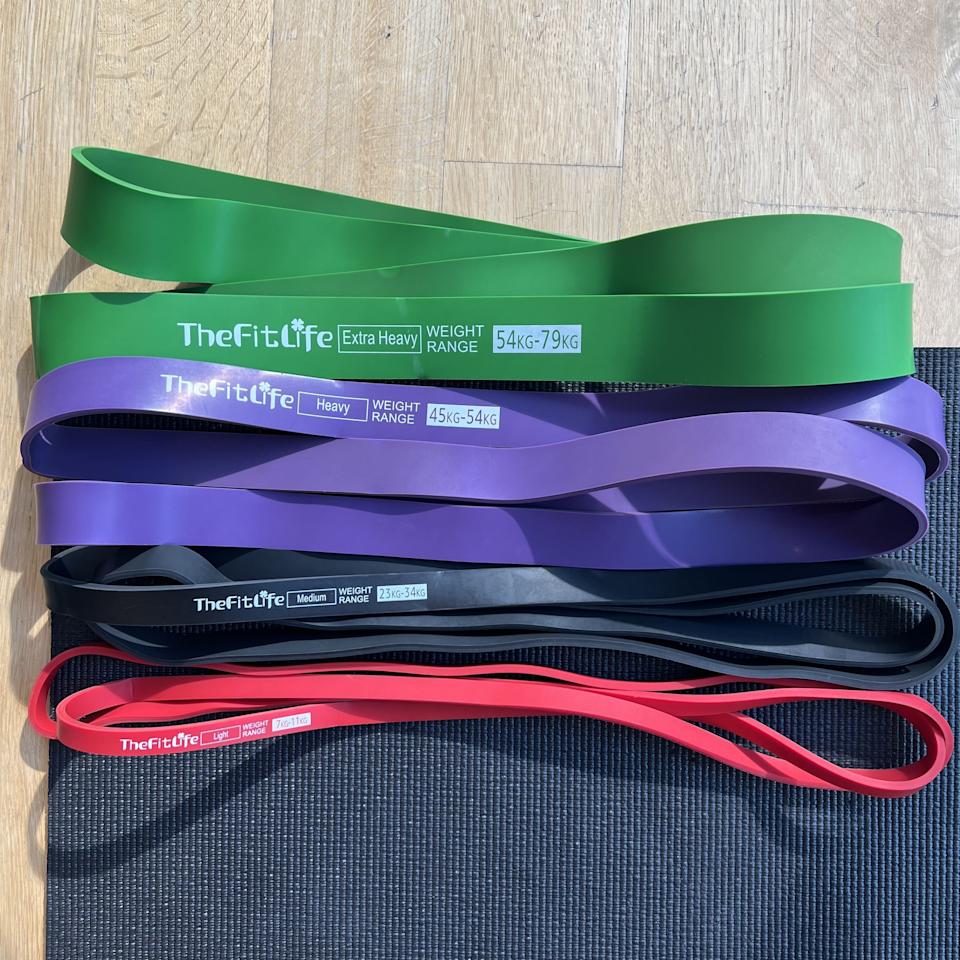
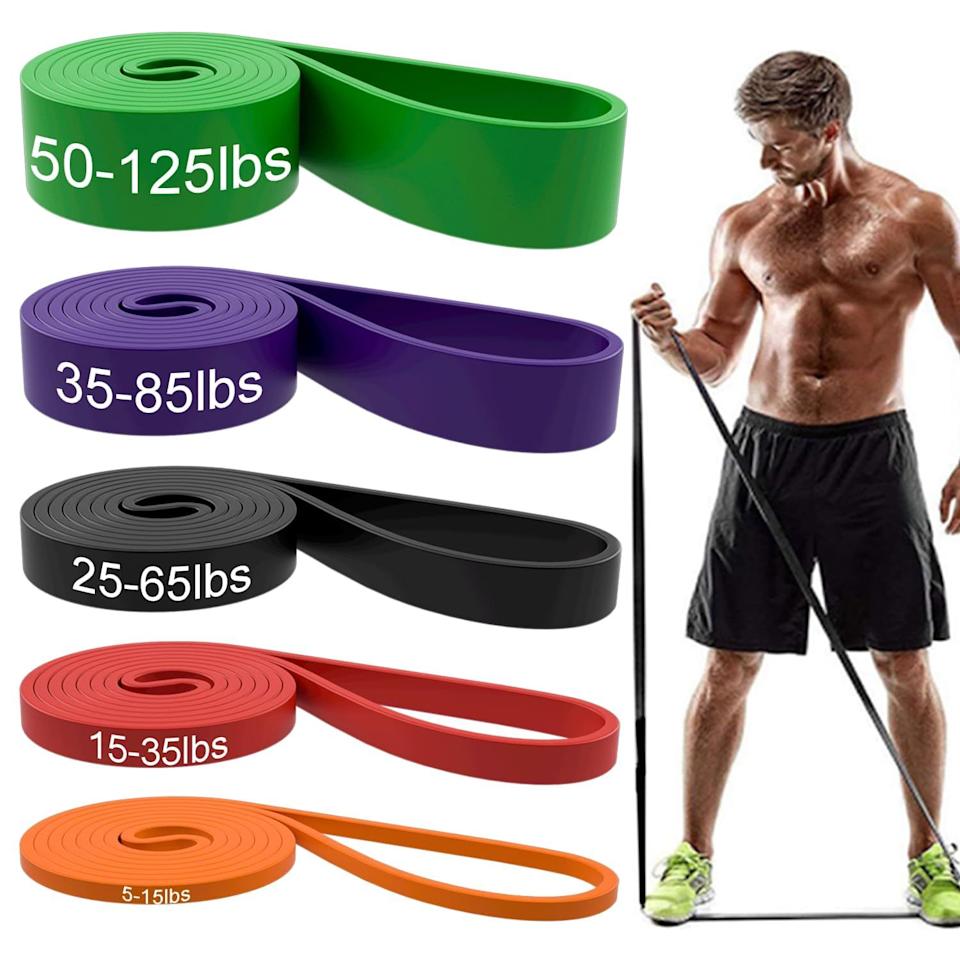
Place a loop band around your ankles or just above the knees, and bend at the knee and hip to come into a quarter-squat.
-
Take controlled steps to the side, keeping tension on the band.
-
Do 10 steps in one direction, and then 10 in the other.
Best Resistance Bands
Resistance Bands
Original Photo Credit: Talene Appleton
Resistance Bands
Courtesy of Retailer
Dead Bug
Best for: Core control, low-back support, and learning to move your arms and legs while keeping your trunk stable, says Young. Do this 2 to 4 times per week, 2 to 3 sets of 6 to 8 reps per side.
How to:
-
Lie on your back with arms reaching to the ceiling and hips/knees bent to 90 degrees. Gently brace your core by sucking your belly in towards your spine. (Per Heimann, a towel can also be placed under the head if tightness in the neck prevents the chin from staying neutral, i.e., when a person juts out their chin and can’t lower it).
-
Then, slowly lower the opposite arm and leg toward the floor without letting your low back come up off the floor.
Bridge Pose
Best for: Learning to maintain ribcage/core stability while hips are moving, says Heimann. “Bridge also mobilizes the hips in extension while reducing the dominant patterns of the low back and hamstrings,” she adds, sharing everyone can benefit from this pose to activate “snoozy glutes” and re-establish their role in moving the hips while stabilizing the pelvis, reducing stress on the low back. Do this daily, holding for anywhere between 30 seconds and 2 minutes for 2 to 3 sets.
How to:
-
Lie on your back with your knees bent and feet flat on the floor, about hip-width apart. Lift your hips up in the air with your arms resting by your side. Squeeze your glutes at the top and hold for up to a minute or two.
-
Make sure to anchor through the feet and low back ribs. Hold for as long as you can, aiming for 30 seconds at a time.
Wall Postural Check
Best for: Rewiring suboptimal postural habits, her Heimann. This exercise serves as both a check-in and a corrective position to rewire the brain for improved posture, she says. You can do this daily, multiple times a day.
How to:
-
Stand with your back against the wall and contact the back of the skull, shoulder blades, and low back area right above the tailbone. Position your feet slightly forward to allow you to press into the wall to make this contact.
-
Place a towel behind any one of those three points that you can’t get to contact the wall; often the back of the skull is the hardest for people to press into the wall because of the “text neck” positioning, which creates tension at the base of the skull. Think of growing the spine long while engaging the muscles all around the spine.
-
Hold for 10 to 15 seconds and release.

Get the Workouts

Get the Workouts

Get the Challenge
Get the Workouts

Get the Workouts

Get the Challenge

Get the Workouts
Get the Workouts
Get the Workouts

Get the Challenge
Get the Workouts
Get the Workouts
Get the Workouts
Get the Workouts

Get the Workouts
Get the Workouts
Get the Workouts
Get the Workouts

Get the Workouts
Get the Workouts
Get the Challenge
Get the Workouts
Get the Workouts
Get the Workouts

Get the Workouts
Get the Workouts
You Might Also Like
-
Jennifer Garner Swears By This Retinol Eye Cream
-
These New Kicks Will Help You Smash Your Cross-Training Goals