


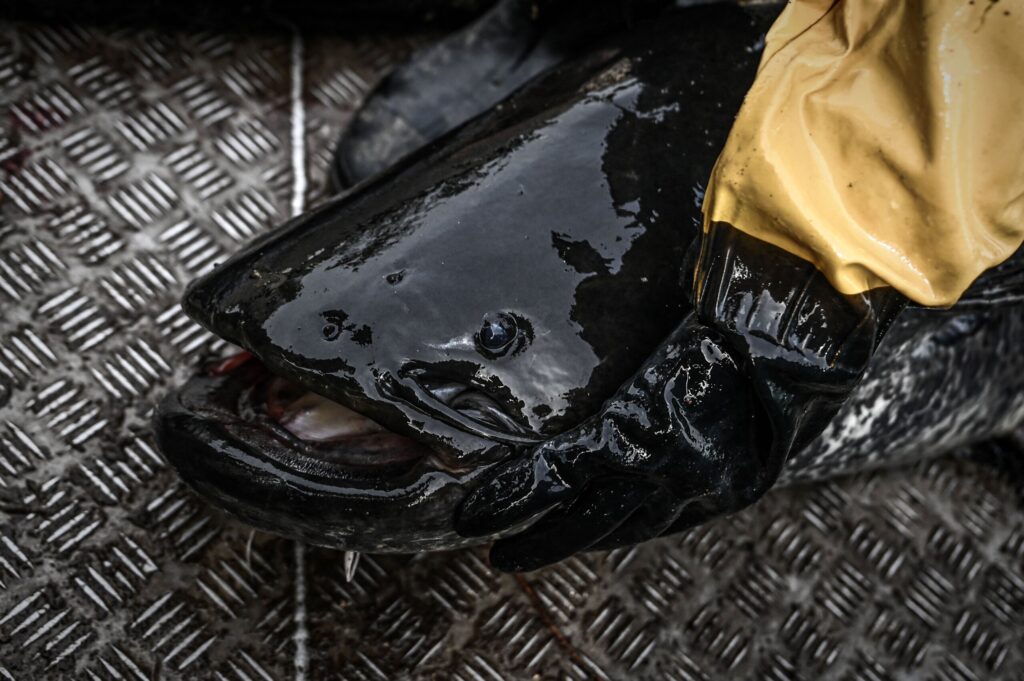
The program would provide grants to pet and animal food manufacturers to buy blue catfish directly from watermen and seafood processors.
Invasive blue catfish are a growing problem for the Chesapeake Bay ecosystem; the U.S. House of Representatives has passed a bill to encourage the use of Chesapeake blue catfish as pet and animal food.
The bill — The Mitigation Action & Waterman Support (MAWS) Act — introduced by Rep. Sarah Elfreth, a Democrat, would create a two-year pilot program with the National Oceanic and Atmospheric Administration.
The program would provide grants to pet and animal food manufacturers to buy blue catfish directly from watermen and seafood processors. Data would be collected on how the increased harvesting of blue catfish affects other species.
Blue catfish are aggressive feeders, preying on other fish, crabs, clams and crayfish in the Bay.
Not everyone agrees with the idea — Maryland catfish harvesters say the bill undermines their efforts to develop the market for people eating wild-caught blue catfish, which is firm, lean, flaky, mild and slightly sweet.
“Now is not the time to undercut the great work of these small businesses and existing investments made by the taxpayers by subsidizing the purchase of product suitable for human consumption for the sole benefit of pet food companies,” said U.S. Rep. Andy Harris, the Maryland Republican representing the Eastern Shore.
In her remarks on the House floor Monday, Elfreth cited state health regulations that blue catfish is safe for human consumption when the fish is between two and 25 pounds.
“This means there are tens of millions of fish over 25 pounds, or up to 85 pounds, actually, that watermen struggle to sell because they cannot be processed for human consumption, and the market is not there. Fortunately, they are completely safe for inclusion in the pet food industry,’” Elfreth said.
In a joint letter, from Maryland Blue Catfish Processors, said they have spent years “overcoming longstanding public stigma and educating consumers that blue catfish is not only safe, but a high-quality and desirable protein-rich seafood product.”
“The MAWS Act, however well-intentioned, risks undermining this progress by shifting public messaging toward the use of blue catfish primarily for pet food or similar byproducts,” according to the processors.
The bill now heads to the Senate for consideration.
Get breaking news and daily headlines delivered to your email inbox by signing up here.
© 2026 WTOP. All Rights Reserved. This website is not intended for users located within the European Economic Area.