


Fitness trackers have become as common as water bottles at the gym. Whether you’re training for a marathon or simply trying to increase your physical activity throughout the day, these devices can help you understand what’s happening with your body. From counting steps to tracking your sleep, fitness trackers put a wealth of health data right on your wrist (or your finger).
Fitness trackers are worn or carried to track and estimate key health metrics like heart rate, steps, calories burned, body temperature and sleep. Many also double as smartphone companions, allowing you to receive calls and notifications without picking up your phone. “Fitness trackers use real-time monitoring and can track different types of activities ranging from walking, jogging, cycling and even sleeping. Fitness trackers can increase motivation and can provide more knowledge regarding overall health,” says Devin Trachman, physical therapist and clinic director at Physical Therapy Central in Oklahoma City, Okla.
Trachman goes on to explain the reasons fitness trackers are worth it: They can positively impact long-term health and wellness, help improve cardiovascular health by encouraging users to increase their daily activity, and these factors together can positively influence weight management. Fitness trackers can also lead to changes in behavior, including the adoption of healthier lifestyle habits by prioritizing sleep and increasing physical activity. There’s also a social aspect that increases accountability because there’s a sense of pride and excitement associated with showing or telling others about your fitness accomplishments.
If seeing numbers and progress motivates you, a fitness tracker could be exactly what you need. As a personal trainer, strength coach, and yoga instructor, I know that it’s essential to find and utilize the right fitness tracker for your specific needs. But in an ever-growing market filled with a range of devices (rings, bands and watches, oh my!) it can be hard to know where to start. To help make the choices easier to navigate, a group of strength coaches, marathon runners, competitive athletes, and everyday people joined forces to test 23 popular devices to help you find your perfect activity tracker match. Here’s what we uncovered.
Update, November 20, 2025: We checked all product prices and availability. Our No. 1 pick for best fitness tracker remains unchanged.
Best overall fitness tracker

Garmin
Battery life: Up to 10 days | Metrics tracked: Activities (calories burned, time, distance, steps, sets), sleep, energy, heart rate, skin temperature, HRV, menstrual cycles/health, stress, blood oxygen saturation, respiration, VO2 max | Smart tracker: Yes | GPS functionality: Yes | Special features: Send/receive calls, GPS tracking for indoor and outdoor sports/activities, music storage, ECG capabilities, wheelchair mode, waterproof, workout plans or build your own workout capabilities
Garmin’s Venu 3S delivers on what Garmin has built a longstanding reputation on: durability, extremely accurate metrics, long battery life and the capability to track workouts across multiple sports and disciplines. This watch ups the ante with detailed health insights, ECG sensors and atrial fibrillation detection, music storage, smartphone notifications (available for both iOS and Android operating systems), a microphone and speaker, and an accessible wheelchair mode.
If you participate in multiple forms of fitness, you’ll be thrilled with the activity tracking options on the Venu 3S. The fitness-focused smartwatch has 30 preloaded sports and workouts, which makes it easy to track specific activities. While participating in these modes, the watch offers three screens with varying data, so it’s easy to toggle back and forth in real time to see your heart rate, reps, distance or calories burned. If you want to create your own workout, the Garmin Connect app syncs with the watch, so you can load workouts into the watch that are then cued through the device’s speakers. Outside of activity, the watch also provides overall health tracking, looking at sleep and stress. While it took a few days to sync to my body, I loved the insight into energy and recovery for a more well-rounded approach to my fitness routine. For an extra recovery boost, the watch also offers programmed meditation and breath work sessions.
And, while it’s stacked with nearly every feature imaginable, the Venu 3S is a chic and stylish watch that complements outfits, unlike other, clunkier sports-focused watches.
As one Amazon reviewer raves, “The 1.2-inch AMOLED touchscreen display is stunning — vibrant and easy to read, even in bright sunlight. Navigating through the features is smooth and intuitive, making it simple to track workouts, monitor heart rate and check notifications.”
- Thirty preloaded sports apps and workouts
- Very accurate data collection across all biometrics and activities
- Ability to create workouts with Garmin Connect app that load to watch
- Larger size
- On the pricier end compared to other models
$350 at Amazon
More fitness trackers we like for 2025

Coros
Battery life: Up to 20 days | Metrics tracked: Steps, heart rate, sleep, calories burned, stress, HRV | Smart tracker: Yes | GPS functionality: Yes | Special features: Offline maps, virtual pacer, group tracking, recovery coaching
If you’re training for a 5K, a marathon or anything in between, the Coros Pace Pro is a high-tech addition that can boost any training cycle. This incredibly lightweight and durable watch not only integrates with apps like Strava and Nike Run Club, but also offers the ability to plan running routes and download them right into the watch to access offline. The watch’s bright, AMOLED display is designed to easily be seen during the sunniest of days as well as during darker morning or evening runs. You can even download music to the watch to access offline too.
The Coros Pace Pro also tracks heart rate, calories burned, distance traveled and steps, all of which are accurate. These metrics are easy to view on the screen, especially with the watch’s upgraded processor, which shows these metrics (and maps) quickly.
The Coros Pace Pro does offer additional sport modes outside of running, but our tester found that this library was less extensive compared to other brands. If you are cross-training in addition to running and comfortable being less specific while tracking, this is no issue.
- Extremely accurate GPS tracking and route planning capabilities
- Integrates with apps like Strava, Nike Run Club and Apple Health
- Stores music offline
- Higher price point
- Silicone band can feel rigid
$299 at Amazon
Whoop
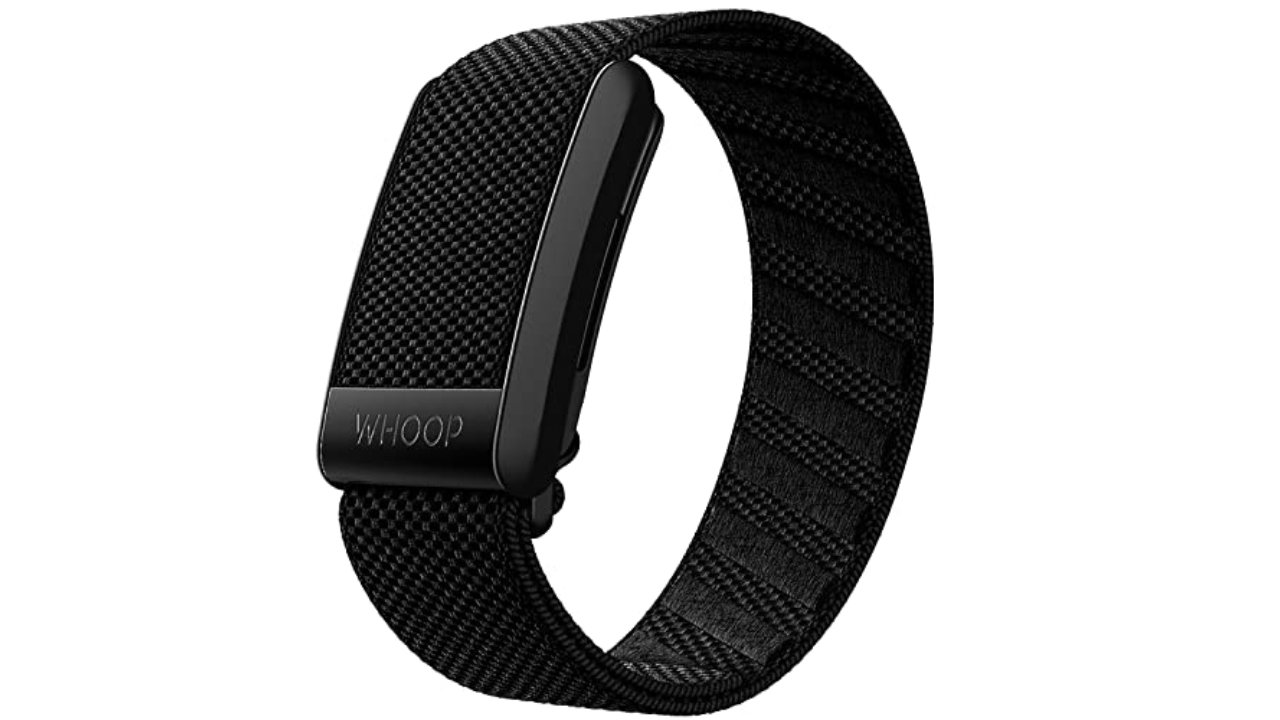
Battery life: Up to five days | Metrics tracked: Sleep, strain, activity, recovery, stress, heart rate, HRV, blood oxygen, skin temperature | Smart tracker: Yes | GPS functionality: No | Special features: Health journal, customized tracking
Recovery is key, and Whoop gets that. In addition to tracking heart rate variability (HRV), activity (including time spent in each of the five heart rate zones), blood oxygenation, skin temperature and stress, Whoop provides an overall look at your “strain” and “recovery.” Based on these scores, Whoop provides personalized coaching for how to improve sleep, when to work out, how to reduce stress at specific points in the day and more. I liked understanding when I was best prepared for physical activity and noticed marked improvements in my performance based on this.
Whoop’s sleep tracking is particularly impressive, with accurate readings on sleep stages, how many times you woke up, sleep trends and sleep schedule planning.
“Trackers that include sleep duration and sleep quality help to round out the health picture, going beyond physical activity alone. When looking to optimize health, we can’t ignore the importance of restorative sleep. Inadequate sleep contributes to unhealthy changes in blood pressure, blood sugar control and even impacts weight by increasing hunger hormones that lead to excess caloric intake and cravings for higher-calorie foods,” says Dr. Richa Mittal, owner and founder of Radiant Health in Dallas.
While the Whoop band can be tricky to adjust at first, once it fit, I found it comfortable. Similar to the band, the app was slightly challenging to navigate at first. There is so much data to consume, it can be hard to determine which numbers you need to focus on and what to take action on. After a few weeks of testing, this became easier to navigate.
The black strap doesn’t have a visual interface, so if you’re looking for real-time activity data as you exercise, you might want to opt for a watch that provides metrics at a glance, as the Whoop is keenly focused on optimal recovery.
While we tested the Whoop 4.0 version, it’s no longer available, but the Whoop 5.0 is.
- Personalized activity and recovery recommendations
- Minimalist, screen-free design
- Customizable tracking
- Requires subscription
- Not ideal for real-time activity metrics (time, distance, heart rate, etc.)
$179 at Amazon
Fitbit
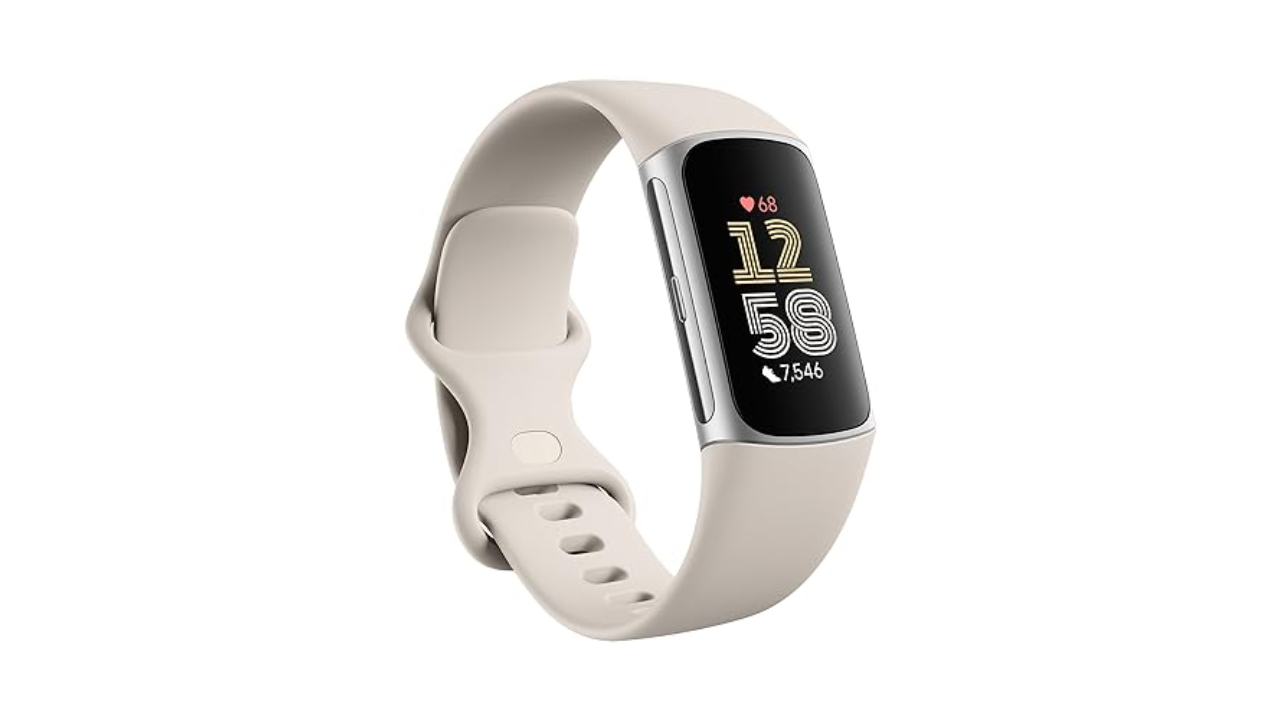
Battery life: Up to seven days | Metrics tracked: Steps, heart rate, calories burned, distance, sleep, stress, blood oxygenation | Smart tracker: Yes | GPS functionality: Yes | Special features: Connects to exercise machines, VO2 max tracking, sleep score tracking, call, text and calendar notifications, SmartWake alarm, equipped with Google Maps, Google Wallet and YouTube Music, water resistance up to 50 meters
If you’re just diving into the world of fitness trackers and want to log and track your workouts, count steps and keep an eye on your heart rate without getting distracted by additional metrics, the Fitbit Charge 6 is the perfect option for you. Incredibly lightweight and comfortable, it is a straightforward and easy-to-use device at a budget-friendly price point.
The Fitbit Charge 6 has an advanced heart rate monitor, an accelerometer, GPS to track runs, walks, hikes and bike rides, light water resistance and Bluetooth compatibility. Plus, you can also access Google Maps, Google Wallet and YouTube Music through the device. The Fitbit comes with 40 exercise modes and can intuitively recognize when you’re engaging with them, which makes tracking workouts a seamless experience. All of this is summarized in a weekly progress report, which is visual and easy to understand.
The device has a small touchscreen, but our reviewer found that the Charge 6’s side button was easier to navigate as the touchscreen was more unreliable, especially with gloves on.
While not officially part of the testing, Yahoo Life’s Health Editor, Laura Williams, says this is the tracker she gave to her 75-year-old mother to monitor her steps and other basic health data. While her mom isn’t a fan of juggling multiple apps or integrating excessive technology into her life, she’s called this tracker “incredibly easy to use” and has truly enjoyed having a way to gauge how much activity she’s getting.
- Budget-friendly
- Forty workout modes
- Comfortable and lightweight fit
- Select metrics require a Premium subscription to access
- Some users report inaccuracies with heart rate measurement
$100 at Amazon
WHOOP
Battery life: Up to 14 days | Metrics tracked: Sleep, strain, activity, recovery, stress, heart rate, HRV, blood oxygen, skin temperature | Smart tracker: Yes | GPS functionality: No | Special features: Medical-grade ECG, blood pressure monitoring, AFib detection, Healthspan with Whoop Age, AI coaching, biomarker integration
If you’re looking for clinical-level health monitoring in a wearable, the Whoop MG delivers medical-grade features that go beyond typical fitness tracking. The “MG” stands for Medical Grade, and this screenless band includes ECG capability for on-demand heart screenings, blood pressure monitoring (which requires calibration with a cuff), and atrial fibrillation detection. Our tester found these features particularly valuable for comprehensive health tracking and peace of mind.
One of the most motivating features is Healthspan with Whoop Age, which calculates your body’s physiological age compared to your chronological age and provides actionable insights for improvement. Our tester found this metric highly motivating for setting health goals and tracking habits that directly impact biological aging. The ability to upload bloodwork results creates an even more comprehensive picture of how your daily habits affect your health markers and vice versa.
The Whoop MG excels at tracking heart rate variability (HRV), a crucial marker for stress and readiness, as research has shown. Studies have demonstrated the Whoop’s superior accuracy compared to other wearables, and our tester confirmed this holds true in practice. Combined with detailed sleep tracking across all sleep stages, strain scores and recovery recommendations, the device provides a holistic view of your body’s state and readiness for activity.
Battery life is exceptional, lasting up to 14 days, and the wireless charging pack can be attached while you’re wearing the device, eliminating the need to remove it. The band is comfortable for 24/7 wear with no issues during workouts or sleep. The app includes AI-powered coaching that answers questions and provides personalized insights based on your data and habits, making the wealth of information more actionable.
Our tester experienced occasional syncing issues, particularly during the first few nights and once after an update when sleep wasn’t tracked. The Whoop MG requires the Life subscription tier, which costs $359 per year, making it the most expensive option in Whoop’s lineup. While the medical-grade features justify the cost for health-conscious users who need clinical-level monitoring, they may be overkill for those primarily interested in basic fitness tracking.
- Medical-grade ECG, blood pressure monitoring and AFib detection
- Healthspan/Whoop Age tracking for longevity insights
- Superior HRV accuracy backed by research for stress and readiness assessment
- 14-day battery life with convenient on-wrist charging
- Biomarker integration for comprehensive health picture
- Expensive Life tier subscription required ($359/year)
- Occasional syncing issues
- No screen for real-time activity data during workouts
$338 at Amazon
Oura
Battery life: Up to seven days | Metrics tracked: Sleep, activity, temperature, heart rate, stress, VO2 max, HRV, menstrual cycle, steps, calories burned | Smart tracker: Yes | GPS functionality: No | Special features: Water resistant up to 328 feet, withstands a variety of temperatures (including saunas and ice baths), integrates with 40+ apps like Natural Cycles
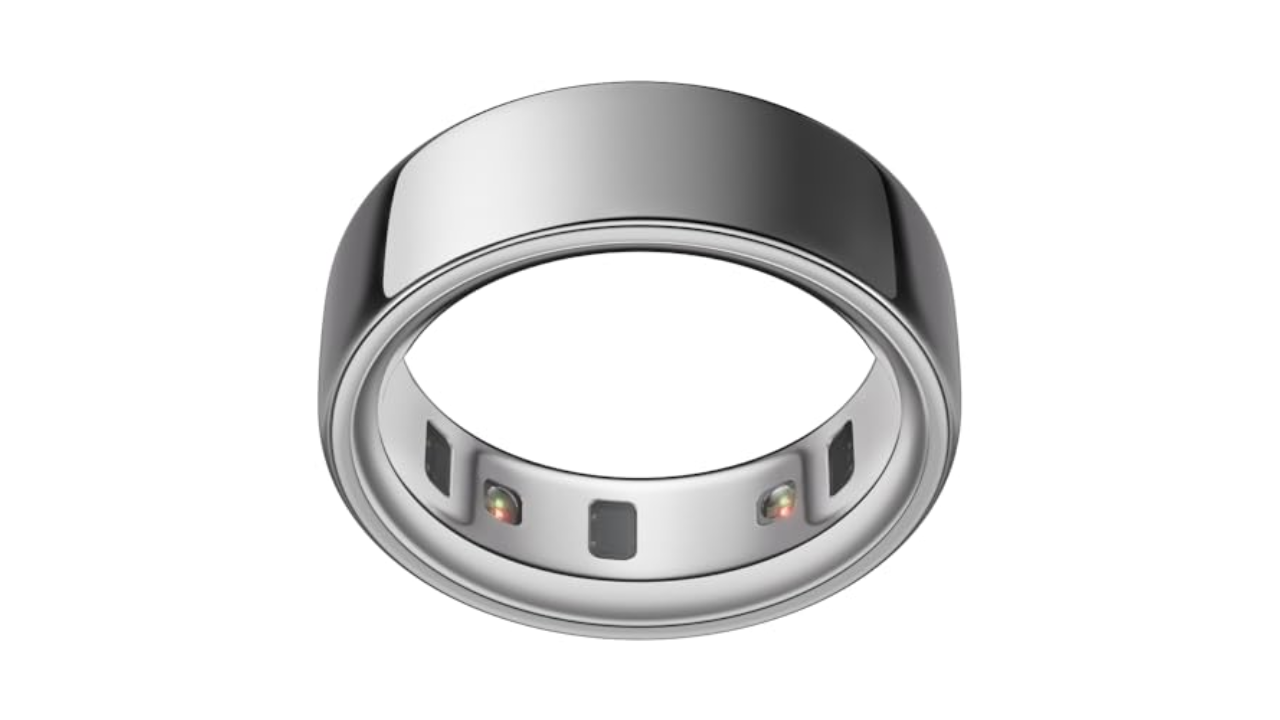
If you’re looking to track health metrics outside of your workouts, the Oura Ring is a solid option. This stylish and comfortable smart ring accurately measures heart rate, blood oxygen, heart rate variability, respiratory rate, skin temperature, sleep duration and sleep stages, categorizing them by activity, sleep and stress. While you can’t view heart rate, calories burned, distance or time elapsed during a workout, the ring automatically tracks 40 different types of activity and removes the need to manually log exercise. One of the most unique aspects of the Oura Ring is its focus on women’s health. With its integration with Natural Cycles, the Oura Ring provides cycle insights, pregnancy insights and fertile window estimates.
All of this data is accessible through the ring’s app, which is incredibly easy to navigate. On top of activity, sleep and stress scores, the app also provides personalized insight into your cardiovascular age, sleep regularity and holistic readiness. Similar to the Whoop band, the readiness score was helpful in understanding how to plan workouts and recovery. I also appreciated the app’s coaching, recommendations and resources to improve overall well-being and health. I found these more accurate and useful the more I wore the ring.
I was initially hesitant about wearing a ring, wondering if it might feel bulky, but I was pleasantly surprised; I hardly ever noticed the ring was on (and I only felt the sensors when I wore it with mittens or worked out with a kettlebell). It’s a stylish addition and very easy to sleep with too. Plus, Oura gives you the option to choose a band color so it can fit your preferred look.
- Minimalist design without interface
- Comfortable fit
- Accurate and intuitive activity and sleep data
- Requires monthly subscription
- Not ideal for real-time activity metrics (time, distance, heart rate, etc.)
$249 at Amazon
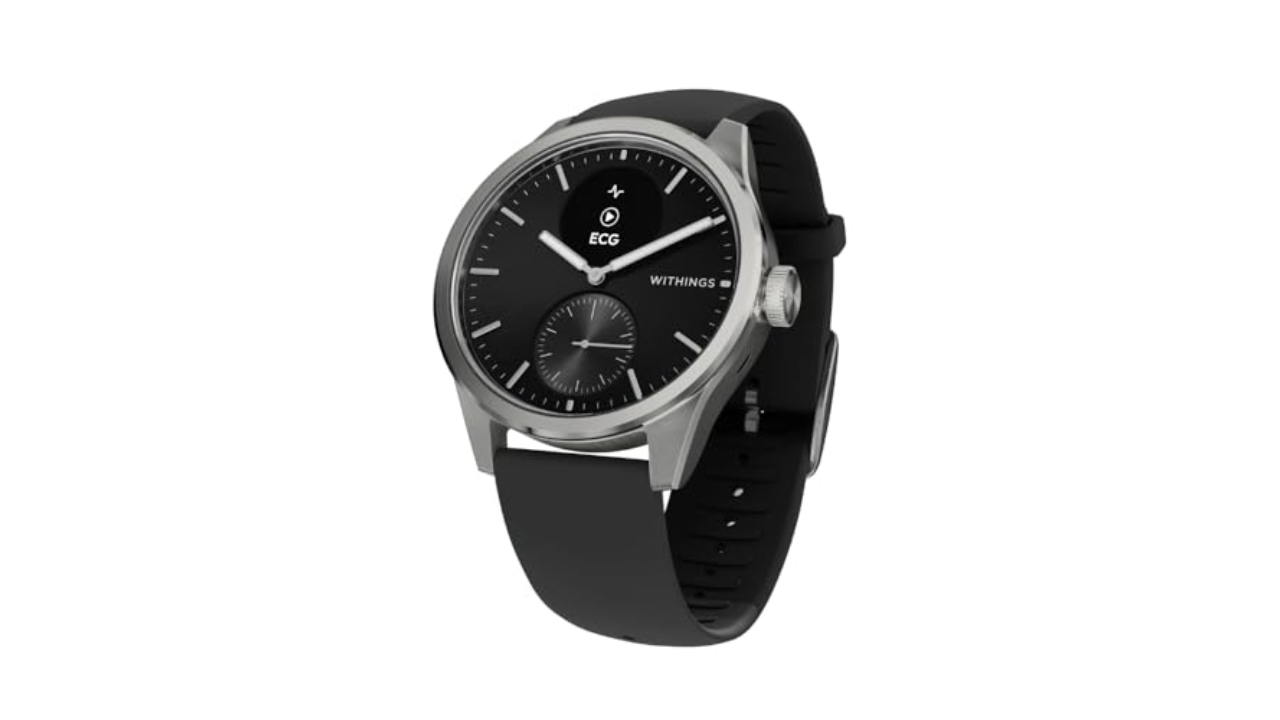
Withings
Battery life: Up to 30 days | Metrics tracked: Steps, sleep, menstrual cycles, temperature, blood oxygenation, elevation | Smart tracker: Yes | GPS functionality: No | Special features: Tracks irregular heart rate, advanced body temperature tracking
Style is certainly not the No. 1 priority with a fitness tracker, but a visually appealing device can help you consistently wear it. The Withings ScanWatch 2 is an elegant fitness smartwatch that closely resembles a real watch.
The watch specializes in tracking heart rate, temperature and sleep. In addition to providing a daily sleep quality rating with suggestions on how to improve sleep, the watch’s advanced temperature tracking also notifies users of any changes that may indicate oncoming illness or other health concerns. Temperature tracking is also utilized in the ScanWatch 2’s workout mode. By tracking instances of overheating, the ScanWatch 2 can help you dial in your warm-up and cooldown.
In terms of activity tracking, our tester found the ScanWatch 2 was limited, with no GPS tracking and only seven modes of activities available on the watch at one time. While these can be swapped out on the app, it adds an additional step.
The watch’s screen is fairly small, and our tester found that viewing metrics or reading texts was easier on the watch’s companion app, which provides a full breakdown of health data.
- Polished and comfortable design
- Accurate biometrics
- Long battery life
- Small screen can be challenging to read
- Upgraded metrics only available in subscription-based app
$290 at Amazon
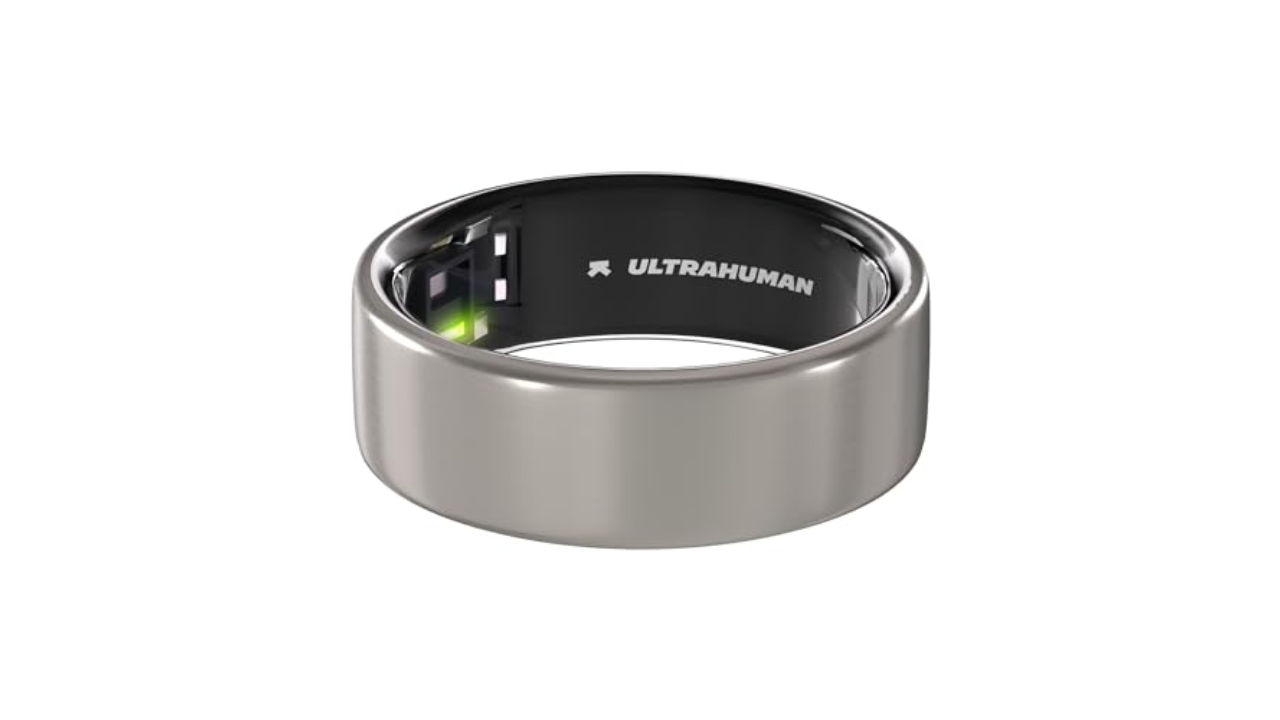
Ultrahuman
Battery life: Up to six days | Metrics tracked: Sleep, movement, recovery patterns, heart rate, HRV, body temperature, SPO2, stress rhythm, step count, calories burned, distance, VO2 max | Smart tracker: Yes | GPS functionality: No | Special features: Tracks caffeine restriction window, water-resistant
If you’re looking for a screen-free tracker, Ultrahuman’s Ring Air is a solid choice. This lightweight titanium ring is worn on your finger and looks like a sleek piece of jewelry. The smart ring tracks heart rate, HRV, body temperature, sleep stages, blood oxygenation and movement frequency to provide insight into sleep, movement and recovery. Unlike many smart rings, including the Oura Ring, the Ultrahuman Air does not require a subscription to access any of this data.
Our tester noted that the app can be intimidating for the first few days, especially if you’re less tech-savvy. There are lots of metrics that can be hard to digest, but after a few days, our tester found it easier to dissect which numbers to pay attention to and why. In particular, our tester really liked the Stress Rhythm and Movement Indexes that offered a high-level view of how they were doing each day. They also appreciated the suggested sleep patterns for better rest, as well as the caffeine restriction window to boost energy levels throughout the entire day.
While the Ultrahuman Ring Air excels with overall health and movement tracking, it loses some steam with real-time activity tracking. Some users have had to manually input workouts, and viewing heart rate or distance traveled during a workout isn’t an option since the device is a screenless ring.
Similar to other rings, the battery lasts around five days (a little less than the “up to six days” the brand states). Pay attention to the battery life on the app — our tester had it run out twice since they found it so comfortable to wear and didn’t notice the app.
- No subscription required
- Comfortable fit
- Personalized recovery, movement and sleep recommendations
- Ring can get scuffed easily
- Workout tracking is less intuitive than other products
$349 at Amazon
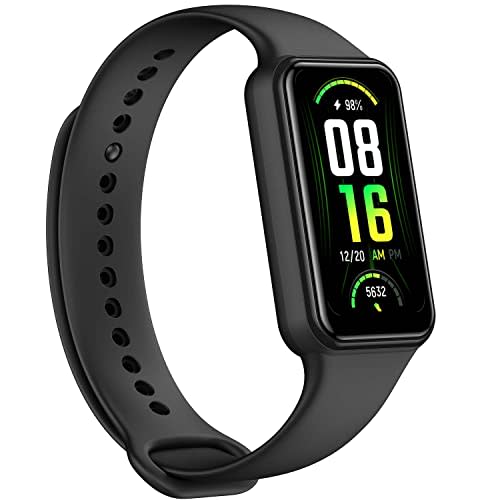
Amazfit
Battery life: Up to 18 days (28 days in battery-saver mode) | Metrics tracked: Steps, heart rate, sleep, distance, calories burned, SpO2, stress | Smart tracker: Yes | GPS functionality: Smartphone-connected GPS (no built-in GPS) | Special features: 20 sport modes, 5 ATM water resistance, Amazon Alexa enabled, PAI health score, menstrual cycle tracking, music controls
If you’re looking for a capable fitness tracker that won’t break the bank, the Amazfit Band 7 has some impressive features for the price. Our tester, who switched from a Fitbit Charge, found this to be the perfect middle ground between a basic fitness band and a full smartwatch like an Apple Watch. Setup was quick and easy with the Zepp app, and the interface proved intuitive and robust without overwhelming users with complexity.
Battery life is a huge plus. The marketing claims of 18 days hold true in real-world use, with the option to extend to 28 days in battery-saver mode. The display is clear and easy to read, with our tester noting it’s actually easier to see step counts on this device compared to a Fitbit, thanks to the larger watch face and customizable options.
Tracking accuracy is solid across the board. Step counting is on par with Fitbit devices, heart rate monitoring proved accurate and responsive (our tester received a stress alert at the exact moment they were feeling stressed), and sleep tracking provides reliable data on sleep stages and quality. The device offers 20 sport modes and connects to your smartphone’s GPS for distance tracking during outdoor activities. With 5 ATM water resistance, you can use it for swimming and everyday water exposure.
The Zepp app provides comprehensive tracking including sleep duration and stages, heart health metrics, stress levels, PAI (Personal Activity Intelligence) score, workout stats and more. The device also includes smart features like Amazon Alexa integration, music controls, weather updates and smartphone notifications.
Our tester noted a few minor drawbacks. The band clasp uses a small peg-and-hole system that occasionally caused the watch to pop off. The band felt slightly itchy during the first two days of wear but became comfortable after that. The lack of built-in GPS means you’ll need your phone nearby for accurate distance tracking during outdoor activities. Additionally, the free watch faces tend to be bright and colorful rather than subtle, though additional options are available for purchase.
At under $50 (often on sale for around $40), our tester called this tracker “a steal” and enthusiastically recommended it to anyone seeking a straightforward fitness tracker without the bells and whistles of a smartwatch.
- Exceptional 18-day battery life (28 days in battery-saver mode)
- Easy setup and intuitive Zepp app
- Clear, readable display with good step count visibility
- Band clasp can occasionally pop off
- No built-in GPS (requires phone connection)
- Limited subtle watch face options
$40 at Amazon
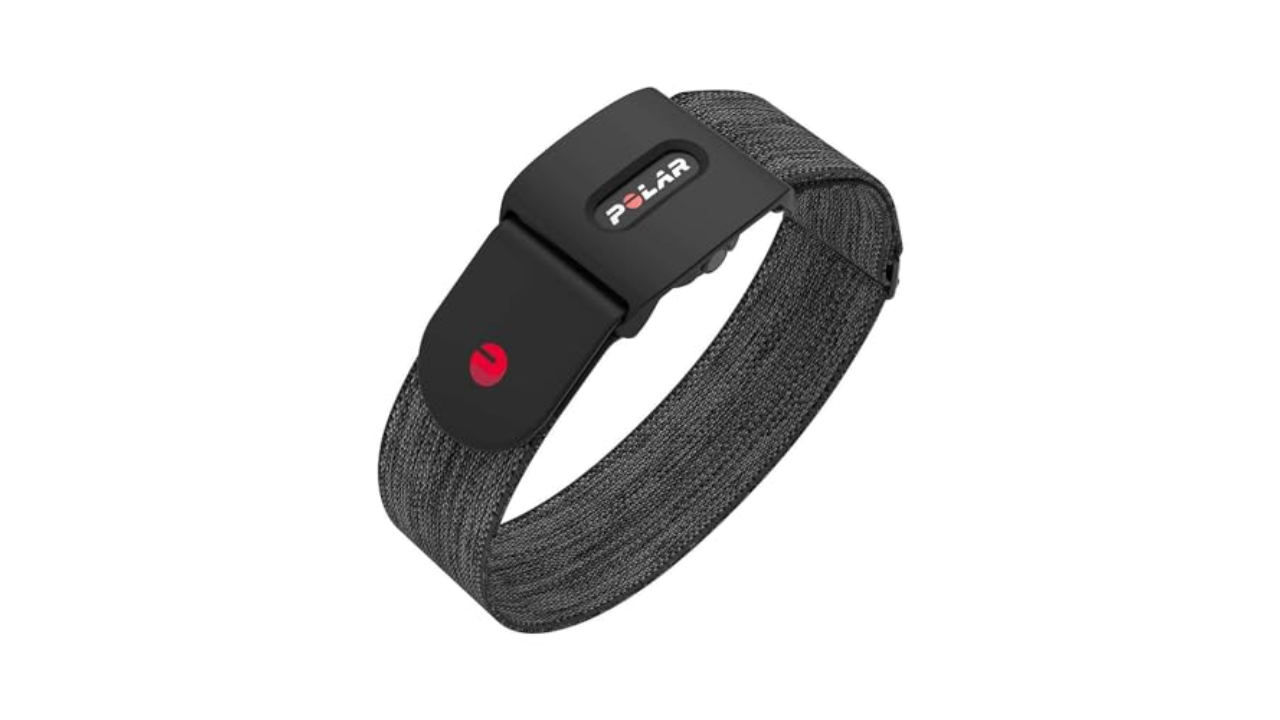
Polar
Battery life: Up to 30 hours | Metrics tracked: Heart rate | Smart tracker: No | GPS functionality: No | Special features: Can be worn with an armband or clipped to goggles, waterproof up to 50 meters, Bluetooth and ANT+ connectivity
If you’re not interested in tracking a slew of metrics and are most interested in monitoring your heart rate and intensity level throughout your workouts, the Polar Verity might just be the right fitness tracker for you. This simple device (about the size of a coin) can be slid into the provided armband or goggle clip to wear as you exercise. There are three modes — swimming mode, heart rate mode and recording mode — allowing you to choose which option best suits your needs. With the heart rate mode, you can sync the device with Bluetooth or ANT+ to monitor your heart rate in real time, or with the recording mode you can exercise without your phone or watch on-hand, recording your heart rate throughout the workout so you can sync it at a later time. Swimming mode is more similar to recording mode, as it allows you to track your swimming workout intensity to sync with your phone or other device after you get out of the pool.
Our tester found this monitor to be incredibly comfortable to use and wear for running and strength training workouts. Without a wristband or ring to restrict movement or pinch when grabbing dumbbells, she found herself preferring this armband to other options for strength training workouts. She also liked that she was able to sync the monitor to her treadmill to have more accurate heart rate readings during her treadmill runs.
The main downside? Heart rate is the only thing this device monitors. If you want a tracker that does it all, the Verity may not be the right choice.
- Multiple ways to wear
- Highly accurate heart rate measurements
- Waterproof up to 50 meters; appropriate for swimming workouts
- Comes with a goggle clip to wear while swimming
$89 at Amazon

Battery life: 24 hours (up to 36 hours with Battery Saver mode) | Metrics tracked: Heart rate, steps, sleep, distance, calories burned, HRV, cardio load | Smart tracker: Yes | GPS functionality: Yes | Special features: Daily Readiness score, Cardio Load tracking, running form analysis, loss of pulse detection, Safety Check timer, Emergency SOS, available in 41mm and 45mm sizes
If you’re an Android user looking for a watch that seamlessly blends fitness tracking with smartwatch functionality, the Google Pixel Watch 3 delivers on both fronts. Our tester found this watch particularly valuable for its integration with the Android ecosystem — especially with Pixel phones — making it easy to use voice activation, set timers and receive notifications without reaching for your phone. The 45mm version offers a larger, easy-to-read display that’s comfortable enough to wear all day and night.
The Pixel Watch 3 excels in its running-specific features. Daily Readiness, Cardio Load and Target Cardio Load scores provide valuable insights into how your habits and sleep affect your workout readiness. Our tester found these metrics useful for tracking trends over time and making smarter training decisions. Heart rate monitoring was consistent when compared to a Whoop worn simultaneously, and GPS tracking proved accurate for outdoor activities. Step tracking was reliable in most scenarios, though like most wrist-worn trackers, it didn’t register steps during activities like typing on a walking pad.
The watch comes with six months of Fitbit Premium, though our tester found the free features sufficient for most users. Setup was straightforward and intuitive, and the watch remained comfortable even during sleep. Emergency features including loss of pulse detection and Safety Check provide peace of mind, even if you don’t need to use them.
The main drawback is battery life. While the watch does achieve its advertised 24 hours with always-on display (and longer with Battery Saver mode), this means charging every couple of days, which can feel inconvenient compared to watches offering multi-week battery life. However, if you’re already accustomed to daily charging routines with other devices, this may not be a dealbreaker.
- Loss of pulse detection with automatic emergency services calling
- Advanced training metrics (Daily Readiness, Cardio Load, Target Load) based on sports medicine research
- Comfortable for all-day and nighttime wear
- Seamless integration with Android ecosystem, especially Pixel devices
- Requires charging every couple of days or less
- Step tracking can be off
$200 at Amazon
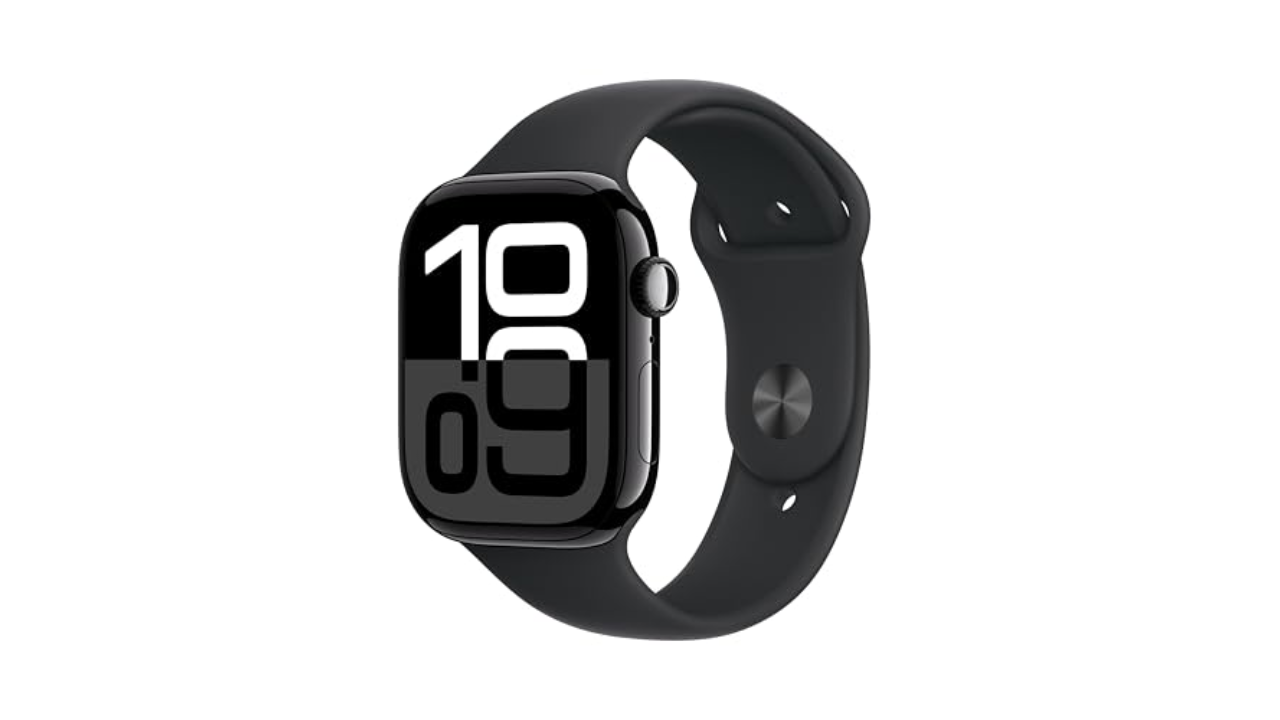
Apple
Battery life: About 24 hours, depending on usage | Metrics tracked: Heart rate, sleep, distance, calories burned, steps, temperature | Smart tracker: Yes | GPS functionality: Yes | Special features: Sleep apnea detection, ECG test, irregular heart beat notification, fertility tracking
A good balance of fitness features with a broad range of smart capabilities. This smartwatch, ideal for those who are already part of the Apple ecosystem, is a practical choice if you want an easy way to sync all your Apple devices. “It’s very practical as it’s compatible with other products. It also has many features like GPS, calorie tracking, etc., as well as the ability to send you notifications and progress updates,” said Sandra Gail Frayna, founder of Hudson Premier Physical Therapy & Sports.
The Apple Watch stands apart from many other smartwatch or fitness tracker options thanks to its comprehensive health tracking. In addition to steps, distance, calories burned, heart rate monitoring and sleep tracking, you can also take an ECG test at any time, and the watch can be set to notify you if it detects an irregular heart rhythm. In the same vein, the sleep mode can monitor irregularities in sleep patterns that may indicate sleep apnea
Also, thanks to its body temperature tracking capabilities, it’s able to provide you information on fertility and estimate your ovulation dates.
As far as fitness tracking, the Apple Watch offers similar features to many of the other monitors we tested. You can set workout goals, track your intensity and choose specific workout modes (like cycling, running, yoga or strength training) to better monitor your every movement. The watch is also water-, crack- and dust-resistant so you don’t have to worry about damaging your watch during a workout.
One area where Apple Watch stands out is its integrated safety features. While thankfully our tester didn’t need to use them during her trial, she said that they “provided peace of mind, particularly on long runs or bike rides.” You see, Apple Watch can auto-detect hard falls or crashes, automatically calling for help and sharing your location with your saved emergency contacts. Likewise, you can set a “check in” notification to be sent to a friend when you arrive at a destination, and you can share your real-time GPS location with friends so someone will always know where you are.
The major downside to this tracker is its battery life, which requires a daily charge. However, a 30-minute charge gives you 80% battery, so while frequent charging is a bit of a pain, you don’t have to disconnect for long to be back in business.
- Many smart features that integrate well in the Apple ecosystem
- Expansive fitness tracking and health monitoring
- High level of accuracy
- Comes with three months free of Apple Fitness+
- Battery life is limited
- More expensive than many options
$310 at Amazon
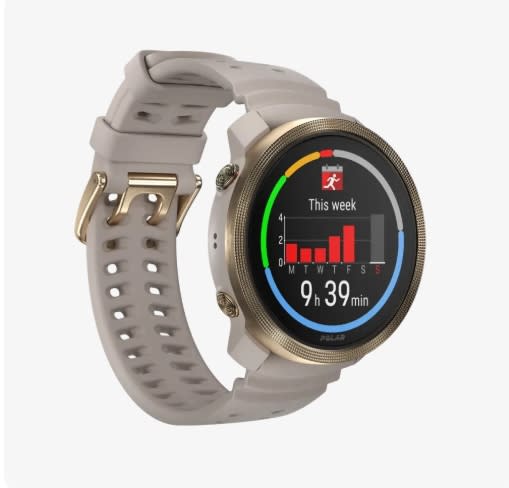
Polar
Battery life: Up to 7 days (up to 30 hours with GPS) | Metrics tracked: Heart rate, steps, sleep, distance, calories burned, SpO2, skin temperature | Smart tracker: Limited smart features | GPS functionality: Yes (dual-frequency) | Special features: Offline color maps, turn-by-turn navigation, ECG, compass, altimeter, 170+ sport modes, voice guidance, Training Load Pro, Recovery Pro
If you love hitting the trails, paddling remote lakes or exploring new terrain, the Polar Vantage M3 puts essential navigation tools right on your wrist. The standout feature is the offline color maps, which proved invaluable during our testing on poorly marked nature trails and while stand-up paddleboarding on a lake. Having maps directly on your wrist means you don’t need to dig out your phone or rely on a network connection — your hands stay free for trekking poles, paddles or climbing.
The watch packs a built-in compass and altimeter alongside dual-frequency GPS that proved accurate when compared to Google Maps. Before starting any GPS-tracked activity, the watch provides a helpful battery life estimate so you know exactly how much juice you have left. With 7-day battery life in smartwatch mode and up to 30 hours with GPS tracking, this watch can handle multi-day adventures without needing a charge.
With 170+ sport modes available, the Polar Vantage M3 handles everything from strength training and hiking to swimming and cycling. Our tester found the watch comfortable enough for all-day wear, though the larger 44mm size may feel bulky on smaller wrists. The 1.28-inch AMOLED display is exceptionally bright and sharp, remaining easily readable in all lighting conditions from bright sun to nighttime. Heart rate tracking was consistent with other devices like Fitbit and Whoop.
The watch menus can be navigated via touchscreen or side buttons, providing flexibility when you’re on the move. One quirk worth noting: the map orientation can swing around erratically when you’re moving, which can be frustrating. The watch also only allows one alarm at a time, so if you need backup alarms, you’ll need to use another device.
At around $400, the Polar Vantage M3 sits at a higher price point than some competitors, but the offline maps, compass, altimeter and comprehensive sport tracking make it a solid choice for outdoor enthusiasts who want reliable navigation without pulling out their phone.
- Offline color maps with GPS, compass and altimeter
- 170+ sport modes for comprehensive activity tracking
- 7-day battery life with helpful pre-activity battery estimates
- Bright, sharp AMOLED display readable in all conditions
- Higher price point
- Larger size may feel bulky on smaller wrists
- Only allows one alarm at a time
$375 at Polar
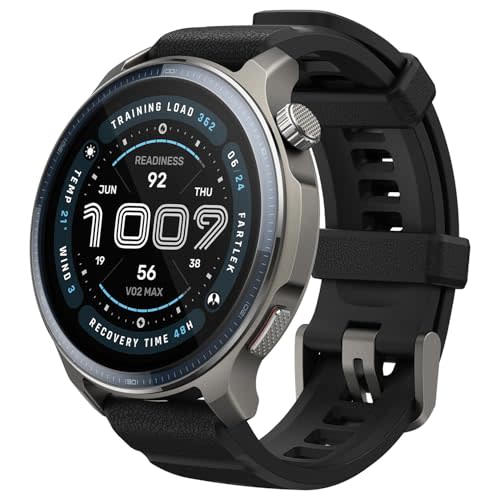
Amazfit
Battery life: Up to 21 days | Metrics tracked: Steps, heart rate, sleep, distance, calories burned, blood oxygen, stress, VO2 max, HRV | Smart tracker: Yes | GPS functionality: Yes (dual-band, six satellite systems) | Special features: BioCharge recovery score, Zepp Coach AI workout plans, 170+ sport modes, downloadable maps, 45m dive certification, dual speakers for Bluetooth calling
If you’re tired of constantly charging your fitness tracker, the Amazfit Balance 2 delivers exceptional battery life without sacrificing functionality. Our tester charged this watch only four times over three months of consistent use, and when it does need power, it recharges quickly — even 15 minutes provides enough juice for a run. This alone makes it stand out in a market where many smartwatches require daily or near-daily charging.
Beyond the impressive battery, the Amazfit Balance 2 excels as an all-around fitness tracker and smartwatch. The GPS functionality is particularly accurate for distance tracking, and the interface is straightforward and easy to navigate. Daily metrics are clearly displayed on the watch face, while long-term data is easily accessible through the app. The traditional silicone watch band is comfortable and adjustable, and the sapphire glass touchscreen has proven durable with no signs of wear after months of use.
The watch offers a “biocharge” score that estimates your readiness for exercise based on factors like previous workout intensity and sleep quality. While our tester found this feature generally accurate, it occasionally missed the mark. Sleep tracking itself is reliable, accurately capturing bedtime, wake time and periods of wakefulness. Heart rate monitoring is consistent when the watch is positioned correctly — not too tight or too loose.
One standout smartwatch feature is the silent alarm, which uses vibration to wake you without disturbing a partner. However, the alarm occasionally turns off on its own, so double-check the settings before bed. Step tracking is accurate in most scenarios but our tester found it struggles when pushing a stroller, though this is a common limitation across fitness trackers.
- Exceptional 21-day battery life with fast charging
- Accurate GPS and distance tracking
- Easy-to-use interface with comprehensive metrics
- Comfortable for all-day wear
- Higher price point (around $300)
- Alarm settings occasionally reset
$270 at Amazon
Types of fitness trackers
There are plenty of fitness trackers that suit different needs and personal styles. Here are a few of the most common:
-
Fitness bands: Fitness bands, like Fitbit devices and Whoop bands, are small, lightweight and worn on the wrist. They typically don’t offer a robust visual interface (if any at all). Fitness bands tend to be on the more budget-friendly side of the market.
-
Smartwatches: A smartwatch merges your smartphone and a standard wristwatch into one device. Smartwatches come in a variety of shapes, sizes and colors and can track data like distance, pace, elevation, heart rate and more, depending on the device. Most offer smartphone connectivity to display notifications, make calls or access apps.
-
Heart rate monitors: Heart rate monitors are exactly what they sound like — they’re designed to specifically measure heart rate in real time. These are typically offered in a chest strap, wristband or armband format.
-
GPS monitors: GPS trackers record location, speed, distance and elevation during outdoor activities like running, cycling, hiking and walking. Some can also map routes ahead of activity. GPS monitors come in the form of smartwatches or clip-on trackers.
-
Multisport: Multisport fitness trackers are advanced devices that track multiple activities or workouts with specialized modes tailored to specific sports.
-
Rings: Rings, like the Oura Ring and Ultrahuman, are worn on your finger and do not display a visual interface. These can track metrics like heart rate, sleep, activity and stress, depending on the device.
Factors to consider when making a purchase of a fitness tracker
“Ultimately, the best trackers are the ones you will use consistently and integrate with other health monitoring tools or information with your doctor to provide a complete picture of your health,” says Dr. Sajad Zalzala, co-founder and medical director at AgelessRx.
As you consider investing in an activity tracker, keep these factors in mind:
-
Functionality: “The first step to choosing a fitness tracker is to decide how you are going to use the device and whether it fits with your fitness goals. For most casual gymgoers, smartwatches and/or rings provide basic metric collections like heart rate, oxygen rates, distance and steps traveled, sleep time and quality, and calories burned,” explains Kevin Pura, group fitness instructor at Crunch Fitness. He goes on to add that some devices use the standard metrics to provide additional information and scores on factors like physical readiness or stress levels. This type of “summary data,” so to speak, can make it easier for users to gauge how to approach their next workout in a safe and effective manner. “It can help users tailor their workouts to go hard when they are well rested or take it easy and avoid injury when more recovery is needed,” Pura says. And if you’re an athlete training for a specific goal? Pura suggests looking for trackers that offer sport-specific data tracking for options like weightlifting, swimming, cycling and running to better monitor your progress and goals.
-
Sizing: Fitness trackers come in different sizes. If you have smaller wrists or fingers, you may want a smaller device, and vice versa if you have larger wrists or fingers. Make sure the size of the device does not get in the way of your workouts.
-
Weight and feel: The most effective wearable is one you will actually wear, so it’s important to find one that feels lightweight and comfortable, especially if you are planning to wear it to bed to track your sleep.
-
Cost: Fitness trackers vary widely in price, ranging anywhere from $25 to $600 (although the products on this list range from $75 to $450). Generally, the more expensive models are able to measure multiple metrics. In addition to the gadget’s base price, some trackers, like Whoop and Oura, require a monthly or annual subscription.
-
Compatibility: While most trackers pair with both iOS and Android devices, some only pair with specific operating systems. For instance, the Evie Ring only pairs with Apple devices, while the Samsung Galaxy Watch only pairs with Android devices and offers additional features for Samsung phone users.
-
Battery life: Take into consideration the claimed battery life of trackers you are looking into. If charging a device is a hassle for you, look for devices with a longer battery life.
How we chose
It was important to look at a variety of types of fitness trackers when creating this list. First, I consulted with multiple physical therapists, strength and conditioning experts, health coaches and medical professionals for their recommendations on top fitness trackers, as well as features to focus on.
Then, as a certified personal trainer, strength instructor and yoga teacher, I took a handful of devices to test during my daily life and weekly teaching schedule. I also recruited a team of peers from varying age groups with diverse fitness goals to test additional devices. These individuals were personal trainers, strength coaches, marathon runners, Pilates instructors and competitive athletes.
Over the course of two months, we tested 23 devices during daily life, activity and sleep to determine the best fitness tracker. We assessed the devices on a variety of different factors, including setup, ease of use, comfort, accuracy, features, battery life, price and durability.
FAQs
What fitness tracker is the most accurate?
Fitness trackers are not medical-grade devices, so they may display inaccurate data. A 2020 study found the Apple Watch and Garmin were the most accurate for measuring biometrics (like heart rate), while Fitbit, Apple Watch and Samsung had the most accurate step count measurements. However, all brands considered (Fitbit, Apple Watch, Garmin, Polar, Samsung, Mio, Xiaomi, Misfit and Withings) had strong interdevice reliability for steps, heart rate and calories burned, which indicates most well-known brands will provide similar data, although it may not be perfect data. Also, not all brands or models have been widely tested, so it’s impossible to know exactly which product might be the most accurate, especially since how the product fits can affect the accuracy of the data tested.
Our testers noted that the Garmin, Oura Ring, Coros, Polar and the Whoop band were all fairly accurate as well (in comparison to other devices and medical testing).
Which fitness trackers do not require subscriptions?
A variety of fitness trackers do not require a subscription, including Garmin watches, Coros watches, Amazfit bands, Suunto watches and Polar devices. The Evie Ring and Ultrahuman Ring Air also do not require subscriptions.
Can fitness trackers help with weight loss?
Fitness trackers provide insight into health and movement trends that can help inform and guide a weight loss plan. They can also help you track progress along the way and keep you accountable.
“Psychologically, they encourage behavior change by providing immediate feedback, creating accountability and reinforcing habits through gamification or goal tracking. They can be powerful motivators by showing progress in a way that feels rewarding,” says Zalzala.
That said, the data alone can’t help you lose weight. The power for change remains in your commitment to an achievable plan, not a device.
How do fitness trackers work?
“Fitness trackers use sensors to measure metrics like heart rate, movement and sleep patterns in real time. Scientifically, they collect real-time physiological data that can highlight trends over time, like activity levels or stress. Most fitness trackers use a combination of accelerometers and special light emitters called photoplethysmography, along with sophisticated computer algorithms, to measure the various parameters,” says Zalzala.
Some integrate the use of GPS to track distance as well.
Other products we tested
-
Suunto Race S: The Suunto Race S was durable yet comfortable. Our tester loved the ability to create workouts and training plans (available to download offline), as well as its integration with Strava. The app was a key standout feature and helped our tester understand training and recovery needs. Our tester found that some metrics were slightly inaccurate, including step count, distance and heart rate. For that reason, it didn’t make our list.
-
TicWatch Atlas: The rugged TicWatch Atlas is a durable smartwatch designed for Android users. Our tester found that the watch was easy to customize and use. The GPS and distance tracking was incredibly accurate, but the sleep tracking data fell flat and didn’t properly recognize sleep. Our tester noted that the app had room to grow as well.
-
Evie Ring: Unlike many smart rings, the Evie Ring does not require a subscription. The ring focuses on menstrual cycle tracking, but it fell short in other metrics, such as steps, heart rate, and activity. While many users love the notched ring design, our tester found it often getting caught in her hair and clothing.
-
Armitron Quantum Smartwatch: This budget-friendly option is a nice smartwatch that can flex as both a step tracker and a professional-looking watch. Our tester liked the app but found that the watch itself was on the simpler side. The metal band also caused some discomfort during workouts.
-
Amazfit Helio Ring: Our tester was excited to give this ring, an alternative to the subscription-based Oura Ring, a try. She found it comfortable to wear, with an intuitive app. The heart rate monitoring appeared highly accurate when compared to Polar and Fitbit devices, and the sleep data was also good. Unfortunately, the step count data was way off — by thousands of steps per day.
-
Fitbit Versa 4: The Fitbit Versa 4 is a nice, affordable smartwatch that offers high-quality data on steps, distance, heart rate, daily readiness and sleep. The app is also easy to use and intuitive. Where this watch falls short is in its smartwatch functionality — receiving notifications was hit or miss, although when it worked, it worked well.
-
Samsung Galaxy Watch7: This smartwatch offers impressive AI-powered features including sleep apnea detection, personalized activity and sleep coaching, and accurate GPS tracking for outdoor activities. The scratch-resistant oversize screen makes it easy to read notifications and metrics on the move, and the AI can even suggest text replies. However, the battery life was a significant drawback — while advertised at 24 hours, it consistently fell short when actively using tracking features, requiring daily charging that made it impractical for users seeking a low-maintenance device.
-
Samsung Galaxy Watch8: Like its previous iteration, the updated Watch8 offers in-depth health tracking and smartwatch features, but our tester couldn’t get past the 30-hour max battery life, which lasted closer to 24 hours in testing. Given that the Amazfit Balance 2 offered very similar metric tracking with almost three weeks of battery life, our tester found the Galaxy Watch8 just wasn’t compatible with her lifestyle — several times when she wanted to check sleep data or set up a workout, the watch was dead. The watch works best within the Samsung ecosystem, making it ideal for Samsung phone users who don’t mind frequent recharging; however, it may be less practical for those using other brands.
-
Wav Watch: This wearable isn’t a fitness tracker but rather a watch that emits quiet sound frequencies intended to support wellness and sleep, with claims ranging from allergy relief to hormone balance. While the website links to some research on sound frequencies, there’s no independent research specifically on this watch and user outcomes. Additionally, many of the referenced studies are older, smaller, and don’t use sound frequencies in the same manner. Our tester didn’t find the watch enjoyable to use — the battery life maxes out at 18 hours, and even at the lowest setting, she found the quiet buzz highly annoying, describing it as “what I imagine tinnitus sounds like.” Without scientific backing and at a price of more than $600, with limited additional features, we can’t recommend this one.
Meet our experts
-
Devin Trachman, PT, DPT, MTC, clinic director at Physical Therapy Central
-
Richa Mittal, MD, owner and founder of Radiant Health
-
Sajad Zalzala, MD, co-founder and medical director at AgelessRx
-
Kevin Pura, group fitness instructor at Crunch Fitness
Our health content is for informational purposes only and is not intended as professional medical advice. Consult a medical professional on questions about your health.