


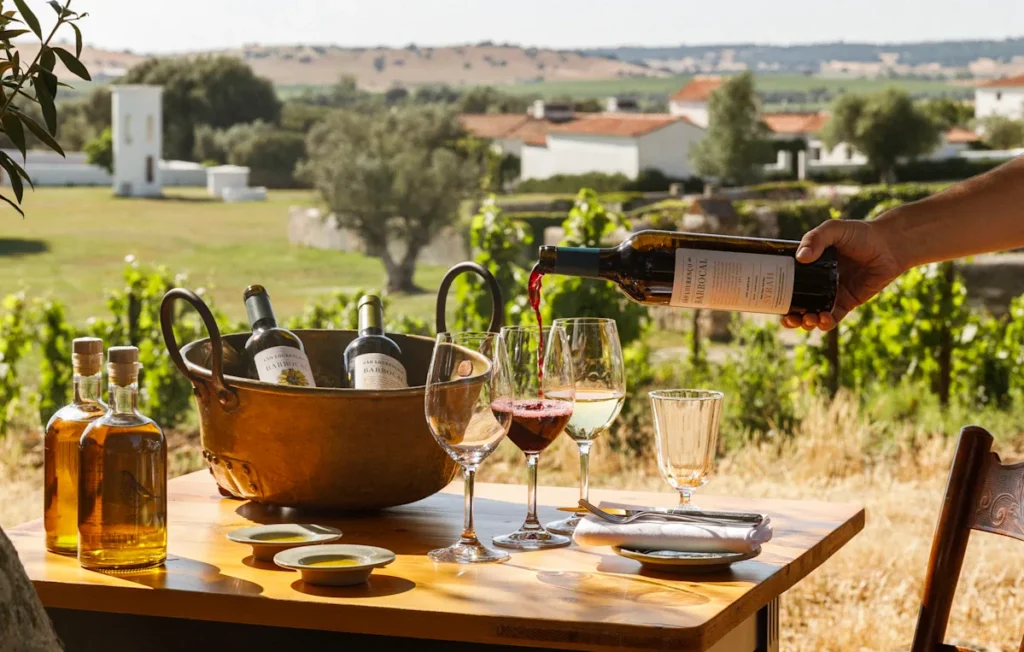
There is a secret corner of Portugal that most American travelers still overlook. In a country that draws visitors to golden beaches and medieval cities, few make the journey inland to Alentejo, Europe’s quiet agricultural heart. Two hours from Lisbon, tucked into 780 hectares of olive groves, wildflower meadows and weathered granite formations, sits , a restored 19th century farm estate that feels like Portugal’s gentlest revelation.

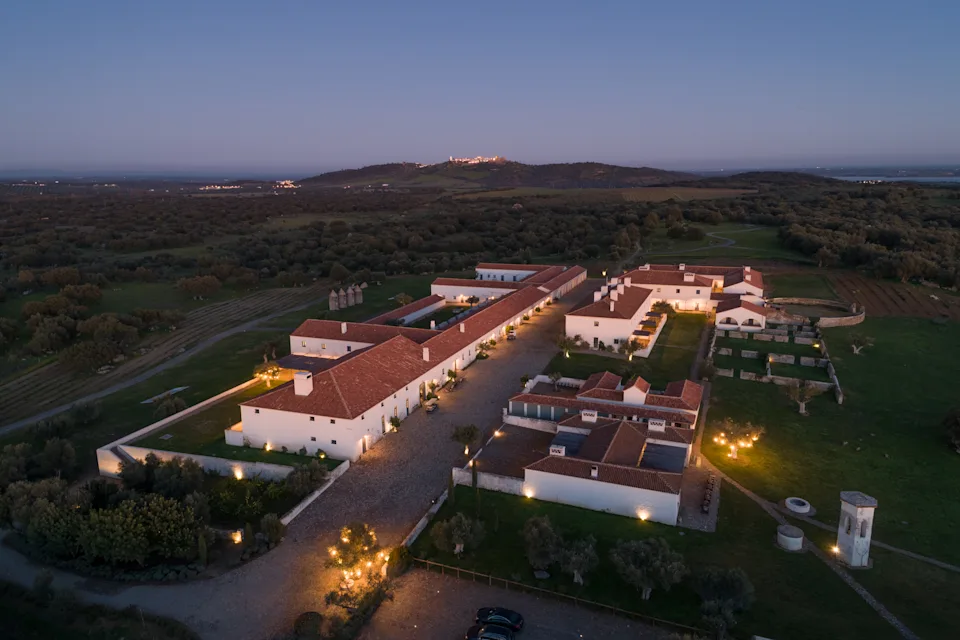
Evening aerial view of São Lourenço do Barrocal
(Ricardo Bravo // São Lourenço do Barrocal)
The story begins more than two hundred years ago, when this was a working family farm and rural micro-village. You see remnants of that village the moment you arrive: a long cobbled street, whitewashed buildings, low stone barns and outbuildings. It all fell into decline following Portugal’s political turmoil in the 1970s, when farms were seized and agriculture collapsed across Alentejo.
The eighth generation owner, José António Uva, returned as an adult and was determined to bring his family land back to life. Fourteen years of careful restoration later, with the help of archaeologists, architects and local craftspeople, the estate reopened as a quiet five star escape in 2016.
It is now part of and the Mr. & Mrs. Smith portfolio, yet it never feels overly polished or resort like. It feels lived in, rooted and respectfully revived.

São Lourenço do Barrocal estate
(Ash James // São Lourenço do Barrocal)
Arriving feels like exhaling
Our driver took us from Lisbon without encountering much traffic. We watched the landscape open into rolling plains and cork forests. Already, it felt like we had traveled much farther than we had. (The hotel can easily arrange a transfer for you, too, if you would rather not drive.)
Check in led us directly to the hotel bar for a light lunch. We ordered what would become the defining dish of the trip, a prego sandwich. For anyone unfamiliar, a prego is Portugal’s casual steak on bread lunch staple, usually tender beef marinated with garlic and served on soft pão. Look, I live in Lisbon, so I eat a lot of these. But wow. Here, it is prepared with the same care they give their tasting menus. We loved it so much we ordered it again two days later before our departure. It sounds simple, yet it was astonishingly good. We still talk about it, weeks later.

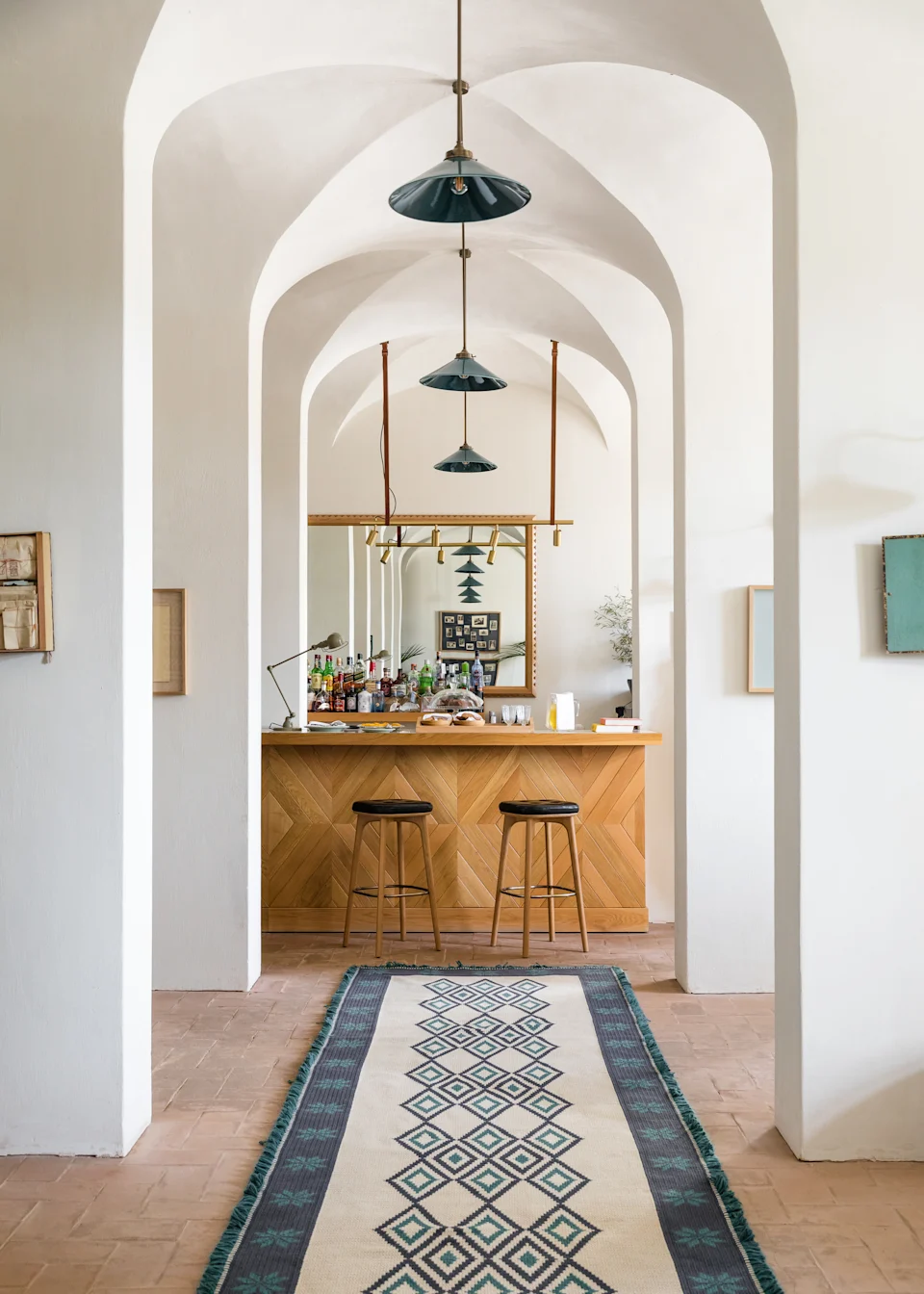
São Lourenço do Barrocal hotel lobby bar
(Ash James // São Lourenço do Barrocal)
A landscape older than history
The estate spreads across more than a thousand acres, and we spent our first afternoon riding in a jeep with Nuno, Barrocal’s on site biologist and expert on the area’s wildlife and native plants. He introduced us to olive trees that are older than most civilizations, including some believed to be thousands of years old. Many are knotted and wide, almost sculptural in their posture. I joked they looked cinematic, as if a film crew had staged them, but this is simply what Alentejo has always looked like.

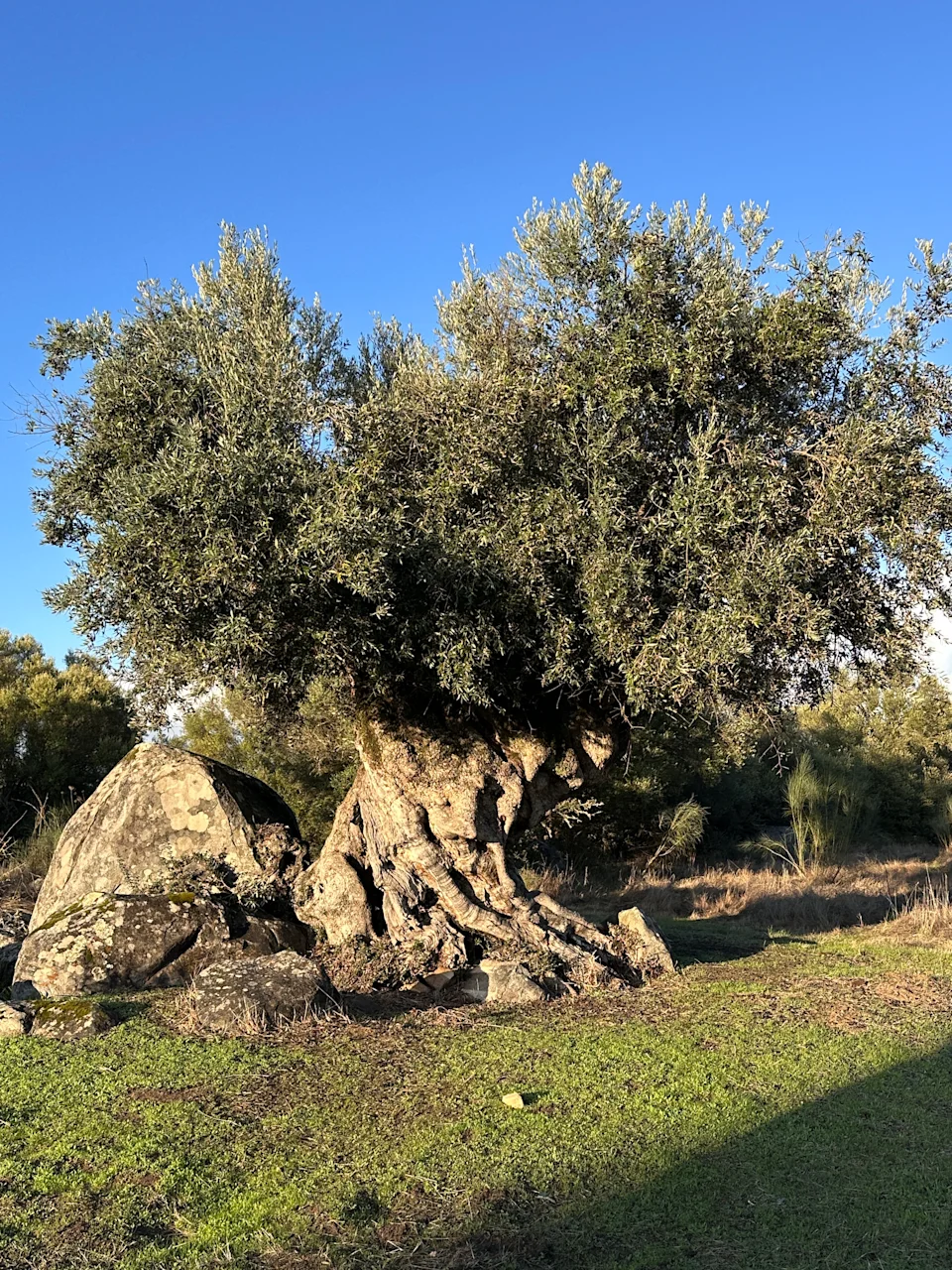
2,000-year old olive tree and barrocal
(Adam Hurly)
There are wild olives, small and sharp in flavor, and regional varieties such as Galega and Bical. We tasted several olive oils in a guided session, comparing single varietals and blends in the same way one might taste wine. It completely reframed something we use so casually in our kitchens at home.
Also, it should be noted: “Barrocal” in the property name refers to the region’s striking granite formations, which appear across the landscape as massive boulders and ancient standing stones. These natural outcrops are called barrocals, many of which predate recorded history, and several prehistoric menhirs and dolmens remain on the grounds.
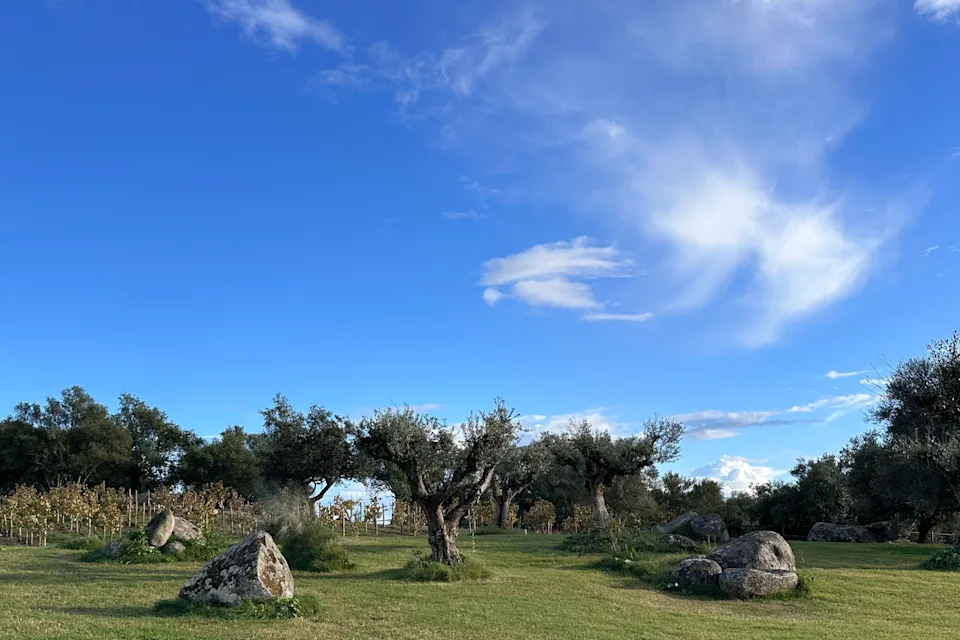
Barrocals in front of olive trees and vineyards.
(Adam Hurly)
Wine, olive oil and the pleasure of bringing Portugal home
Alentejo is developing a strong reputation for wine, and Barrocal plays a quiet role in that conversation. Their winery produces single estate wines under the DOC designation, crafted with regional grapes under the direction of award winning winemaker Susana Esteban.
There is a small shop on property selling wines, olives and olive oils, along with local crafts and seasonal produce. These make far better souvenirs than any ceramic magnet from Lisbon. We brought several bottles home to open on special occasions, knowing precisely where each grape was grown.
The main restaurant highlights traditional Portuguese flavors using estate olive oil, vegetables, seasonal produce and regional meats, while the open-air Hortelão provides a more relaxed, garden-side setting in warmer months. (Though we at outside comfortably in late November.) Both emphasize simple preparations and hyper-local sourcing, and estate wines pair naturally with nearly every dish whether you prefer slower dinners or easy outdoor lunches.

Hotel restaurant at São Lourenço do Barrocal
(Ash James // São Lourenço do Barrocal)
The joy of slowness
One of the most remarkable aspects of staying here is how gently the days pass. You might watch sunrise over the fields at breakfast, noticing dew on the grass outside the restaurant windows. You might notice the way dusk softens the cobbled lane, or how the rooms catch the late afternoon light.
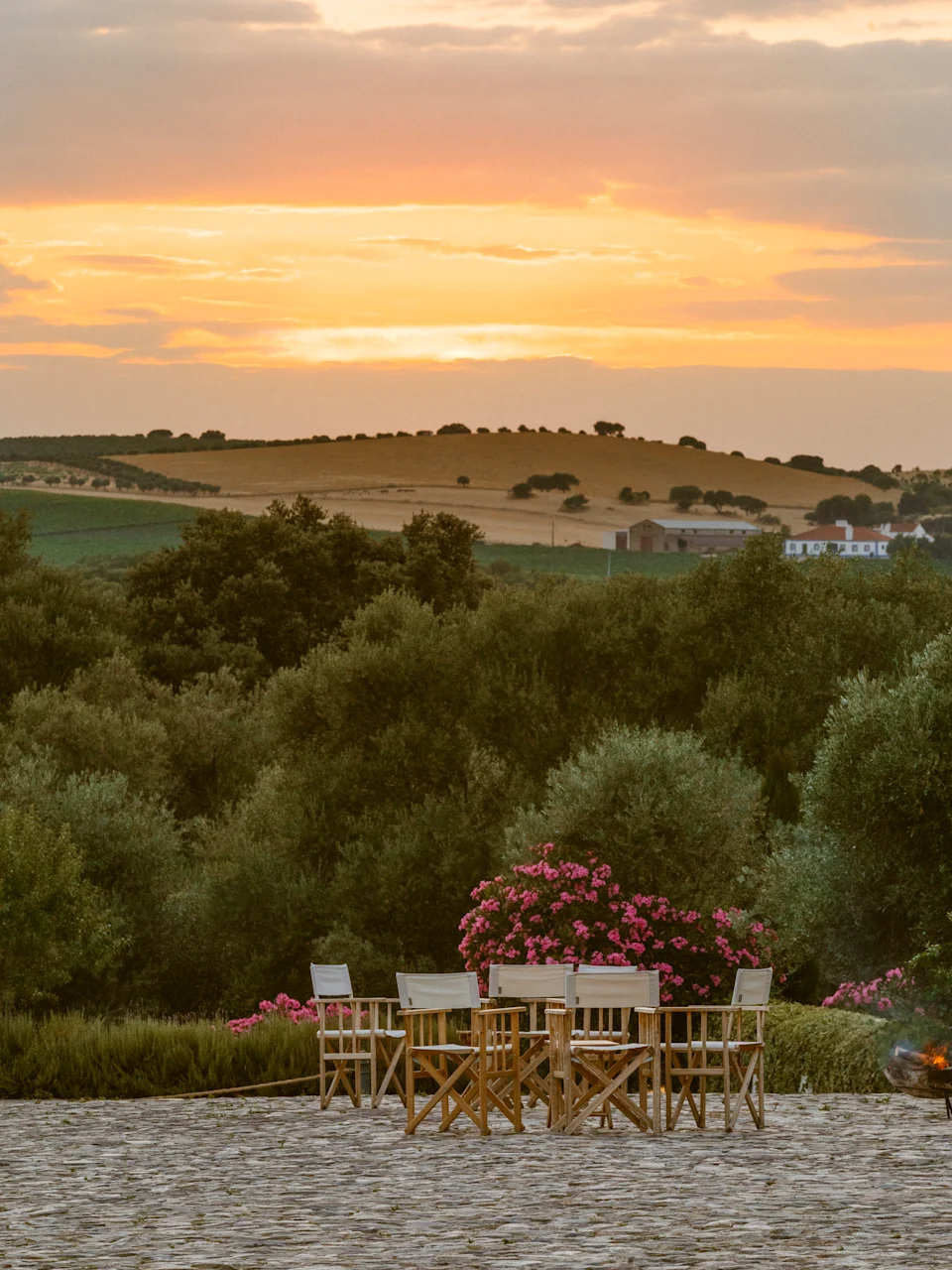
São Lourenço do Barrocal sunset
(Ash James // São Lourenço do Barrocal)
All of the accommodations, even the larger cottages, feel zenful—and simultaneously spacious but cozy in ways that encourage rest rather than design-drowned spectacle. It all feels authentic.

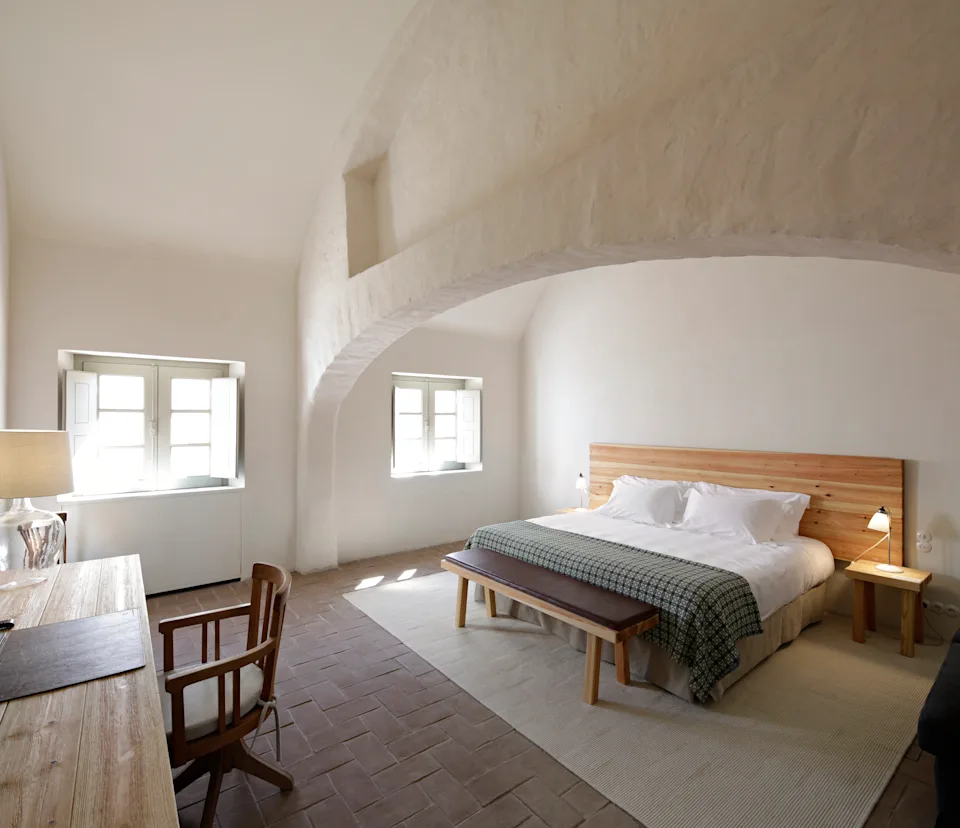
São Lourenço do Barrocal accommodations
(Nelson Garrido // São Lourenço do Barrocal)
We spent long stretches simply walking the trails, finding wild herbs and tasting edible plants straight from the ground; that was supervised by Nuno, the biologist, of course. He will point out which are safe. You might even see an occasional wild horse, since many roam the property. (Their ancestors were set free generations ago when the property once shuttered, and now those descendents still roam nearby; the property is gated though, so the only horses (and donkeys) on site are all accustomed to visitors and will happily snack from your hands. There was a newborn donkey named Jeremias that we were lucky to meet. One young horse in particular, Vanilla, became a favorite. (She liked that we fed her berries and gave her butt scratches.)

This chocolatey pony is actually named Vanilla. She loves berries and butt rubs.
(Adam Hurly)
The estate offers gentle horseback rides and guided walks to those aforementioned prehistoric menhirs and dolmens scattered throughout the estate. It is startling to look at a seven thousand year old granite pillar standing upright in the soil and remember that people were worshipping and farming here thousands of years before Portugal existed as a country.
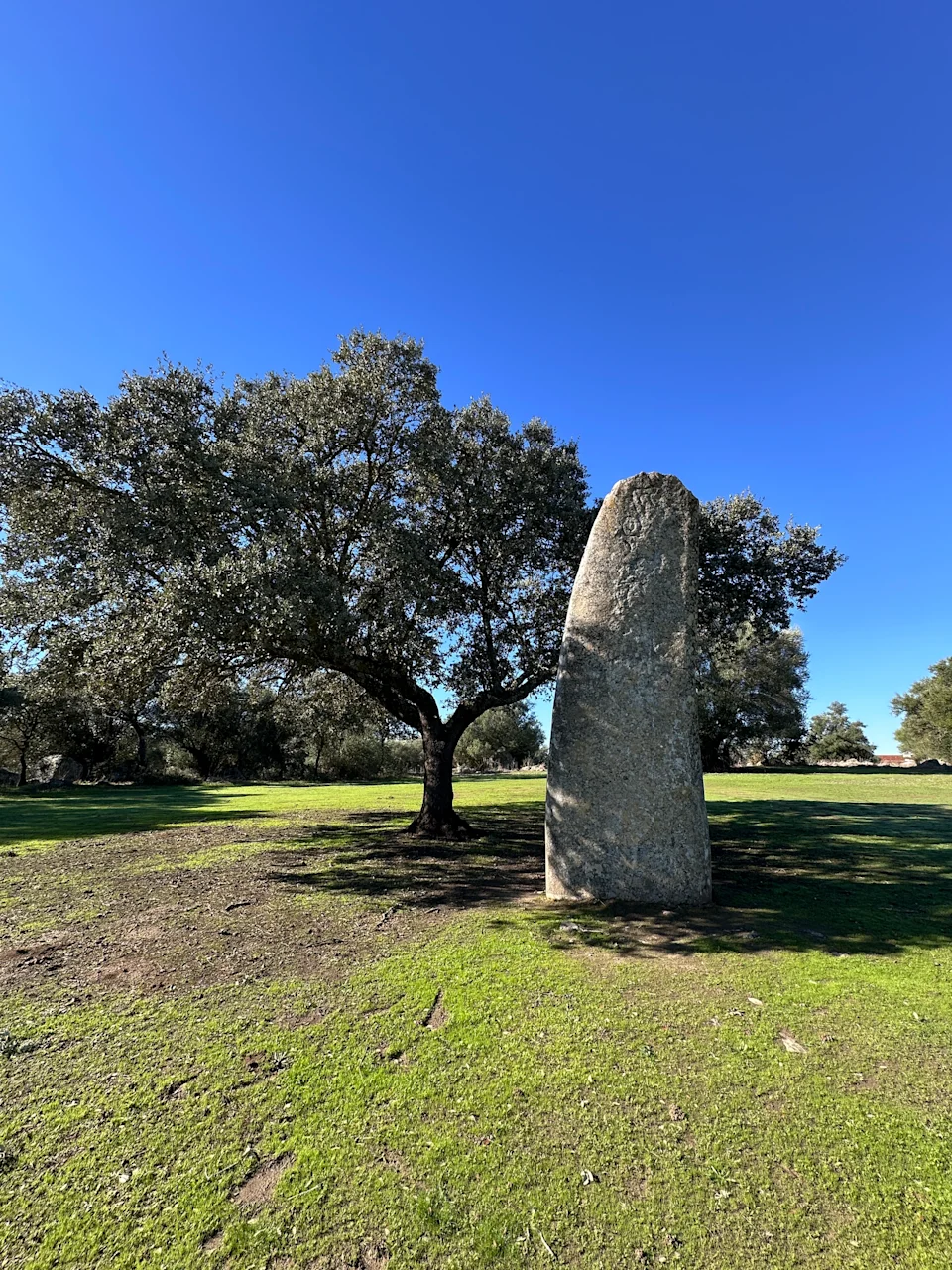
Many thousands of years old, this monolith was found in the mud and re-erected as it once would have stood.
(Adam Hurly)
As for walking around the greater property, outside those gates: It felt like a safari, down to the examination of all the flora and fauna… I found myself scanning the horizon for lions and rhinos, as if I was on an actual safari. (There are no such beats, except the wild horses and nocturnal boars, all of which will avoid you.)
Slow spa days, and starry nights
After dark, the sky becomes the estate’s most cinematic feature. This region belongs to the Alqueva Dark Sky Reserve, a designation with virtually zero light pollution. You can see the Milky Way in perfect clarity, and sometimes you will catch a bonfire or telescope viewing on the grounds. Even stepping outside your room is enough, because stars feel close and deliberate.

Starry Nights at São Lourenço do Barrocal
(Nelson Garrido // São Lourenço do Barrocal)
The spa uses Susanne Kaufmann products in room and in its peaceful treatment spaces (as well as olive oil, but of course!). The Barrocal signature massage was deeply restful. I likely snored since it rounded out what was already an extremely restorative trip. We slipped away t the sauna in the evening, too, for a good toxin-purge. We slept deeply, ate well, and genuinely forgot any responsibility we left in Lisbon.

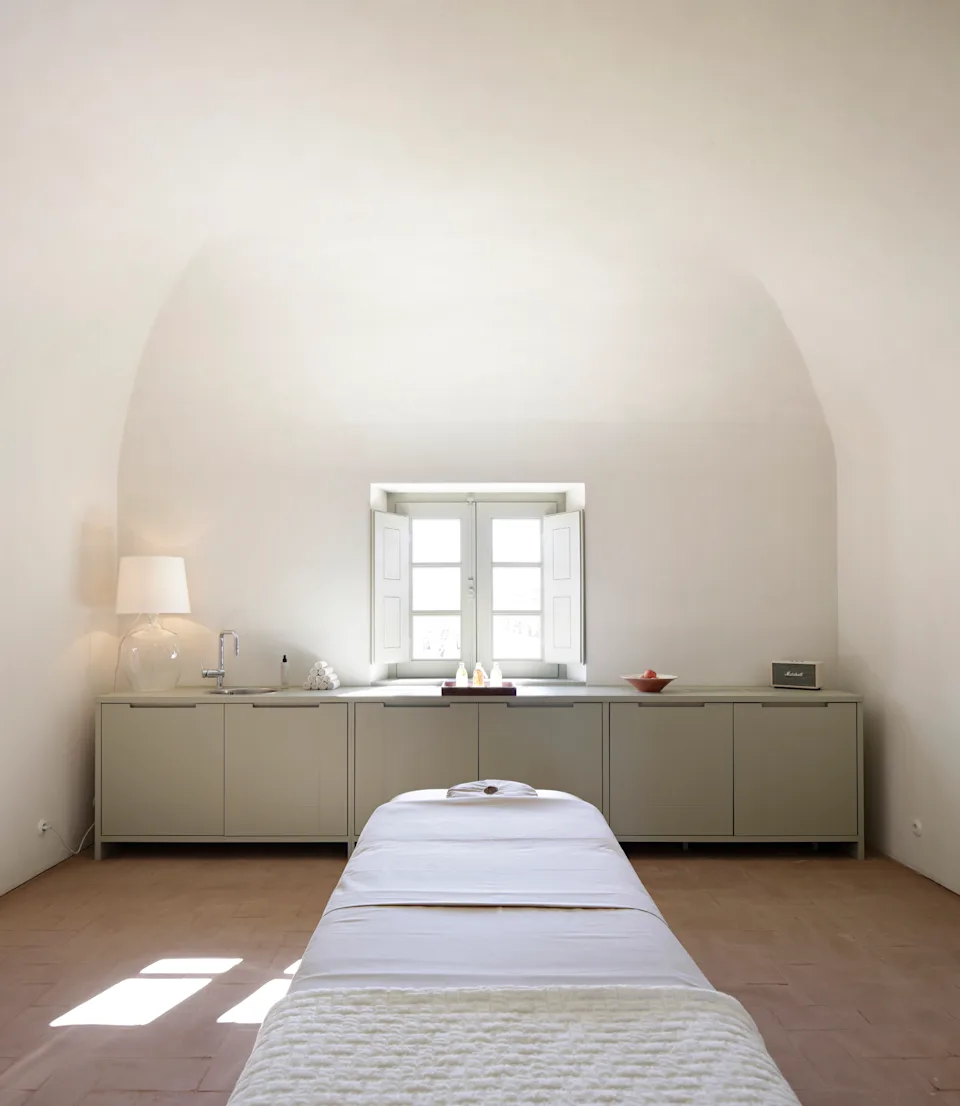
The spa at São Lourenço do Barrocal
(Nelson Garrido // São Lourenço do Barrocal)
Sprawling views off property
As for the surrounding region, right there on Spain’s border, there is not a long list of things to check off. Most everything you want is here, such as walking paths, pools, gardens, horses, olive groves, wine tastings and slow meals. You will not feel pressured to create an itinerary.
That said, nearby Monsaraz is a lovely diversion perched on a rocky hilltop overlooking Spain. It’s a medieval walled-in town, with a castle and panoramic view into Spain, and it certainly merits a short drive-by visit.

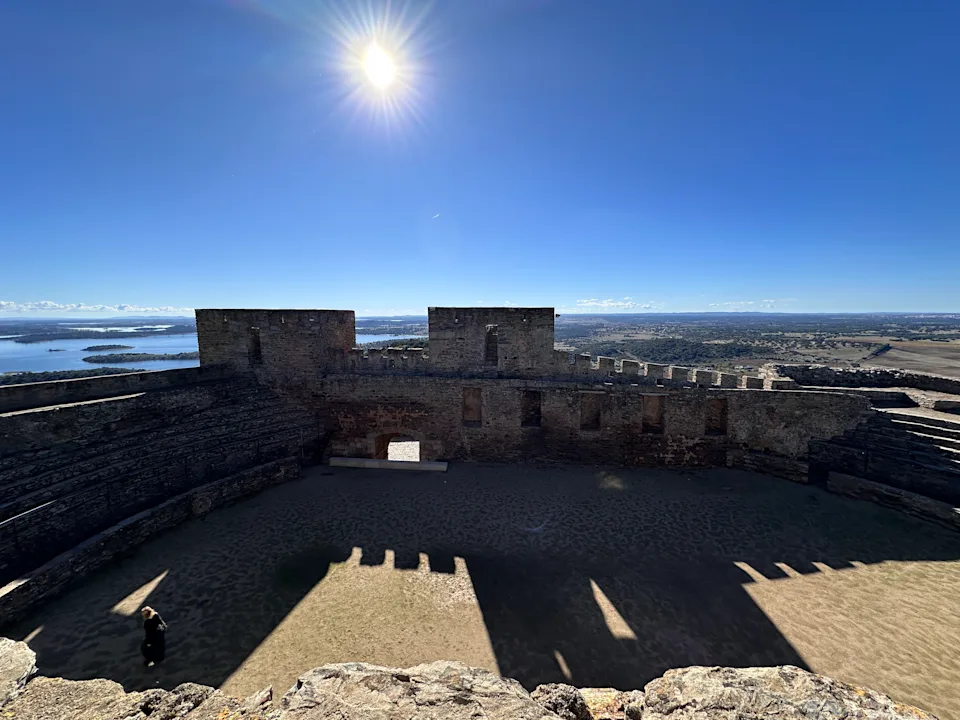
Monsaraz castle overlook
(Adam Hurly)
Portugal’s most rewarding inland journey
For Americans accustomed to Portugal’s coastal glamour, Barrocal represents something quieter and deeply Portuguese. It is not a resort created for international tourism. It is a centuries old family estate that survived political upheaval, declined, and has now been restored with more integrity than glamour.
If you travel in shoulder season, rates can be surprisingly accessible. And because so much of the experience is included via the recreation (gardens, swimming, saunas, and trails and olive groves and stargazing), it becomes a remarkably rewarding investment.


The pool at São Lourenço do Barrocal
(Ash James // São Lourenço do Barrocal)
As residents of Portugal, we often remind visitors that this small country cannot export most of what it produces, which means the best of it, including wine and olive oil and vegetables and cheeses, is consumed here. That alone makes meals in Portugal feel revelatory. It feels especially so at São Lourenço do Barrocal, where everything around you, from garden to glass, grows beneath your feet.
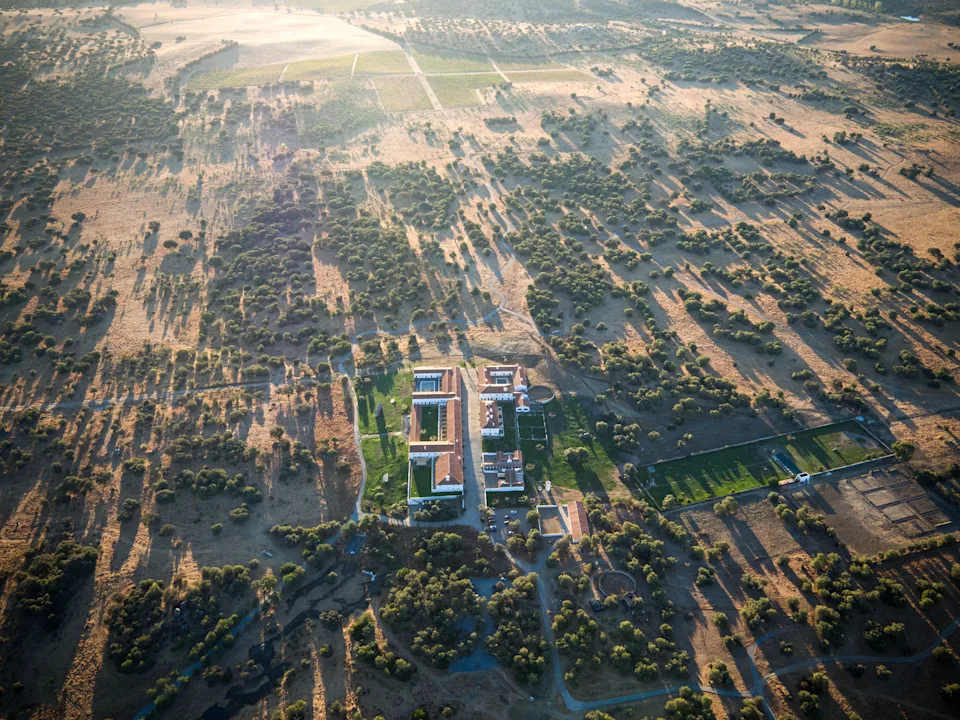
Aerial view of São Lourenço do Barrocal
(Nelson Garrido // São Lourenço do Barrocal)
I hope you’ll consider this special place for a future visit to Portugal. While everyone else pads the southern shores, or shuttles between Lisbon and Porto, you can escape inland, with everything homegrown and world class: the wine, the spa treatments, the accomms, the olive oil, the fresh food (the prego!!) and the warm hospitality. Perfeito.
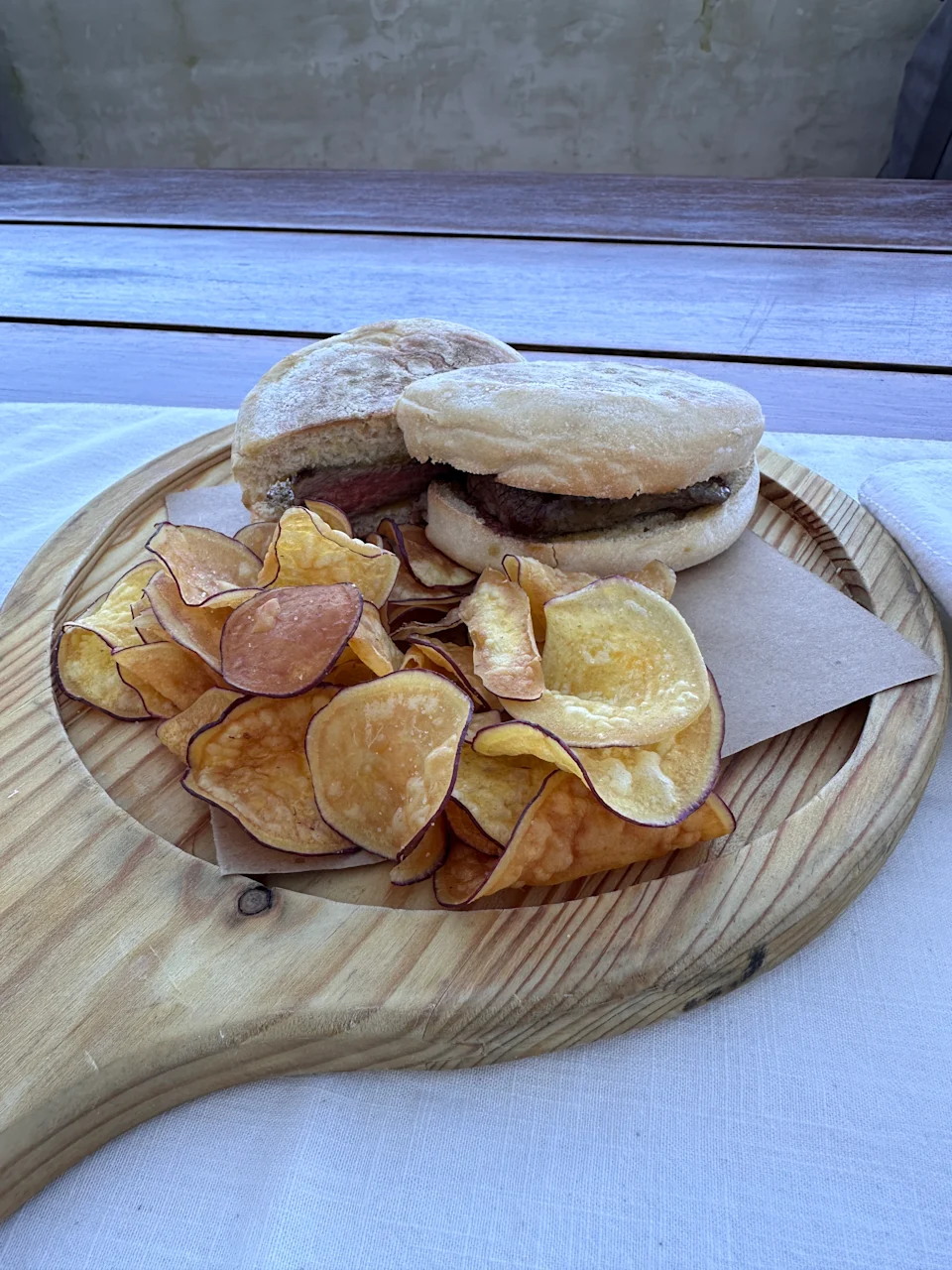
For good measure… the onsite prego sandwich from the hotel bar. (Now infamous in our household.)
(Adam Hurly)