

Sonoma County, California, is a place where country roads wind past working farms, vineyards, orchards, and small towns. Long before wine became its calling card, the region was an agricultural powerhouse, producing apples, prunes, hops, dairy products, and enough eggs to earn Petaluma the nickname “Egg Basket of the World.”
Vintage souvenir photo postcard depicting a parade float in Petaluma California with a sign reading ‘Petaluma The World’s Egg Basket, 4,000,000 Petaluma hens lay 450,000,000 eggs annually valued at $13,500,000’ (Photo by Nextrecord Archives/Getty Images).
That farming heritage remains part of Sonoma County’s appeal, giving visitors another reason to explore beyond the vineyards. Farmers markets have long been part of life’s weekly agenda, but there’s good reason to take the scenic route outside of town: farm stands.
A farm stand offers something different. Instead of joining the Saturday morning crowds to stock up on produce, visitors can head into the countryside, discover a working farm, and buy something grown just beyond the door. At some farms, they can even pick it themselves. It’s a simple pleasure, and one that feels particularly at home in Sonoma County.
Sign for Sonoma County Farm Trails, Sonoma, California, June, 2025. (Photo by Smith Collection/Gado/Getty Images)
This year, partners and FlyDog Farm Co-Founders Grace Lucero and Bonnie Kline opened a farm stand after purchasing the land just two years ago. They transformed a former vineyard into a 10‑acre regenerative agriculture project with a diverse, pollinator‑friendly landscape.
Advertisement
Advertisement
“We were both raised around farmland,” Lucero said. “We were concerned about the effects of so much single-crop vineyard farming on the soil. Rather than get on our high horse and tell other people how to farm, we decided we would be an example.”
FlyDog Farm, Healdsburg, California
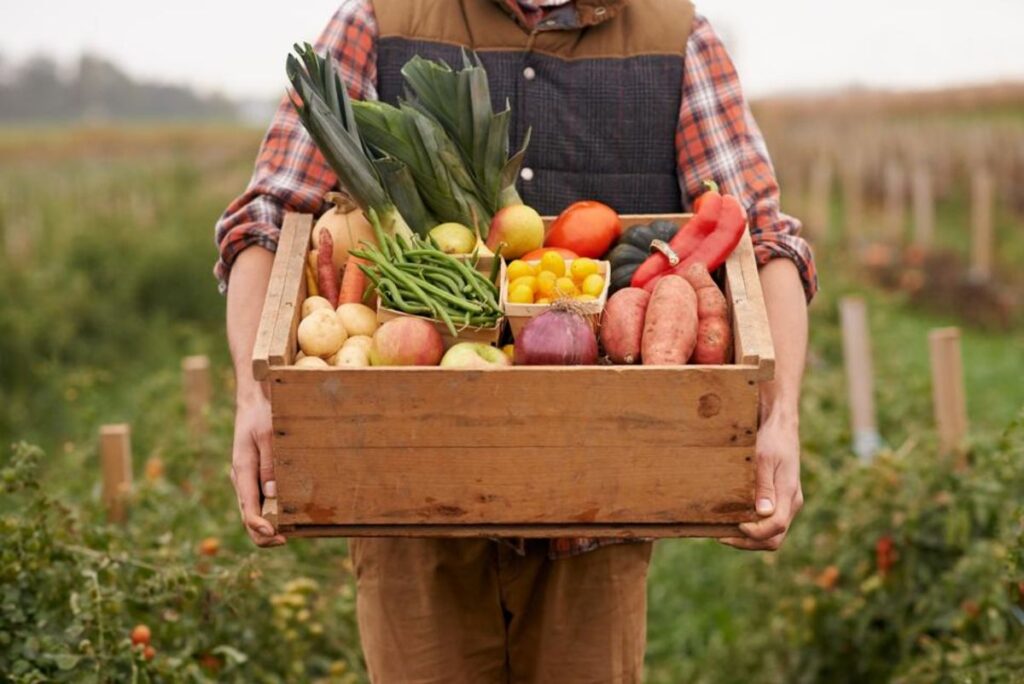
FlyDog takes a different approach to Community Supported Agriculture (CSA). Through its Harvest Collective, members visit the farm stand each week and select their own produce rather than receiving a predetermined box. “We didn’t want to hand people a preset box and say, ‘here’s what you get.’ Some people don’t like kale or other vegetables. People can come and choose what they want from the stand—spinach, kale, broccoli, cauliflower, cabbage, and so forth.”
Lucero explained how they farm. “We don’t till, and we don’t spray anything on our plants. We did have to till when we first got the property because it had been vineyard land for so long. We’re focused on rebuilding the soil.”
Farm Stands Offer More Than Fresh Produce
For Lucero and Kline, the farm stand is only the beginning. FlyDog will eventually (hopefully, next year) offer lifestyle events, too.
Advertisement
Advertisement
“Right now, we’re zoned for twelve events a year, but we can also do smaller dinners and experiences. Education will be a big part of it. We probably will offer some farm stays, where someone could spend a weekend or perhaps a week and experience life here,” Lucero added.
“We just got permits for a barn, and construction should start early next year. By Christmas next year, we could have a great Christmas party.”
Sign showing direction to farmstand.
Farm Stands And Sonoma County’s Agricultural Future
That renewed interest in farm-based experiences comes at a consequential moment for Sonoma County agriculture. In June 2026, county supervisors approved a resolution acknowledging the pressures facing local farmers and identifying farm stands, farm stays, and educational experiences as ways to strengthen agricultural resilience. Meanwhile, Sonoma County Farm Trails provides visitors with a map and guide to explore working farms, U-pick harvests, and other rural experiences.
Sign for Sonoma County Farm Trails, Sonoma, California, June, 2025. (Photo by Smith Collection/Gado/Getty Images)
This is all taking place in a county where grapes are the top crop. “I keep joking that eventually all those directional signs pointing toward wineries will point toward farms,” Lucero said.
Advertisement
Advertisement
Still, she’s clear that farm stands don’t compete with vineyards; they complement the broader Sonoma County lifestyle. “You can drink wine, visit farm stands, kayak the river, go to the lake, hike, or bike. There’s so much to do.”
FlyDog Farm will continue through Thanksgiving 2026, offering fall and winter vegetables before closing for the holidays. Check the FlyDog Farm website and Instagram for up-to-date days and hours.
This article was originally published on Forbes.com
Source link