

Developing bigger pectoral muscles, or “pecs,” is one of the most common goals for anyone focused on building upper-body strength or improving their physique. After all, a strong, well-developed chest not only enhances your silhouette but also supports everyday movement, athletic performance and better health.
“Improving strength of the pectoral muscles has been associated with greater upper body functional capacity and, by nature of increasing resistance training, improvements in heart health, including decreased adverse cardiovascular events and improving all-cause mortality,” says Dr. Chantal Nguyen, chief resident at Stanford Medicine’s Physical Medicine and Rehabilitation Clinic. “Resistance training can also improve bone health and strength, which can prevent or decrease the rate of osteoporosis.”
But to gain these benefits and grow your chest muscles, it’s helpful to understand how the pecs work, which exercises are most effective and how much recovery your body actually needs to adapt and grow between workouts. Here’s what to know.
What are pectoral muscles?
Pectoral muscles consist of a group of muscles on the front of the upper torso that play a major role in pushing movements and overall upper-body strength.
The most prominent of these is the pectoralis major, explains Sean Sewell, a certified personal trainer and founder of Colorado Personal Fitness in Denver. The pectoralis major runs from the collarbone and breastbone to the upper arm and is responsible for bringing the arms forward, drawing them toward the body’s midline and rotating them inward. Because of its size and position, it’s the muscle that gives the chest its overall shape, definition and fullness.
The muscle is also often described as having different regions, or heads, Sewell explains. The upper, or clavicular, portion contributes more to the appearance of the upper chest, while the larger lower, or sternocostal, portion makes up most of the chest’s mass.
Beneath the pectoralis major lies the pectoralis minor, “a smaller, triangular muscle,” says Nguyen. It attaches to the shoulder blade and, while it does not add much visible size, it plays an important role in stabilizing the shoulder and guiding proper movement.
Good to know: A beginner’s guide to exercising at home, according to fitness experts
How to get a bigger chest
One advantage of chest exercise is that “the chest muscles respond well to training and can become very strong,” says Sewell.
Doing so requires stimulating the muscles in a way that encourages hypertrophy, or muscle growth. The most effective approach combines resistance training, smart exercise selection and gradual progression of weight or number of reps over time.
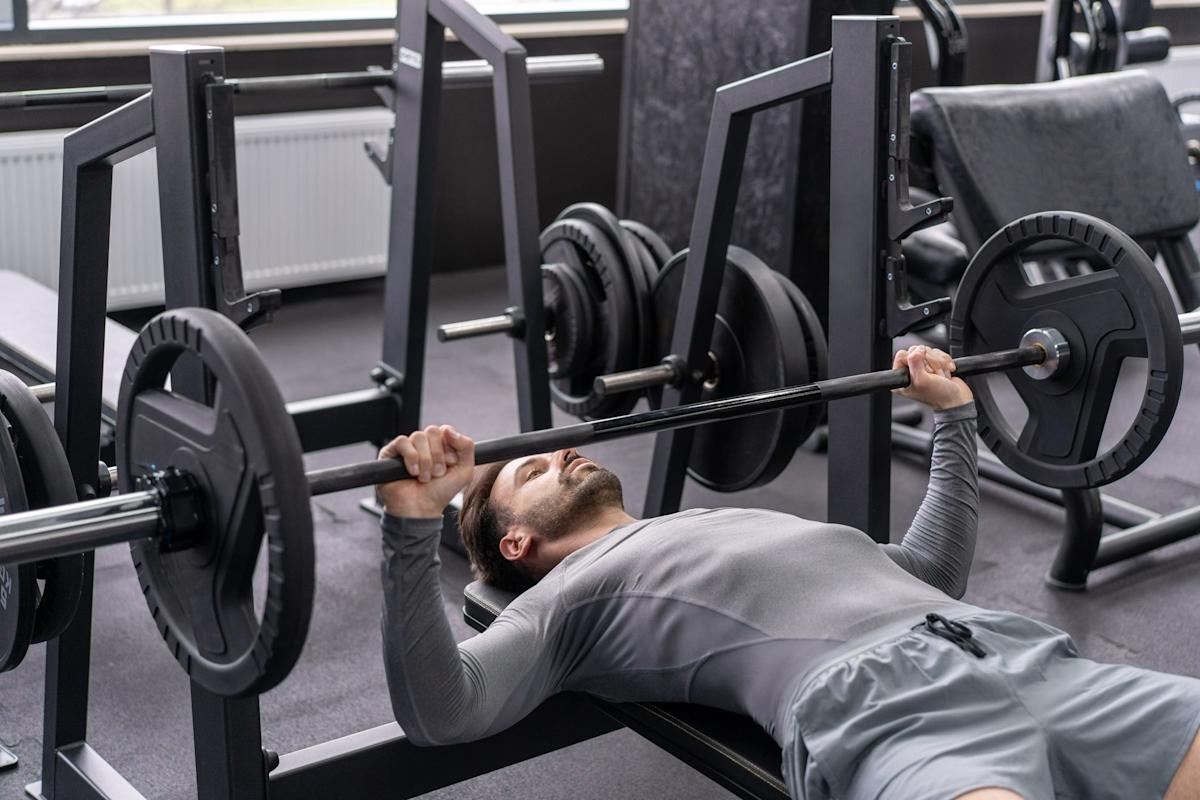
Chest workouts should include both compound and isolation exercises. Compound movements, such as the bench press, work the chest along with supporting muscles like the shoulders and triceps. “To perform a flat bench press, lay on your back with your feet flat on the ground, hold the barbell slightly wider than shoulder-width apart, lower the barbell slowly toward your chest while inhaling, then push the barbell upwards with full range of motion while exhaling,” explains Nguyen.
This lift has the benefit of allowing you to use heavier weights and of creating a progressive growth pattern. Nguyen notes that flat bench presses are effective for building your middle chest, incline presses emphasize the upper chest, and decline presses and dips target the lower chest muscle fibers. Using multiple pressing angles ensures all areas of the pectoralis major are challenged and built equally.
Isolation exercises are another option and can complement pressing movements by emphasizing the chest’s ability to bring the arms across the body. These include cable crossovers, dumbbell flies, overhead press variations and TRX one-arm chest presses, explains Sewell. They are performed either with dumbbell free weights or by using a cable machine and are performed by moving the arms from a wide position toward the body’s midline, squeezing the chest at the top and controlling the movement on the way back.
These exercises create strong contractions and deep stretches in the pecs, both of which are important for muscle development. Push-ups are another effective option, especially when hand placement or body angle is adjusted to increase chest involvement.
Push-ups can get you a chiseled chest. More on what muscles push-ups work
How often should pectoral muscles be worked?
When performing any of these exercises, “sets of eight to 12 reps for three to four rounds yield great results,” says Sewell. When doing so, he says it’s important to remember the role progressive overload has. This means gradually making it more challenging by lifting heavier weights, doing more repetitions, adding sets or slowing each repetition to increase time under tension. Beginners generally grow with less volume, while advanced lifters often need more to keep progressing.
Proper form and a full range of motion also matter. “People often go wrong by not learning how to properly contract the chest muscles and the contributing stabilizers while lifting,” says Sewell.
And recovery is just as important as training. Along with planning for rest days, recovery means getting adequate sleep, managing stress, improving or maintaining sufficient protein intake and prioritizing balanced nutrition so muscle fibers can repair and rebuild. Nguyen also recommends stretching before workouts and rotating exercises, which can improve joint mobility, reduce stiffness, prevent overuse injuries and help avoid training plateaus.
“And don’t train your chest in isolation,” she adds. Training your back and other opposing muscle groups alongside your pecs helps maintain alignment, improves posture, lowers injury risk and can make your chest look stronger and be more defined. “Build your workouts around balance,” Nguyen says, “so one muscle group doesn’t overpower another.”
This article originally appeared on USA TODAY: How to build chest muscles, according to exercise professionals