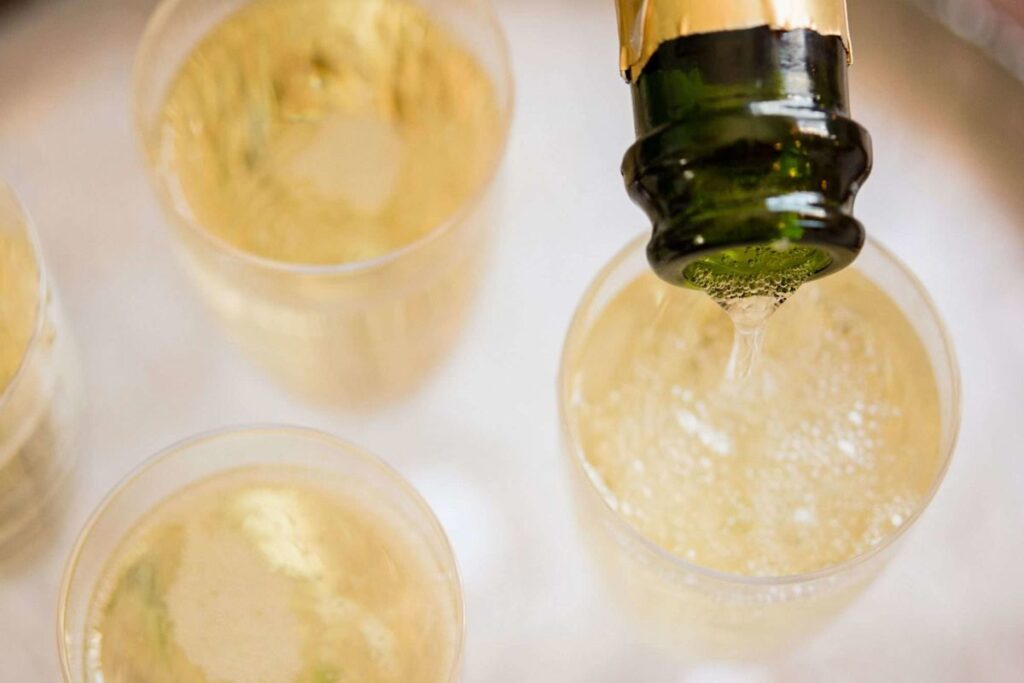
Popping a bottle of bubbly can make any experience more festive. Whether you’re toasting at a wedding, ringing in the New Year, or just enjoying mimosas at brunch with friends, sparkling wine can be a key part of special occasions.
But while many people use the terms interchangeably, Champagne and sparkling wine aren’t actually the same thing. In fact, Champagne is sparkling wine, but not every bottle of sparkling wine is Champagne.
Here’s what separates Champagne from other types of sparkling wines, and how to choose what to buy for your party.
What Is Sparkling Wine?
Sparkling wine is a broad category that refers to any wine that contains bubbles, regardless of where it’s made. Those bubbles are created when carbon dioxide becomes trapped during fermentation, giving sparkling wine its signature effervescent touch.
Sparkling wines are produced all over the world, using a variety of grapes and production methods. Some of the most popular types include Prosecco, cava, American sparkling wines, and more. Each has its own personality—some are light and fruity, while others are rich and complex. Some even use the same production method used to create Champagne (one type of sparkling wine), while others use faster, more economical methods.

What Makes Champagne Unique?
Champagne is a specific type of sparkling wine produced exclusively in the Champagne region of France. This region’s cool climate, chalky soil, and centuries of winemaking tradition all contribute to the distinctive style Champagne is known for today. To be labeled Champagne, the wine must:
-
Be produced in the Champagne region of France
-
Follow strict production regulations
-
Use approved grape varieties (the three primary grapes used are Chardonnay, Pinot Noir, and Pinot Meunier)
-
Undergo a secondary fermentation inside the bottle
These rules help ensure consistency and preserve the reputation of one of the world’s most famous wine regions.
How Champagne Gets Its Bubbles
One reason Champagne is considered such a premium product is the amount of work and time involved in making it. After the base wine is produced, a second fermentation takes place directly inside each bottle. During this process, yeast consumes additional sugar and produces carbon dioxide, creating the bubbles naturally.
The wine is then aged, developing Champagne’s signature nutty, toasty flavors.
Sparkling Wine Vs. Champagne
While it can vary based on the type, here are the common differences between sparkling wines and Champagne:
-
Flavor: Champagne is known for its crisp acidity, and toasty, yeasty complexity, while other sparkling wines can range from fruity and floral to rich and complex.
-
Production method: Champagne is made using a secondary fermentation in the bottle, while other sparkling wines use a tank fermentation process that creates bubbles more efficiently at a lower cost.
-
Region: Champagne comes from Champagne, France, while sparkling wine can be made anywhere.
Why Champagne Typically Costs More
Champagne usually has a higher price tag than sparkling wines, thanks to the strict production, longer aging time, and high demand for the product. This doesn’t necessarily make it better than other varieties of sparkling wines, but it does reflect the cost of production. Its reputation for excellence, long history, and perceived luxury make it a more premium product.
When to Choose Champagne Vs. Sparkling Wine
The good news is that there’s no wrong choice when it comes to what type of sparkling wine you choose. It often comes down to budget. Champagne is a wonderful choice for celebrating big moments, milestone events, formal occasions, and for gifting. Sparkling wines can be perfect for brunches, casual gatherings, incorporating into cocktails, and more budget-friendly celebrations.
If you don’t mind spending a little more, Champagne is always worth the splurge. But if you’re looking for something fresh, fruity, and affordable, a quality sparkling wine can be just as enjoyable.
Read the original article on Southern Living