Thanksgiving dinner is upon us, and there’s no doubt that in my family and in many of yours, it’s going to be your indulgent meal of the year.
I love everything about rich and creamy mashed potatoes and tons of stuffing with gravy, and I totally always nibble on that crispy turkey skin.
I’ll be honest and say when I go into this meal, i’m not exactly thinking of heart-healthy eating, but my parents are getting older, and I’m trying to be more mindful of what I feed them, at least.
But I recently got the good news that surprisingly, there’s a lot on the traditional Thanksgiving menu that can be good for your heart. Usually, it’s more about how those foods are prepared, and how much of it we’re eating.
I recently interviewed Dr. Brandon Rafison, a cardiologist, longevity specialist and Medical Director of Longevity at SimonMed, over email, and he shared which Thanksgiving foods he’d prioritize for heart health, which he’d enjoy in moderation and how we can make some of our favorite holiday dishes a little healthier without sacrificing flavor.
The 5 Best Thanksgiving Foods for Your Heart
1. Turkey
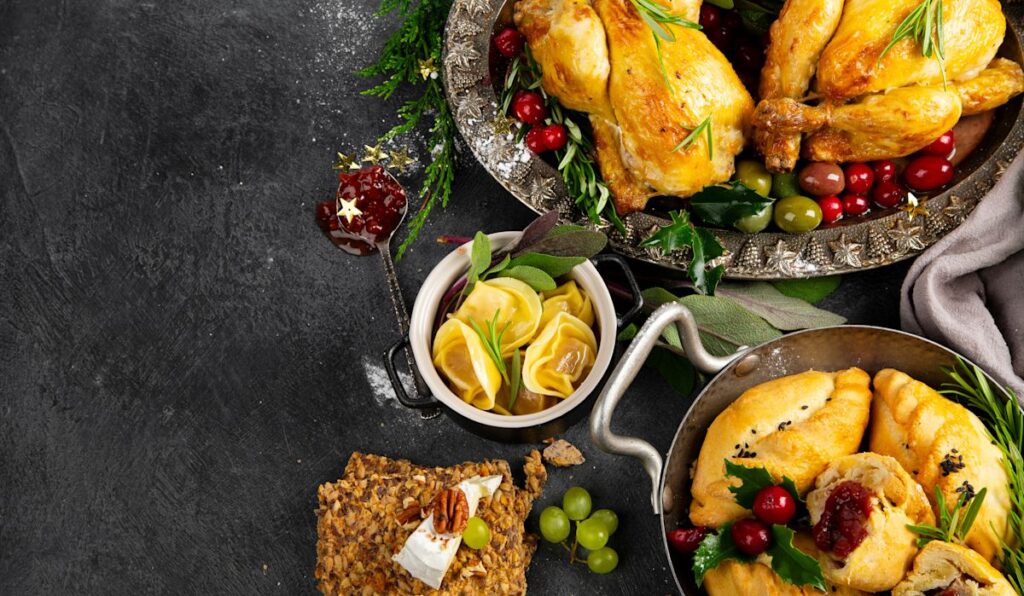
It’s not really Thanksgiving without the turkey, but according to Dr. Rafison’s that’s actually one of the more heart-healthy holiday foods.
“It’s a lean, filling protein with very little effect on blood sugar,” said Rafison in an email. “White meat is leanest, but dark meat has only slightly more fat, so eat whichever you prefer.”
If you’re looking to cut back on fat, removing the turkey skin that I love so much is one easy option. However, keep in mind how the turkey was prepared, if you’re rubbing it down with butter or brining in a bunch of salt, this may become a very different conversation.
2. Brussels Sprouts
Brussels sprouts are my favorite way of incorporating some green into a table laden with beige and brown foods, and it turns out they are a rather good choice.
“Their soluble fiber helps lower LDL cholesterol, and their potassium helps counter sodium’s effect on blood pressure,” said Rafison.
He recommends preparing roasted vegetables with olive oil rather than butter, which is what my family always does anyway. Score one for the Walansky clan!
3. Green Beans
Green beans are loaded with fiber and potassium and also don’t have many calories, so they are another heart-friendly addition.
Of course, you know that it matters if you’re simply prepared green beans versus creating that traditional green bean casserole loaded with creamy canned soup and crispy fried onions. That, too, will change things.
4. Roasted Sweet Potatoes
Sweet potatoes are a big part of Thanksgiving, and while a casserole topped with marshmallows, butter and brown sugar, isn’t going to be the healthiest option, Rafison recommends roasting them with olive oil and cinnamon instead.
You’ll still get some of that familiar sweetness without quite so much added sugar or saturated fat.
5. Cranberries
Cranberries contain polyphenols, which Rafison says support blood vessel health.
Traditional cranberry sauce has a lot of added sugar, but it also has some health benefits to keep in mind.
“Yes, the cranberries still deliver their polyphenols,” said Rafison. “Make it at home so you control the sugar.”
The 5 Worst Thanksgiving Foods for Your Heart
No one is saying to eliminate any of these foods from your holiday menu, but Rafison recommends being mindful of portions.
1. Stuffing
Stuffing is my very favorite Thanksgiving side dish, and I always eat a ton of it, but it’s also the one Rafison would encourage us to eat a little less of, thanks to its combination of refined carbohydrates, butter and salt.
That doesn’t mean you have to give it up entirely. “Use whole-grain bread, add more vegetables like celery, onions and mushrooms, switch to low sodium broth, and cut back on butter,” said Rafison.
2. Dinner Rolls
You may think we’d skip the bread when we’re having all that stuffing, potatoes and other starchy sides, but dinner rolls are a big part of the table. Dinner rolls made with refined flour, particularly when slathered with butter, is not the best plan.
If you’re particularly excited about the stuffing or mashed potatoes, maybe skip that second dinner roll, too.
3. Mashed Potatoes
I love mashed potatoes, especially with gravy. Potatoes themselves aren’t a bad thing, but if you’re adding a ton of butter, cream and salt into this dish, you may want to enjoy in moderation and also make some modifications.
“Swap some of the butter for olive oil and the heavy cream for low-fat milk,” said Rafison. “Keep the portion moderate, because potatoes raise blood sugar quickly.”
4. Pies
Pies are a big part of Thanksgiving, but some of the most delicious ones have lots of added sugar and saturated fat.
However, Rafison isn’t suggesting we skip dessert altogether. In fact, pie is one Thanksgiving food he says not to modify in the name of keeping things healthy.
“A sugar-free, low-fat version satisfies no one, so have a small slice of the real thing,” said Rafison.
5. Candied Sweet Potatoes
While roasted sweet potatoes made Rafison’s list of the most heart-healthy Thanksgiving foods, their candied counterparts are not as blessed.
“The toppings turn a high-fiber vegetable into a concentrated source of sugar and saturated fat,” said Rafison.
It’s a great example of how the preparation of an ingredient can change everything.
How to build a more heart-healthy Thanksgiving plate
Please don’t spend Thanksgiving worrying about everything you shouldn’t eat, but try to pay attention to what you add to your plate.
Rafison recommends filling half your plate with vegetables, a quarter with turkey and reserving the remaining quarter for stuffing or another favorite side dish. If you’re going back for seconds, consider helping yourself to more vegetables.
He also recommends taking a 15- to 20-minute walk after dinner.
But keep in mind what we eat between Thanksgiving and the following Thanksgiving matters a lot more than what we eat on the holiday itself.
“For most people, the year matters far more than the day,” said Rafison. “Heart disease develops over years of habits.”
People with existing heart disease may need to be more cautious, however, as a particularly large meal can put additional strain on the heart. Rafison recommends keeping portions moderate, being mindful of sodium and continuing to take prescribed medications as usual.