Weight loss medication can make it easier to eat less and lose weight, but the number on the scale does not tell the whole story. Weight loss can include fat and lean tissue, which includes muscle. That is one reason strength training deserves a place in a weight loss plan.
The American Diabetes Association recommends that people taking medication for obesity get guidance on adequate protein and muscle strengthening activity to help minimize muscle loss during weight reduction.
That does not mean every person using a GLP 1 medication needs an intense gym routine. A steady plan that trains the major muscle groups, allows for recovery and fits a person’s fitness level is a more useful place to start.
Why strength training matters during weight loss
Resistance training gives muscles a reason to adapt and grow stronger. It can also help people maintain muscle as their body weight changes. In a 2026 randomized trial, adults taking tirzepatide who completed supervised resistance training three times a week lost less lean tissue and gained more strength than participants who did not follow the training program. The exercise group did not lose more total weight, suggesting the potential benefit was in how weight loss affected body composition and strength.
Advertisement
Advertisement
The study used supervised training, so its results do not guarantee the same outcome for everyone. Still, it supports a practical approach: pair medication guided weight loss with regular strength work, rather than relying on weight loss alone.
A simple weekly workout plan
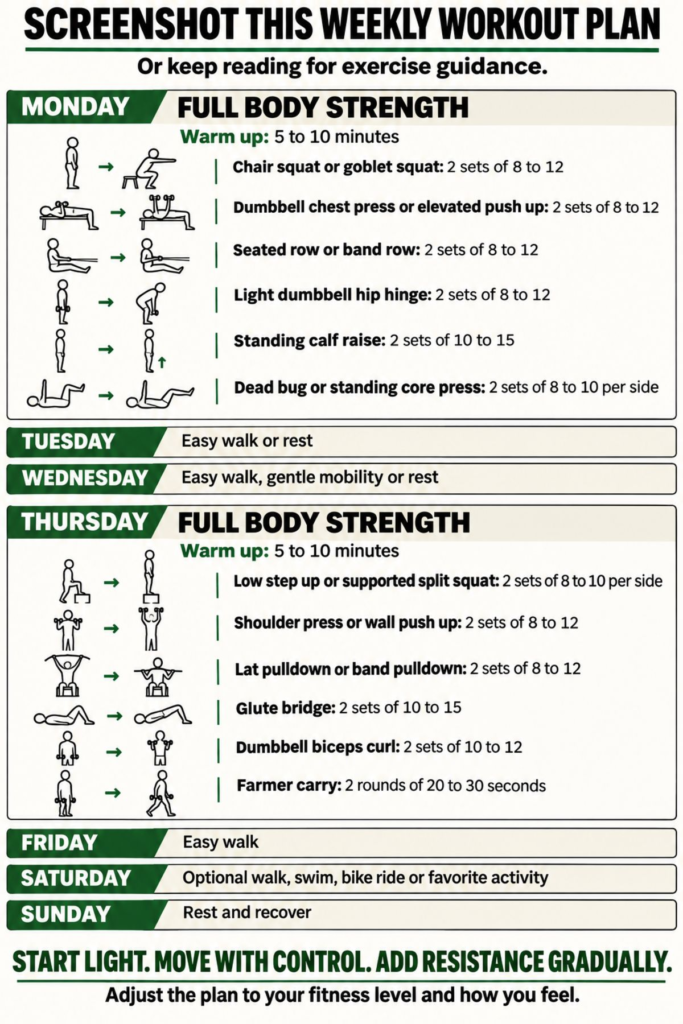
This beginner friendly schedule includes two full body strength sessions, which meets the federal recommendation to do muscle strengthening activities on at least two days each week. Add walking or another comfortable aerobic activity on other days, building toward 150 minutes of moderate activity per week if appropriate for your health and fitness level.
Want a quick reference for the week? Screenshot the workout plan below, then keep reading for guidance on form, recovery and adjusting the routine to your fitness level.

Monday: Full body strength
Start with five to 10 minutes of easy movement, such as walking or cycling. Then complete the following exercises:
Advertisement
Advertisement
• Chair squat or goblet squat: 2 sets of 8 to 12 repetitions
• Dumbbell chest press or elevated push up: 2 sets of 8 to 12 repetitions
• Seated cable row or resistance band row: 2 sets of 8 to 12 repetitions
• Hip hinge with light dumbbells: 2 sets of 8 to 12 repetitions
• Standing calf raise: 2 sets of 10 to 15 repetitions
• Dead bug or standing core press: 2 sets of 8 to 10 repetitions per side
Tuesday: Easy walk or rest
Take a comfortable walk, or rest if you need it. Keep the pace easy enough that you can hold a conversation.
Wednesday: Light activity and mobility
Take a walk, do gentle mobility work, or take a rest day. Choose what feels manageable.
Thursday: Full body strength
Warm up for five to 10 minutes, then complete:
Advertisement
Advertisement
• Step up to a low step or supported split squat: 2 sets of 8 to 10 repetitions per side
• Dumbbell shoulder press or wall push up: 2 sets of 8 to 12 repetitions
• Lat pulldown or resistance band pulldown: 2 sets of 8 to 12 repetitions
• Glute bridge: 2 sets of 10 to 15 repetitions
• Dumbbell biceps curl: 2 sets of 10 to 12 repetitions
• Suitcase carry or light farmer carry: 2 rounds of 20 to 30 seconds
Friday: Easy walk
Take a relaxed walk or another low impact activity.
Saturday: Optional activity
Choose an activity you enjoy, such as walking, swimming, cycling or a recreational sport. Keep it comfortable, especially if you are new to exercise.
Sunday: Rest
Use the day to recover and prepare for the week ahead.
How hard should the workouts feel?
Choose a weight or resistance that lets you complete each repetition with control. At the end of a set, you should feel that you could do a few more repetitions with good form. Stop if you feel sharp pain, dizziness or unusual shortness of breath.
Advertisement
Advertisement
For the first couple of weeks, one or two sets per exercise may be enough. When the routine starts to feel comfortable, gradually add repetitions or a small amount of resistance. There is no need to increase everything at once.
Adjust the plan to how you feel
Some people experience nausea, low appetite, constipation, diarrhea or fatigue while taking GLP 1 medication. On a day when symptoms affect your energy or ability to eat and drink, scale back the workout or rest. If symptoms are persistent, severe or interfere with eating and drinking, contact your prescribing clinician.
It can also help to schedule workouts at a time of day when your energy is more reliable. Keep water available, take breaks as needed and use machines, bands or body weight movements if free weights feel uncomfortable.
Support training with enough food and recovery
A smaller appetite can make it harder to get enough nutrients. Ask your clinician or a registered dietitian how to meet your individual protein and nutrition needs, especially if nausea or early fullness makes meals difficult. The right amount can depend on your body, health history and treatment plan.
Advertisement
Advertisement
Sleep and recovery matter too. Strength training works best when it is consistent and manageable. If you are sore or unusually tired, take another rest day or do an easy walk instead.
Final Thoughts
For many people using GLP 1 medication, two manageable strength workouts each week can be a practical starting point. Train the major muscle groups, progress gradually and adjust based on how you feel. Pairing resistance exercise with clinician guided nutrition and recovery support can help make weight loss a stronger foundation for long term health.
Health note: This article is for general information and is not a personal exercise prescription. Talk with your prescribing clinician before starting or changing an exercise program, particularly if you have a chronic condition, a history of injury or symptoms that affect exercise.

This story was originally published by Men’s Journal on Nov 24, 2026, where it first appeared in the Fitness section. Add Men’s Journal as a Preferred Source by clicking here.