A dip that comes together in ten minutes isn’t a lesser thing. It’s a different category, and the best ones are built around that constraint from the start.
The difference between a fast dip that works and one that doesn’t usually comes down to the base. Cream cheese, sour cream, or a combination gives you something thick, stable, and still presentable after sitting out for an hour or two. Thinner bases tend to separate and go watery at room temperature. When speed is the whole point, thicker is better.
The other thing that separates good fast dips from forgettable ones is how they build flavor. The best ones lean on things that already carry a lot of it: seasoning packets, canned goods, hot sauce, aged cheese. You’re not building flavor from scratch in ten minutes, you’re assembling it from ingredients that already have it. That’s what makes the category work.
Cold dips are faster, and that’s fine.
There’s no rule that a dip has to be heated to be worth serving. A lot of the best ones are cold or room temperature, which means you’re mixing and serving, not waiting for something to heat through. The taco dip with cream cheese is a good example. It’s built on a cream cheese base with taco flavors. Chips, crackers, sliced vegetables, it doesn’t matter much what you pair it with.
For cold dips specifically: pull your cream cheese out before you need it. Cold cream cheese doesn’t mix cleanly, and you’ll end up with unblended lumps no matter how long you stir. Twenty minutes on the counter is enough to soften it. That single step separates a smooth dip from a lumpy one.
When you want something hot, it can still be fast.
Not every hot dip requires a long process. The chili cheese dip is one I reach for when I want something hot, chili and cheese in dip form, without a complicated process to get there. It fits the same role as any hot dip: something to set out with crackers or tortilla chips when cold isn’t what the moment calls for.
The practical note on hot dips: taste before you add extra salt. These recipes typically use already-salty ingredients, canned goods, cheese, seasoning mixes, and they can tip past the line quickly if you add more without tasting first.
Pickle brine changes the flavor entirely.
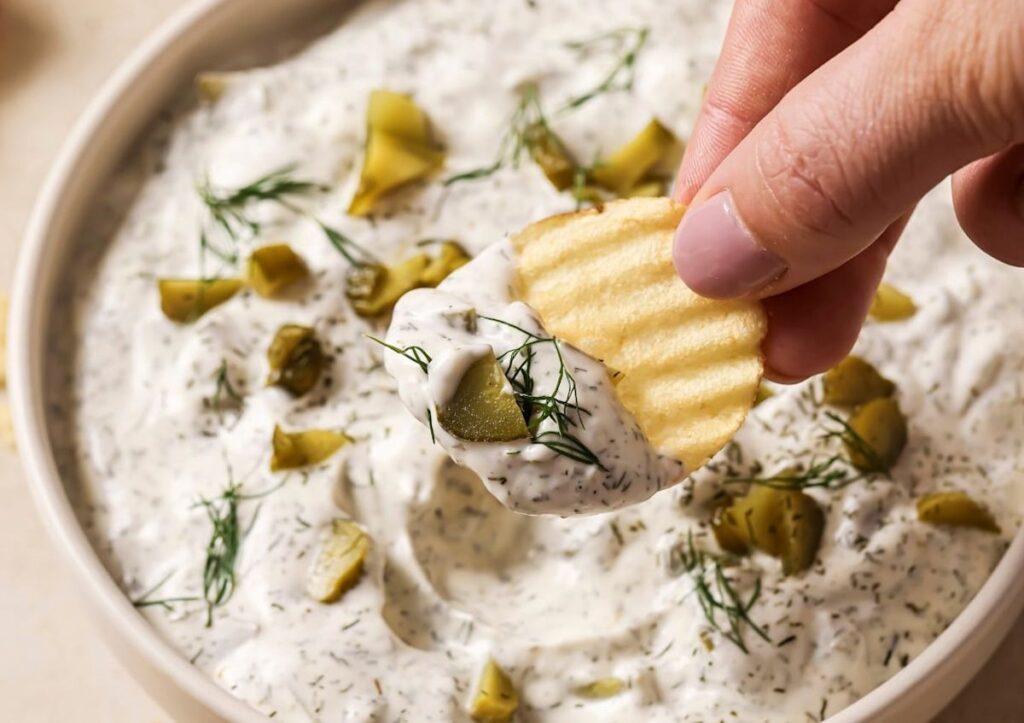
The dill pickle dip stands out from the others. It’s sharp and tangy, genuine pickle flavor, not just a background note. It doesn’t taste like a mild cream dip with some pickle mixed in. If you like pickles, this is the most distinct option in the group. If you’re somewhere in the middle on pickles, it’s still worth trying, the flavor is more balanced than the name suggests.
A few things that make any fast dip better:
Serve with something sturdy. Thin chips collapse under a thick dip. Pita chips, thick-cut tortilla chips, sturdy crackers, and sliced vegetables all hold up better. A chip that breaks before you get the dip to your mouth turns a good dip into a frustrating one.
Make more than you think you need. Dip goes faster than almost anything else on the table. A double batch takes the same effort and gives you enough to get through the evening without scraping the bottom of the bowl.
Season at the end, not throughout. Fast dips lean on ingredients that are already salty, seasoning packets, canned goods, aged cheese, and the flavors concentrate as the dip sits. Mix everything together first, then taste it, then adjust. You can always add; you can’t take back.
These aren’t complicated recipes. That’s exactly the point. They’re done before anything else you’re making, and they’re genuinely good when they get to the table.
By Sara Nelson, Creator of Real Balanced.