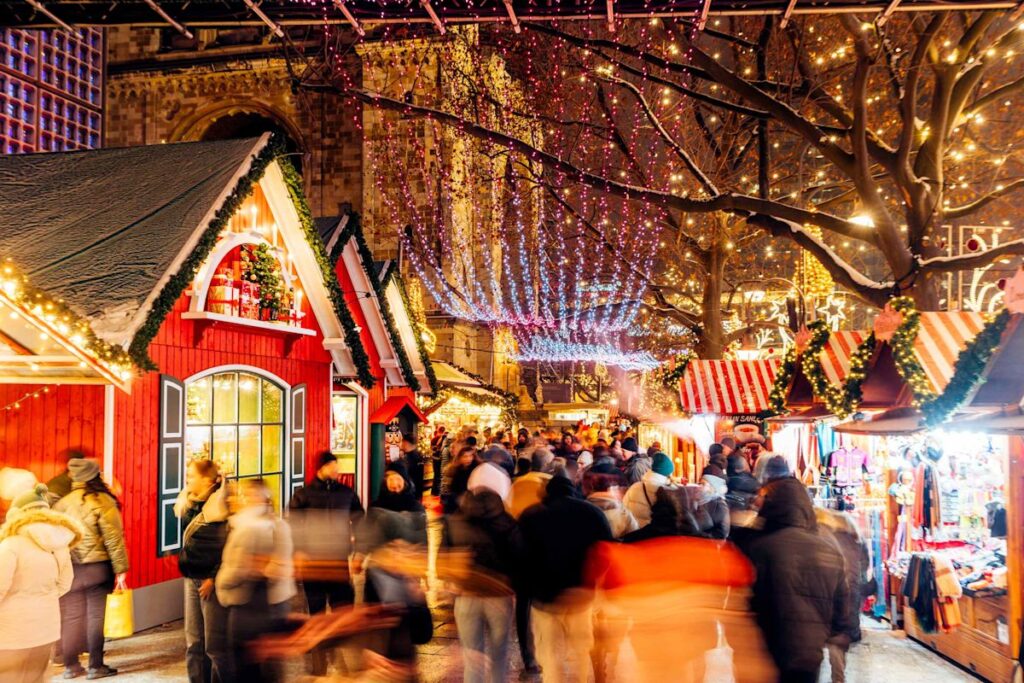


Although I moved to Europe only five years ago, I’ve quickly learned the holiday season is the most wonderful time of year here. And one of the best ways to celebrate is by visiting all the fantastic Christmas markets across the continent. While it may seem like they’re all about sweet treats, hot cocoa, shopping, and visits from Santa, these markets come with a bit of a learning curve. So, I asked travel advisors, local guides, and seasoned market-goers what first-timers should know to avoid common mistakes that could turn even the most festive visitor into a Grinch.
Go during the week.
Dusk at a Christmas market in Brussels, Belgium.
Credit: Romy Arroyo Fernandez/NurPhoto via Getty Images
Many of the experts we spoke with agreed that, if possible, it’s best to avoid visiting on weekends. You’ll have more room to explore and spend less time waiting in line for that mulled wine.
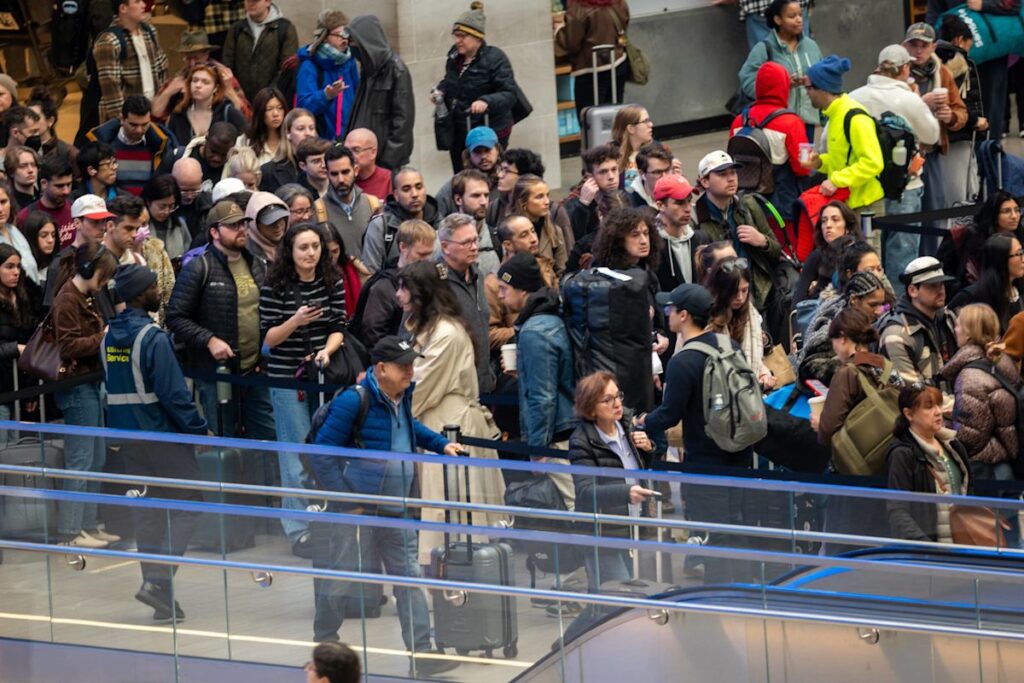
“Go on a weekday, and go after dark,” says Joris Desplenter, founder and guide at Belgium’s Wanderlust. “Last year, a single Saturday at the Brussels market pulled close to 200,000 people. On a Tuesday evening, you can actually walk around.”
Advertisement
Advertisement
Tara O’Reilly, a full-time traveler, agrees, noting that the markets get “super busy, even on weeknights.” Her advice? Try to get there early (around 5 or 6 p.m.). It’ll still be dark, so you get the magic of the lights, just with fewer people.”
LaDell Carter, founder of Royal Expression Travels, suggests you don’t have to choose between a daytime and nighttime visit. Instead, consider going twice. “Go near opening to browse and speak with vendors, then return around dusk for the lights and atmosphere. You get two experiences without changing hotels,” she says.
Arrive hungry and eat what’s local.
Steaming mugs of mulled wine being poured at the Christmas market in Basel, Switzerland.
Credit: Alex Walker/Getty Images
The local food is at least half the reason to visit the markets, so skip anything you can easily find back home. “Eat like a local, not a tourist,” says Michael Kovnick, founder and CEO of Culture Discovery Vacations. “In Bolzano, get the speck and strudel, and in Vienna, the roasted chestnuts and a punsch.”
In Belgium, Desplenter recommends trying the smoutebollen, which he describes as “hot dough balls buried in powdered sugar.” He adds, “If you are brave, try caracoles: sea snails in a peppery broth, served in a paper cup.”
Keep the mug.
A market visitor holds a mug of mulled wine at the Wandsbeker Winterzauber Christmas market in Germany.
Credit: Marcus Brandt/picture alliance via Getty Images
At many markets, your mulled wine comes with a built-in souvenir. “In a lot of places (especially Germany and Austria), you pay a deposit on your mulled wine mug,” explains O’Reilly. “You get it back when you return the mug, or you can keep it as a souvenir. Every market has its own design, so it’s actually a nice thing to bring home.”
Advertisement
Advertisement
Sahana Kulur, founder of Vacaywork, kept hers from all three markets she visited on her first trip. “If you plan to visit different Christmas markets over the years, collecting these mugs can become a lovely travel tradition,” she says.
But you don’t have to treat it as a drinking challenge. “Pace yourself if you’re trying to collect mugs from multiple markets. We learned that the hard way,” adds Jessica Parker, founder of Trip Whisperer Agency. “You don’t have to drink endless mugs of glühwein to build your collection. Many stalls also offer nonalcoholic punch or cider, and some will even sell you the mug separately.”
Dress for standing still.
Taking a brisk walk through a European city in December is one thing; spending an evening lingering in one spot is another. Dress accordingly. “Dress for standing still,” Kovnick says. “Walking keeps you warm; standing around a market for three hours doesn’t.”
O’Reilly adds, “Pack good quality gloves because it’s hard to hold all the delicious food when your hands are frozen solid.” Carter’s must-haves include “warm, comfortable footwear, layers, and a hotel that makes returning for a break easy.” As she puts it, “Cold feet have ended more romantic evenings than anyone cares to admit.”
Advertisement
Advertisement
Francesco Mevoli, founder of Gay Up Travel, takes this advice a step further, suggesting visitors stay near the market so they can easily return to their hotel to warm up. “Standing outside in winter is more tiring than people expect. With your hotel a few minutes away, you can go back to warm up, take a break, and come out again in the late afternoon, when the lights come on and the market looks its best.”
Bring cash, including coins.
A vendor accepts a cash payment at their Nutcracker stall at a Berlin Christmas market.
Credit: Fernando Gutierrez-Juarez/picture alliance via Getty Images
While cards are more widely accepted than they once were, don’t count on using them in every market. Many stalls are be run by small, independent vendors. “Bring cash,” says Shannon Jones, founder of KeeKee’s Big Adventures. Kovnick agrees, noting, “Plenty of stalls take cards now, but the little artisan stands usually do not.”
And this is Europe after all, so keeping some coins on hand is a good idea, too. Lucia Ruggieri-Maynard, a travel advisor and founder of Wander With Lucia, recommends carrying small change, “especially for glühwein, refundable mug deposits, and public restrooms, which often charge a small fee.”
If you do use your card, Kulur says to “always choose the local currency rather than your home currency to avoid unfavorable conversion rates.”
Advertisement
Advertisement
Then, slow down and enjoy it. As Emma Guse, a river cruise travel advisor with Travelmation, put it, “So many people spend years hoping to experience a European Christmas market. When you finally get there, give yourself time to enjoy being there.”
Read the original article on Travel & Leisure
Source link