Bacon has three common cooking methods: stovetop, oven, and microwave. Most people settle on one early and cook bacon that way indefinitely, which works fine until a recipe calls for a full pound at once or you need consistent results across a whole batch. The method you choose changes the texture, what you can do with the fat, and how much attention the bacon needs while it cooks. It also determines whether you’ll have drippings to work with, which can matter just as much as the bacon itself.
The skillet
Stovetop is where most people start. Cold pan, strips laid flat, medium heat. Bacon renders its own fat as it heats, so you don’t add oil. The fat builds in the pan as the strips cook, and by the time the bacon is done, you have both crispy strips and a pan of drippings worth keeping. That’s the actual case for using a skillet: not the bacon itself, but the fat left behind. If you’re cooking eggs next or want to build a sauce in the same pan, the skillet is where you want to be.
The tradeoff is attention. The heat has to stay moderate: too high and the outside burns before the fat fully renders, too low and you get uneven cooking. It takes about 8 to 10 minutes, and you can’t really walk away from it.
The oven
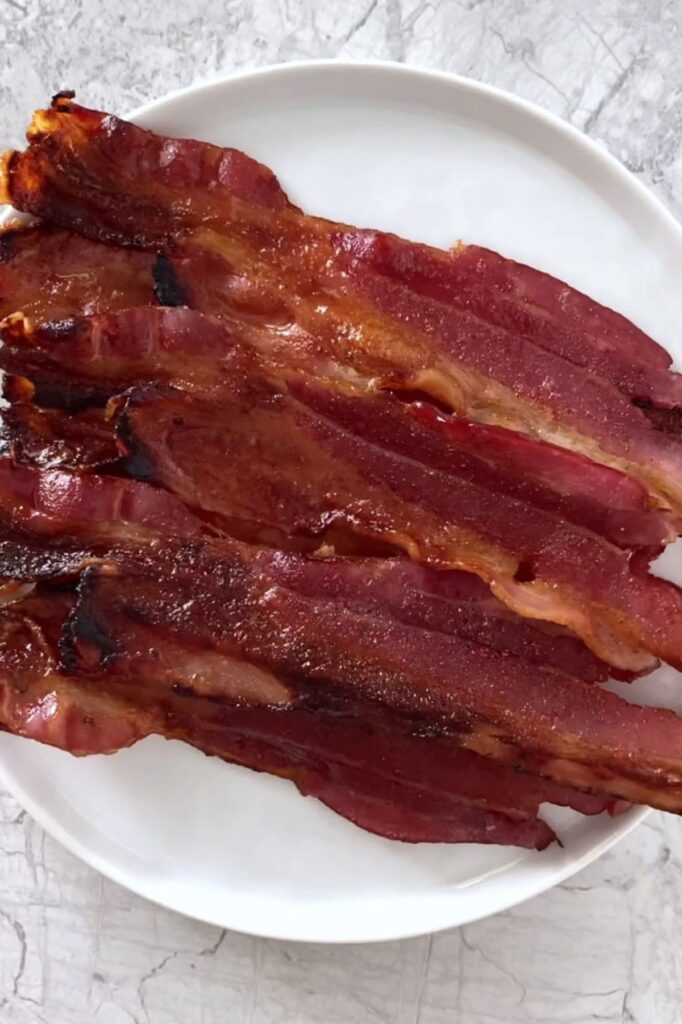
Sheet pan bacon takes longer, typically 18 to 22 minutes at 400°F, but it doesn’t need you there. Line a rimmed pan with foil, lay the strips flat without overlap, and the oven handles the rest. The fat renders and drains as the strips cook. They come out flat and evenly done from end to end. You can do a full pound at once without the splatter.
This is the one I keep coming back to. It handles volume without extra effort, the results are consistent, and cleanup is straightforward. For any recipe that needs a batch of cooked bacon, this is what I use.
The oven is also where bacon can go in a different direction. Spicy candied bacon is the sweet-heat version of this, it belongs on a board or alongside drinks more than it does next to eggs.
The microwave
Microwave bacon is faster than either of the other two methods and leaves almost nothing to clean up. Paper towels under and over the strips, laid flat on a plate, about one minute per strip on high. It does get crispy, but the texture is different, more brittle and drier, with less rendered fat. The drippings aren’t worth saving the way they are from a skillet.
It earns its place when you need two or three strips crumbled over a salad or stirred into something and don’t want to deal with a pan. For anything larger, or any recipe where the fat matters, it’s not the right call.
The one I keep
For recipes, the oven. For drippings and small amounts, the skillet. For speed with minimal cleanup, the microwave. Each fits a specific situation, and none of them is wrong.
Once the bacon is cooked, there’s more to do with it than most people default to. Bacon onion jam turns bacon into a condiment. Put it on a burger, a sandwich, or a charcuterie board and it goes further than plain cooked bacon. For a straightforward weeknight dinner, fried cabbage with bacon is a skillet recipe where bacon carries most of the flavor.
The method matters once you know what each one gives you. Skillet for drippings and small batches. Oven for volume and consistent results. Microwave for speed. Make the call based on what the recipe actually needs.
By Sara Nelson, Creator of Real Balanced.