
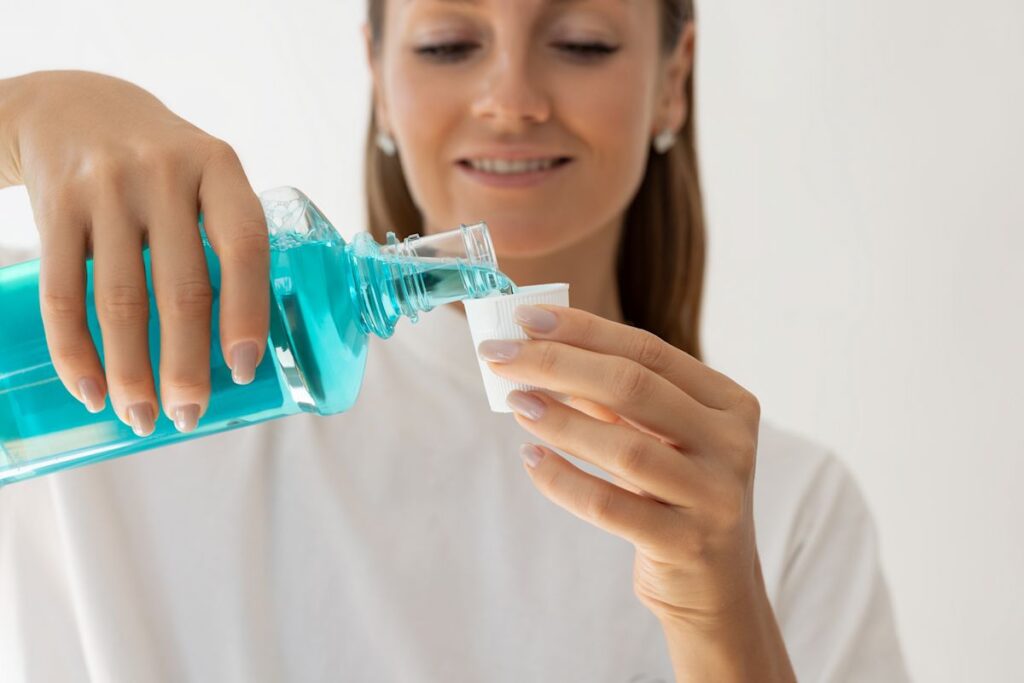


Somewhere between “deep clean,” “total protection” and “whitening,” buying mouthwash became a lot more complicated than it used to be. With approximately 47 shades of blue and green staring back at you along the oral care aisle, how are you actually supposed to sift through the self-proclaimed “best” mouthwashes to know which one deserves a spot under your sink?
Quick Overview
Best overall
Act Mint Fluoride Rinse Mouthwash
Best for bad breath
TheraBreath Fresh Breath Oral Rinse
Best for gum health
Crest Pro-Health Complete Clean Alcohol Free
Best for enamel protection
Sensodyne Pronamel Intensive Enamel Repair Mouthwash
Best for dry mouth
Biotène Fresh Mint Dry Mouth Oral Rinse
The answer depends on what’s happening inside your mouth.
If you haven’t asked yourself what your “mouthwash goal” is, that’s where you should start. Because what you’re hoping to accomplish with your daily rinse is far more important than how strongly it tastes of peppermint. Someone dealing with bleeding gums needs a completely different formula than someone trying to avoid another cavity, while a person with chronic dry mouth might find a traditional alcohol-based rinse only makes their dry mouth worse.
Advertisement
Advertisement
Of course, mouthwash isn’t getting you out of your brushing and flossing routine. But the right formula can offer some pretty useful benefits, from fresher breath and healthier gums to stronger enamel and relief from dry mouth. We’ve already tackled the question of whether mouthwash really does anything (spoiler alert: it does), so now comes the fun part: figuring out which one is worth buying.
We spoke with three dentists — Whitney White, DDS, Thomas McCabe, DMD, and Leilani Myers, DMD — about the mouthwashes they recommend, what makes each one worth considering and which promises on the label deserve a closer look.
The best overall mouthwash
Target; background edited with ChatGPT
Active ingredient: Sodium fluoride 0.05% | Alcohol-free: Yes | ADASeal: Yes | Size: 18 fl. oz.
Sometimes the simplest option makes the most sense, particularly when you’re already brushing and flossing regularly and just want a little extra protection against cavities. Both Myers and McCabe recommend Act Anticavity Fluoride Mouthwash, an affordable alcohol-free rinse containing 0.05% sodium fluoride.
“Fluoride helps remineralize enamel, strengthen teeth and protect against cavities. I also love this formula because it provides a meaningful preventive benefit rather than simply covering up bad breath,” Myers says.
McCabe agrees, particularly when it comes to people who could use some additional cavity protection. “This is especially important for patients who struggle with dry mouth, exposed roots, or a history of frequent cavities,” he says.
And because there’s no alcohol, you won’t have to brace yourself for that familiar mouthwash burn. Just keep in mind that Act isn’t specifically designed to treat gum disease, so if plaque and gingivitis are your biggest concerns, another formula may be a better fit.
- Budget-friendly
- Convenient measuring dispenser
- No alcohol burn
- Doesn’t specifically target plaque or gingivitis
More mouthwashes dentists love
Target; background edited with ChatGPT
Active ingredient: Sodium chlorite | Alcohol–free: Yes | ADASeal: Yes | Size: 16 fl. oz.
Your second iced coffee might not be doing your breath any favors, but there’s a lot more happening in your mouth than whatever you had to drink that morning. Bacteria can produce sulfur compounds responsible for some pretty unpleasant odors, which is why McCabe recommends TheraBreath Fresh Breath Oral Rinse.
“TheraBreath uses ingredients like sodium chlorite to help neutralize these sulfur compounds rather than just masking them with fragrance,” he says.
There’s no alcohol in the formula, which is welcome news if you find traditional mint mouthwashes a little too intense. It also carries the ADA Seal of Acceptance for helping reduce bad breath, giving it another advantage over rinses that primarily rely on a strong flavor to make your mouth feel fresh.
There is one thing to know before adding it to your routine, though. White points out that the directions require a little more time than the quick swish you might be used to.
“TheraBreath’s label calls for rinsing for 90 seconds and waiting five minutes before eating,” she says, which is just a small commitment for anyone who’d rather stop second-guessing their breath every time they open their mouth.
- Free of dyes and sulfates
- pH-balanced, non-acidic formula
- Icy Mint and Rainforest Mint flavors contain xylitol.
- No fluoride for cavity prevention
Target; background edited with ChatGPT
Activeingredient: Cetylpyridinium chloride (CPC) 0.07% | Alcohol-free: Yes | ADA Seal: No | Size: 33.8 fl. oz.
If your gums bleed every time you floss, buying mouthwash probably shouldn’t be the only item on your to-do list. A consistent brushing and flossing regimen are two of the most important factors that can help counteract underlying inflammation that may be contributing to bleeding. That said, an antibacterial rinse can give your gums some additional support.
Myers recommends Crest Pro-Health Complete Clean Mouthwash, which contains 0.07% cetylpyridinium chloride, better known as CPC. The ingredient helps reduce bacteria linked to plaque and gingivitis, and the alcohol-free formula doesn’t sting the way some traditional antiseptic rinses do. (Some retailers list this rinse as Crest Pro-Health Multi-Protection Alcohol Free Mouthwash, a name that’s also used for a fluoride rinse without CPC. If you’re unsure, check the label for 0.07% CPC under “Active ingredient.”)
White also favors CPC-based formulas for mild gingivitis. “For mild gingivitis, over-the-counter antibacterial rinses with CPC or essential oils can help reduce plaque and gum inflammation when they’re used along with brushing and flossing,” she says.
CPC can hold its own against the prescription stuff. A 2025 review found that when people brushed regularly, CPC rinses worked about as well as chlorhexidine, a stronger mouthwash dentists sometimes prescribe, at keeping plaque and inflamed gums in check. Chlorhexidine had a small edge on plaque when brushing wasn’t part of the routine, but it also tends to cause more tooth staining.
CPC isn’t entirely free of side effects, either. It can cause tooth staining or occasional burning. And while these rinses can help with mild gingivitis, Myers wants people to take persistent bleeding seriously. “If your gums are consistently bleeding, switching mouthwashes isn’t the solution. You need to address the source of inflammation and determine whether professional periodontal treatment is necessary,” she says.
- 30-second rinsing time
- Helps reduce plaque-related gum bleeding
- Also fights bad breath
- May still cause mild stinging despite being alcohol-free
Target; background edited with ChatGPT
Active ingredient: Sodium fluoride 0.05% | Alcohol–free: Yes | ADASeal: No | Size: 16.9 fl. oz.
Your tooth enamel puts up with a lot. Between acidic foods, sugary snacks and everything else you consume throughout the day, it can gradually lose the minerals that help keep your teeth strong. You probably won’t notice it happening, which is a pretty good argument for taking care of your enamel before it starts giving you trouble.
White recommends Sensodyne Pronamel Intensive Enamel Repair Mouthwash, which contains 0.05% sodium fluoride. Fluoride helps prevent cavities, and the brand says this rinse, used with a fluoride toothpaste, also helps strengthen enamel that’s been weakened by acidic foods and drinks. It’s an easy addition to your existing brushing routine, particularly if you want a little extra protection beyond toothpaste.
“The limitation is that it’s labeled for cavity protection and enamel, and it doesn’t contain potassium nitrate or stannous fluoride. If someone’s main complaint is sensitivity pain, I’d look at a rinse that’s labeled for that,” she says.
If you’ve already got a tooth that’s constantly bothering you, it’s worth having your dentist take a look rather than hoping a bottle of mouthwash will sort it out.
- Also helps prevent cavities
- SLS-free formula
- Alcohol-free formula without the harsh mouthwash burn
- Must wait 30 minutes before eating or drinking after use
Target; background edited with ChatGPT
Active ingredients: Glycerin, xylitol | Alcohol–free: Yes | ADASeal: Yes | Size: 33.8 fl. oz.
Having a dry mouth can make something as simple as holding a conversation feel challenging. And when it keeps happening, there’s more at stake than comfort. Saliva helps neutralize acids and protect your teeth, which means producing less can leave you more susceptible to cavities.
That’s one reason both White and Myers recommend Biotène Dry Mouth Oral Rinse, especially for people experiencing dryness associated with medications.
“Biotène Dry Mouth Oral Rinse is one of the gold standards when it comes to dry mouth using glycerin and xylitol to lubricate the mouth,” Myers says.
The moisturizing formula helps soothe that uncomfortable, sticky feeling without the alcohol that can irritate an already dry mouth. You can also use it up to five times a day, according to the label, which comes in handy when the dryness returns before you’ve even made it through the afternoon.
Biotène can help with discomfort, but if your mouth is constantly dry, it’s best to discuss it with your dentist to identify the underlying cause.
- Helps soothe and lubricate a dry mouth
- Can be used up to five times daily
- Alcohol-free formula is gentle on irritated tissues
- Mint flavor can be too strong for people with existing oral irritation
Amazon; background edited with ChatGPT
Activeingredient: CPC 0.075% | Alcohol–free: Yes | ADASeal: Yes | Size: 33.8 fl. oz.
For years, mouthwash commercials seemed determined to convince us that the more your mouth burned, the harder the product was working. McCabe would like everyone to retire that idea, emphasizing it’s a common misconception that a burning sensation means a mouthwash works better. “The active ingredients are what kill bacteria,” he says.
That’s why he recommends Colgate Total Active Prevention Alcohol-Free Mouthwash, which uses 0.075% CPC to target bacteria associated with plaque and gingivitis. There’s also zinc lactate in the formula to help with breath freshness, giving it a little more to offer than that minty feeling you get immediately after rinsing.
McCabe particularly likes alcohol-free options for older adults taking medications that reduce saliva production. Saliva helps wash away food particles and neutralize acids, so having less of it can already make your mouth more vulnerable to dental problems. Adding an alcohol-based rinse to the mix may only make the dryness more uncomfortable.
“I don’t consider an alcohol-containing mouthwash harmful for every patient, but due to the side effects I see very little reason to make alcohol a requirement when there are more comfortable and more effective alternatives available,” he says.
Colgate’s formula is intended for twice-daily use, with just 30 seconds of swishing each time. And while the lack of alcohol makes it more comfortable for many people, don’t assume every ingredient is completely irritation-free. The peppermint flavor may still feel strong, and CPC can sometimes cause surface staining on teeth. Fortunately, that discoloration isn’t permanent and can generally be removed with regular brushing or a professional cleaning.
- Helps reduce plaque and early gum inflammation
- Zinc lactate adds breath-freshening benefits
- Gentler option for people prone to dry mouth
- CPC may cause temporary surface staining
Target; background edited with ChatGPT
Active ingredient: Hydrogen peroxide 1.5% | Alcohol–free: Yes | ADASeal: No | Size: 32 fl. oz.
If you’re expecting a mouthwash to match professional whitening, dentistry hasn’t become quite that convenient. Still, whitening rinses can help with surface stains and maintaining a brighter smile. White recommends Crest 3D White Glamorous White Mouthwash, an alcohol-free formula containing 1.5% hydrogen peroxide.
The peroxide is responsible for its whitening action, although the brief amount of time mouthwash spends against your teeth limits how dramatic the results can be.
“I’d set expectations accordingly. Whitening rinses like this are best for maintenance and surface stains,” White explains.
Crest markets the formula as helping produce a whiter smile in seven days when used as directed with brushing, but removing surface discoloration is different from making a significant change to your natural tooth color. Myers says shoppers should be realistic about what a whitening mouthwash can accomplish. “If your goal is a visibly whiter smile, I wouldn’t expect a mouthwash to deliver that transformation,” she notes.
At-home strips and trays generally provide more contact time with whitening ingredients, while professional treatments can use higher concentrations under dental supervision.
Whitening also won’t change the color of crowns, veneers or fillings. And although the Crest formula is alcohol-free, peroxide can still cause temporary sensitivity or gum irritation in some people.
- Helps remove everyday surface stains
- Designed to be safe on enamel with daily use
- Clear, dye-free formula
- Can aggravate existing tooth sensitivity
Target; background edited with ChatGPT
Activeingredient: Sodium fluoride 0.05% | Alcohol–free: Yes | ADA Seal: Yes | Size: 16.9 fl. oz.
Getting kids to brush their teeth for a full two minutes can already feel like an intense negotiation. Adding mouthwash to the routine might sound like pushing your luck, but Act Kids makes a pretty good case for trying, especially if your child’s dentist thinks they could use some extra protection against cavities.
For kids ages 6 and older who can reliably swish and spit, Myers recommends Act Kids Anticavity Fluoride Rinse.
“It’s an effective way to provide additional fluoride protection, particularly for children who are more susceptible to cavities,” she says.
The Bubblegum formula contains 0.05% sodium fluoride, which helps strengthen tooth enamel and protect against tooth decay. It’s also sugar-free and alcohol-free, so kids can enjoy the candy-inspired flavor without the sugar or that burning sensation that makes some adult mouthwashes so unpleasant.
There’s a clever little feature parents might appreciate, too. Squeezing the bottle fills a built-in dispenser with the recommended 10-milliliter dose, taking some of the guesswork (and potential mess) out of handing a kid a bottle of mouthwash.
The bigger challenge might be getting them to swish for a full minute. Kids will also need to wait 30 minutes after using the rinse to eat or drink, so think carefully about the best time to incorporate it into your child’s routine.
And while McCabe stresses that brushing and flossing should remain priorities, a fluoride rinse can be a helpful extra step for children whose dentists recommend it. Just make sure they’ve mastered the all-important skill of spitting everything out. Even kids who are old enough to use mouthwash may need some practice and supervision before they’re ready to rinse on their own.
- Adds fluoride protection for cavity-prone kids
- Built-in dispenser helps prevent accidental overpouring
- Sugar-free formula
- Full minute of swishing may be difficult for younger kids
Walmart; background edited with ChatGPT
Activeingredient: Sodium fluoride 0.02% | Alcohol–free: Yes | ADASeal: No | Size: 16 fl. oz.
Myers recommends Tom’s of Maine Whole Care Fluoride Mouthwash in Fresh Mint for people who prefer more naturally derived ingredients but still want the benefits of fluoride. It contains 0.02% sodium fluoride (less than half of what’s in the other fluoride rinses listed here) to help replenish lost minerals in tooth enamel and protect against cavities.
There’s also organic aloe, glycerin and xylitol in the mix, without artificial colors, flavors, sweeteners or preservatives. And since there’s no alcohol, you can skip that familiar mouthwash burn. The mint flavor is fairly mild, which might be welcome news if you find some of the stronger rinses a little overwhelming.
McCabe also has some advice for anyone shopping in the natural oral-care aisle, noting that “the formulation, concentration, and clinical evidence matter more” than anything.
If you’re interested in exploring other ingredient-conscious options, we’ve rounded up the best natural mouthwashes, too.
- Freshens breath without an overpowering menthol sensation
- Helps restore minerals to enamel and prevent cavities
- No artificial colors, flavors or sweeteners
- Doesn’t contain an antibacterial active ingredient specifically for gingivitis
What to look for when buying mouthwash
A mouthwash promising “maximum freshness” might sound pretty convincing when you’re standing in front of an entire shelf of mint-flavored bottles. But what does that actually mean for your teeth? McCabe would much rather you take a look at the fine print.
“I just tell my patients to ignore the front of the bottle and turn it around to read the active ingredients,” he says.
Advertisement
Advertisement
Those ingredients are where you’ll find out what the rinse can actually help with, whether you’re hoping to prevent cavities, get your gums in better shape or finally do something about bad breath.
Match the ingredients to what you’re trying to improve
Cavity prevention: If cavities are your biggest concern, fluoride is an ingredient you’ll want on your side. It helps replace minerals your enamel loses throughout the day, keeping teeth stronger and better protected against acids from food and drinks.
Plaque buildup: For plaque buildup or irritated gums, you’ll want to get familiar with CPC (cetylpyridinium chloride) and certain essential oils, as both can help keep bacteria in check — although you’ll still need to keep up with brushing and flossing.
Bad breath: Bad breath is a little trickier because there’s only so much a blast of mint can accomplish. Ingredients like sodium chlorite, chlorine dioxide and zinc compounds can help tackle the bacteria or sulfur compounds responsible for unpleasant odors, but if your breath seems to turn unpleasant again almost immediately after rinsing, it’s worth checking whether your mouthwash actually targets those compounds.
Whitening: Hydrogen peroxide is the ingredient you’ll often find in whitening rinses. Just don’t expect miracles from swishing for a minute. Whitening rinses can help with surface stains, but think of them as a way to keep your teeth looking bright between more intensive whitening treatments.
Dry mouth: Ingredients like glycerin and xylitol help lubricate your mouth when you’re struggling to produce enough saliva. Consider formulas that also contain fluoride to offer an extra layer of cavity protection.
Know the difference between cosmetic and therapeutic rinses
Maybe you want your breath to smell better before a date; a cosmetic mouthwash can give you a quick burst of freshness before you head out for the evening.
But if you’re dealing with cavities, plaque or gums that bleed when you brush, you’ll get more mileage out of a therapeutic rinse. These contain ingredients designed to address specific oral health concerns, which is why two mouthwashes that look practically identical on the shelf can have very different benefits.
Advertisement
Advertisement
“The label’s active ingredients tell you what a rinse is built to do,” White says, “so I’d start with the goal and work backward.”
Alcohol-free mouthwash can still be effective
Anyone who’s ever swished a particularly strong mouthwash while silently counting down the seconds knows how intense that burning sensation can get. Fortunately, you don’t have to put yourself through it to get a good cleaning.
Many alcohol-free rinses contain the same cavity-fighting or antibacterial ingredients as their alcohol-containing counterparts, plus they’re easier on dry or sensitive mouths.
Research suggests alcohol-free rinses can work. In a 2024 clinical trial of 270 adults with gingivitis, funded by the maker of Listerine, people who added either of two essential-oil rinses, including an alcohol-free version, to brushing had greater reductions in plaque, gum inflammation and bleeding after 12 weeks than those who only brushed. The alcohol-containing rinse appeared to cut plaque more than the alcohol-free one, but both versions were effective options. Really, choosing between an alcohol formula and an alcohol-free one comes down to your comfort and making sure the ingredients are designed to treat the conditions you’re hoping to improve.
Look for the ADA Seal of Acceptance
You’ll see the American Dental Association’s Seal of Acceptance on certain mouthwashes, which means a particular product has undergone evaluation for the safety and effectiveness of its stated claims.
Advertisement
Advertisement
Say a mouthwash claims it can help prevent cavities. The manufacturer has to show the ADA evidence that its formula actually does that, and the same goes for products seeking acceptance for reducing bad breath, controlling gingivitis or relieving dry mouth.
The key here is that the seal applies to a particular product and benefit, so seeing it on one rinse doesn’t mean every formula from that brand has earned it or that the product is effective for every oral-health concern.
Myers also doesn’t want shoppers automatically ruling out a mouthwash simply because the seal is missing. “Some excellent products simply haven’t gone through the voluntary evaluation process,” she says. So consider the seal a helpful sign when you’re comparing products, especially if you’re torn between two similar formulas, but don’t write a product off simply because it doesn’t carry the seal.
Compare the price per ounce
Don’t just look at a bottle’s checkout price; pay attention to the price per ounce. Two bottles may have very similar ingredients and benefits despite a noticeable difference in price.
Pay attention to how you’re supposed to use it
Pour, swish, spit, done… right? The directions can actually make a difference in how much you’re getting out of your mouthwash.
Advertisement
Advertisement
Some rinses call for 30 seconds, while others need a full minute. Certain fluoride formulas also recommend waiting 30 minutes before eating or drinking, giving the ingredients time to do their job. And depending on the product, you may be instructed to rinse once or twice daily.
There’s also the timing, as rinsing immediately after brushing can wash away some of the concentrated fluoride left behind by your toothpaste. Using mouthwash at another point in the day, or before brushing, can help you get the benefits of both.
How we chose the best mouthwashes
We asked three dentists which mouthwashes they actually recommend to their patients and what makes those particular formulas worth buying and where they might come up short. They focused on products suited to specific oral-health concerns and formulas with benefits beyond just temporarily freshening breath.
From there, we took a closer look at the ingredients and what they’re supposed to do, also checking which formulas carry the ADA Seal of Acceptance, whether they contain alcohol and how comfortable they might be to use. And because nobody wants to spend twice as much for essentially the same benefits, we compared how much they cost at major retailers.
Advertisement
Advertisement
We didn’t personally test these mouthwashes, so our picks are based on the dentists’ recommendations and our own product research.
Frequently asked questions
Do you really need mouthwash?
A good mouthwash can bring plenty to your oral-care routine. A fluoride rinse can provide cavity-prone teeth with additional protection, antibacterial formulas can help reduce plaque and gingivitis and moisturizing rinses can make a difference when dry mouth becomes uncomfortable.
What matters is choosing a rinse that addresses your specific concerns. Someone who’s prone to cavities may benefit from a different formula than someone dealing with bleeding gums.
Mouthwash works especially well as part of a consistent routine that includes brushing with fluoride toothpaste and cleaning between your teeth. Those are the habits that physically remove plaque and food debris, while the right rinse offers benefits that go beyond what your toothbrush can accomplish on its own.
Should you use mouthwash before or after brushing?
You might be surprised to learn that the order of your bathroom routine can make a difference, particularly when fluoride is involved.
Advertisement
Advertisement
After brushing with fluoride toothpaste, a thin layer of fluoride remains on your teeth. Following that up with a vigorous rinse can wash some of it away, reducing the time it has to work.
McCabe prefers using mouthwash before brushing, leaving toothpaste as the final step, while White suggests checking the manufacturer’s instructions, since certain formulations are specifically designed to be used after brushing.
The ADA also notes that the best order depends on the ingredients and directions for the products you’re using. If you’re unsure, your dentist can help you work out a routine that makes sense for your teeth.
Is it OK to use mouthwash every day?
Plenty of over-the-counter mouthwashes are designed for everyday use, but the important part is following the directions for whichever formula you’ve chosen.
Advertisement
Advertisement
Pouring yourself an extra capful or rinsing more often than directed isn’t necessarily going to give you better results. McCabe recommends sticking to the product’s stated frequency rather than assuming extra rinsing offers extra protection.
CPC and chlorhexidine rinses can cause staining and increased tartar with prolonged use; chlorhexidine can also alter taste. Your dentist can tell you how long to use a mouthwash for your needs.
Is alcohol in mouthwash bad for you?
Alcohol-containing mouthwashes aren’t automatically harmful, and certain traditional formulas have a long history of helping control plaque and gingivitis.
Still, alcohol can be uncomfortable for people with dry mouth or irritated oral tissues, which is why our dentists generally favor alcohol-free formulas when they provide the necessary therapeutic benefits.
Advertisement
Advertisement
You can still get meaningful cavity protection and antibacterial benefits from an alcohol-free rinse, so if you’ve spent years assuming that burning sensation means your mouthwash is doing an especially thorough job, you can give yourself permission to choose something more comfortable.
Can mouthwash cure bad breath?
It can certainly help, especially when you’re using a formula that goes after the compounds responsible for the smell.
The catch is that bad breath can have several different causes. Bacteria on your tongue, food stuck between your teeth, gum disease and dry mouth can all contribute. Dental appliances that aren’t cleaned thoroughly can also leave you dealing with some seriously unpleasant breath.
McCabe encourages people experiencing persistent bad breath to have their dentist look for the underlying cause. Sometimes improving your cleaning routine or addressing dry mouth makes a significant difference. Other times, there may be a dental problem that needs treatment.
And while we’re on the subject, don’t ignore gums that keep bleeding or a tooth that’s becoming increasingly sensitive. Those symptoms deserve a proper dental evaluation, even if your mouthwash has been helping you feel fresher.
Meet our experts
Leilani Myers, DMD, is a cosmetic and restorative dentist at Smile Design Manhattan in New York City.
Our health content is for informational purposes only and is not intended as professional medical advice. Consult a medical professional on questions about your health.
Source link


