Lean muscle tissue loses moisture quickly once it crosses its target temperature. That’s the core of the dry chicken problem. Chicken breast is lean, which means when it overcooks, even slightly, the proteins contract and push moisture out. The difference between juicy and stringy is a matter of a few degrees and a couple of minutes. Everything else is a variation of that one fact.
A thermometer is not optional. If you’re judging doneness by color or by pressing on the breast to test firmness, you’re guessing, and the guess usually runs long. Chicken breast is done at 165°F, and it can pass that mark while you’re pulling out serving dishes. A fast instant-read thermometer tells you exactly where the meat is, and you stop relying on estimates. That single tool solves more dry chicken problems than anything else.
Rest it before you cut it. Cut into chicken the second it comes off heat and moisture runs straight out onto the board. Five minutes under a loose piece of foil and that moisture redistributes back into the fibers. It’s a short wait, and it makes a real difference in what’s left inside the chicken.
Pound thick breasts to an even thickness. Chicken breast is thick in the middle and thin at the edges. The thin ends overcook while the center is still working toward done. Pound it to an even thickness, around half an inch to three-quarters, and the whole piece reaches temperature at the same time. You’re not adding more time, you’re getting all of it to done at once instead of in stages.
Salt ahead of cooking. Salting chicken at least 40 minutes before it goes in the pan gives the salt time to draw moisture out and pull it back in, seasoning the meat deeper and helping it stay juicier as it cooks. Salting right before cooking seasons the surface and doesn’t penetrate the same way.
Use high heat for chicken breast. Searing or roasting at higher heat, 400°F or above for the oven, a hot pan on the stovetop, gets the interior to temperature before the outside has time to dry out from extended heat exposure. Low-and-slow cooking is for cuts with fat and connective tissue. Chicken breast isn’t that cut.
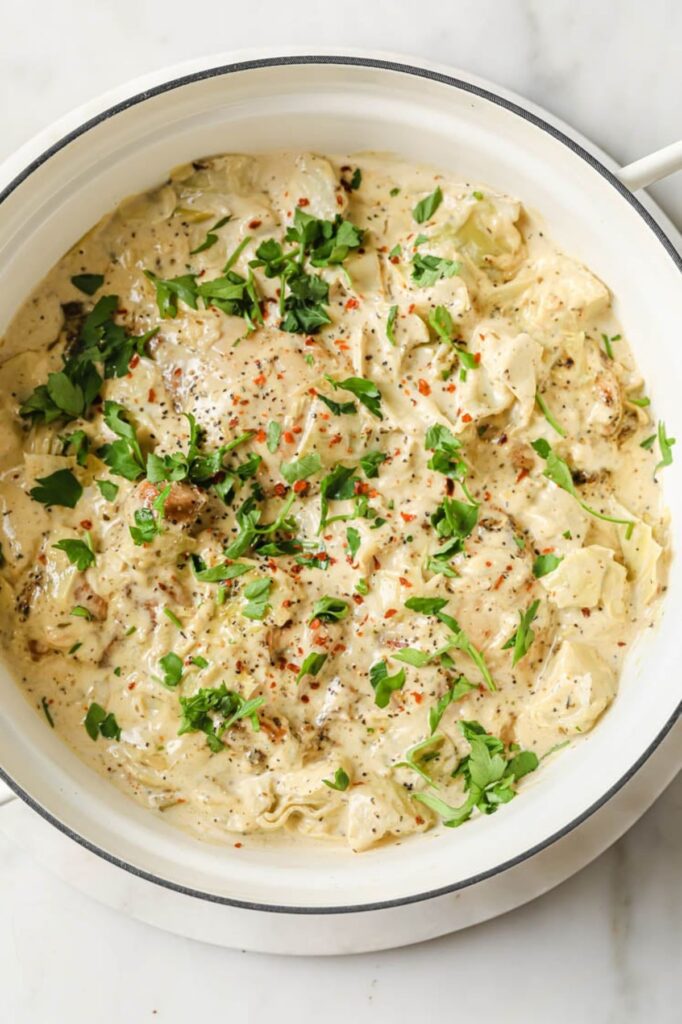
Switch cuts when the recipe allows it. Chicken thighs have more fat than breast, and that fat keeps them from drying out even when they run a few minutes long. For casseroles, stews, or any recipe that calls for shredded chicken, thighs are the more forgiving option every time. Creamy skinless chicken thighs with artichoke hearts shows the difference the cut makes, thighs in a creamy preparation stay juicy in a way breast won’t. Green chile chicken with leftover shredded chicken thighs is the same principle from a different direction: shredded thighs stay loose and tender rather than stringy, which is what shredded chicken is supposed to be.
Don’t crowd the pan. Chicken packed into a pan releases steam, and steam prevents browning. You end up cooking longer to get color, and more time is the last thing chicken breast needs. Cook in batches if the pan is getting crowded.
Match the preparation to the cut. Some recipes protect chicken from drying out better than others. A dish with moisture in it, a sauce, a covered casserole, keeps the chicken from losing moisture to the dry air of a hot oven or pan. Chicken with creamy mushroom sauce is a good example, a sauce-based dish gives the chicken more protection than plain dry heat.
None of this is complicated technique. A thermometer, the right cut for the recipe, some heat management, and a few extra minutes before you cut into it. Chicken breast has a narrow window, but once you understand why, the fix is straightforward.
By Sara Nelson, Creator of Real Balanced.