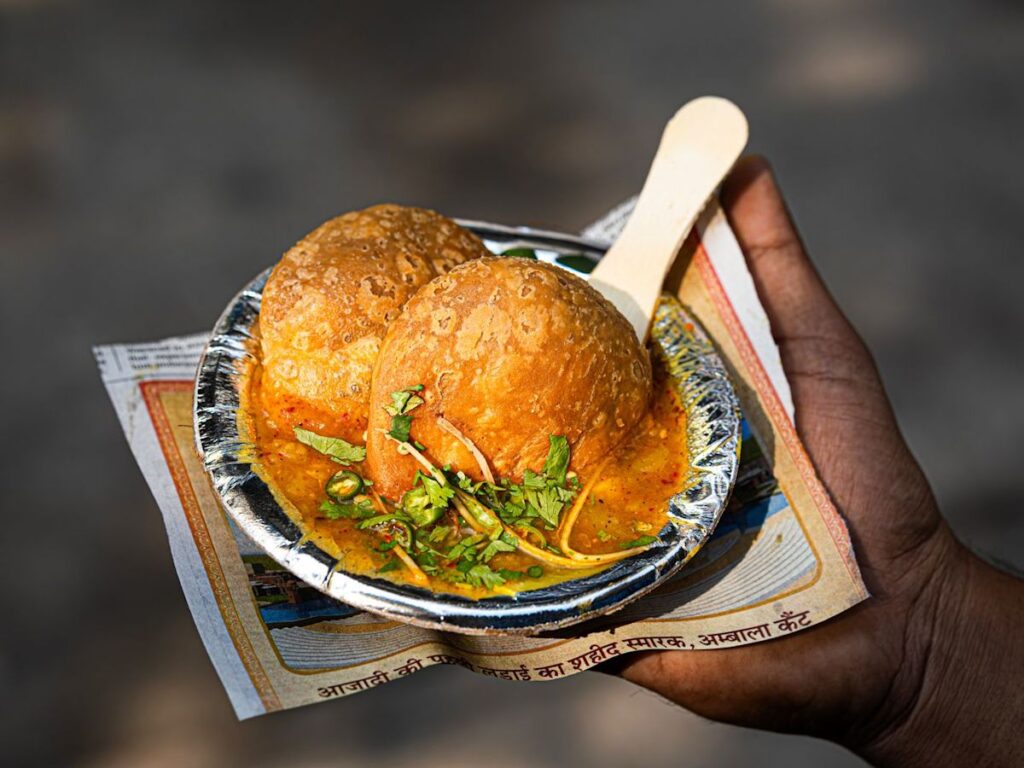


When you’re a food lover traveling at home or abroad, restaurants are usually a top priority—after all, you want to sample the best each place has to offer. But if you only eat at restaurants, you’ll miss a huge part of the local food scene that, in many cases, offers better insights into the culinary culture than a tour of five-star gastro-temples ever will.
Credit: Serious Eats / Jatin Sharma
Street food has plenty going for it. For one thing, it’s relatively affordable. It also often comes in smaller portions, allowing you to try a wider variety of dishes without physical or financial discomfort. Vendors tend to cluster, making it easy to graze, and because they often specialize in one kind of food, they’re usually pretty good at cooking it.
Go just about anywhere in the world, and you can find street food. That’s worth celebrating. We obviously couldn’t cover every country’s street food, so we decided to focus on four countries with vibrant, distinct street-food scenes: India, Italy, Jamaica, and Morocco. We spoke to experts for local perspectives on some of their favorite grab-and-go foods and the role they play in the broader food culture.
Advertisement
Advertisement
No matter where you’re going, though, a few rules of thumb can help you make the most of dining curbside.
5 Rules for Street-Food Success
Look for the Busiest Vendors
No matter where you are, the best street stalls and food carts are usually the ones with the longest lines of locals. They’ve had more time to suss out the places that offer the best value and quality. They’ve also learned which vendors are least likely to dole out a serving of foodborne illness. Food-handling practices aside, higher customer volume can improve food safety, since food is less likely to sit around long enough for bacteria to multiply.
Appearance Doesn’t Necessarily Reflect Quality
Street food sellers usually operate on tight margins, so the money they put back into their businesses is better spent on food and equipment than on upgrading the aesthetic of their stall, cart, truck, or kiosk. “I would encourage people not to be put off by how simple or modest a stall looks,” our Morocco expert, Nargisse Benkabbou, says. “Some of the most delicious food in Morocco comes from places that don’t look particularly impressive.”
Check for Basic Signs of Food Safety
Even if lines are long, you should still look for signs of basic food safety and avoid places that appear to disregard basic food-safety practices. Here are a few things to watch for:
Advertisement
Advertisement
Workers handling food should regularly wash or sanitize their hands. If they wear gloves, they should change them after handling money or touching other potentially contaminated surfaces and before returning to food preparation.
Ingredients should be washed with safe drinking water (such as bottled water), although washing alone doesn’t guarantee safety, particularly where tap water isn’t safe to drink.
Ingredients should be covered when not in use to keep them free of insects and other contaminants.
Perishable foods should be kept sufficiently cold or hot, rather than left sitting in the temperature danger zone of 40–140°F (4–60°C) for extended periods, which allows harmful bacteria to multiply.
Avoid chipped plates, mugs, and glasses, as chips and cracks can trap bacteria, food particles, and other nasties that can become difficult or impossible to clean out.
Take note of how vendors dispose of garbage and whether flies or stray animals are hanging around.
Don’t Try to Get Everything in One Place
Credit: Serious Eats / Philippine Antoine
With smaller setups, less space for inventory, and fewer workers (sometimes just one), street food sellers typically specialize in just a couple of items, sometimes only one. That’s good news for customers: Vendors who specialize in a dish have more opportunities to perfect it. If a vendor offers several dishes, take a cue from the locals and order what they’re ordering.
“I think locals tend to know exactly which vendor makes the best version of a particular food. Locals might go to one person for msemen, another for sfenj, and someone completely different for a bowl of bissara,” Benkabbou says. “It’s not necessarily about finding a stall that sells everything.”
Be Polite—and Remember That Locals May Be as Curious About You as You Are About the Food
Try to learn about local etiquette and customs, say your pleases and thank-yous, and be open to friendly interactions. In some places, a tourist eating from a street cart might attract almost as much attention as a minor celebrity.
Advertisement
Advertisement
“Indians are curious about visitors and will always want to chat with you, ask where you’re from, even take pictures with you,” says Kaumudi Marathé, our India expert. “So be prepared for that.”
Credit: Serious Eats / Saghar Setareh
Credits
India Photography: Jatin Sharma
Italy Photography: Saghar Setareh
Morocco Photography: Philippine Antoine
Jamaica Photography: Getty Images
Creative Direction: Amanda Suarez
Read the original article on Serious Eats
Source link