
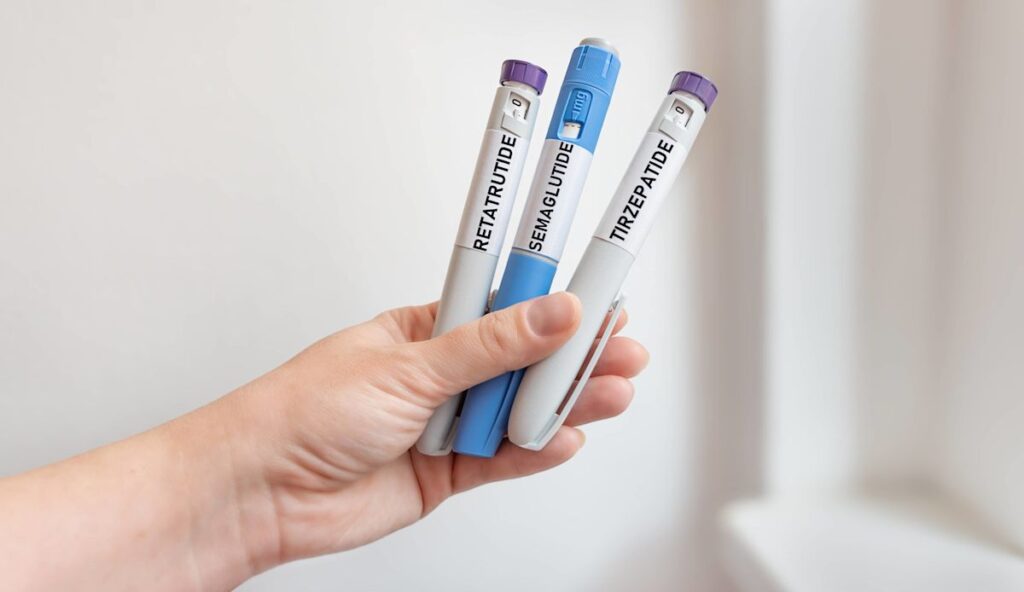
A recent Cleveland Clinic study analyzed data from more than 20,000 patients to determine which treatment approaches best preserved weight loss and metabolic health after discontinuing injectable GLP-1 medications (e.g., semaglutide or tirzepatide). The findings confirm that stopping these medications without a clear plan in place often leads to weight regain and loss of many if the cardiometabolic benefits.
GLP-1 and dual-agonist drugs are expensive and not pleasant for everyone to take indefinitely. So the idea of using these medications to reach a weight goal and then stepping off has obvious appeal. That appeal has created a market for off-ramping protocols. The study is worth reading because its central result is not the one the off-ramp framing anticipates.
What the new study found
The analysis followed 20,486 patients at Cleveland Clinic who had taken semaglutide or tirzepatide for at least three months. Using a target trial simulation to compare what happens when you stay on the drug, switch between semaglutide and tirzepatide, switch to a different obesity medication, undergo bariatric surgery, or stop treatment altogether. Unsurprisingly, surgery produced the largest average weight loss at roughly 28%, switching between the two drugs about 16%, staying on the original drug about 11%, and switching to another medication about 8%. Stopping treatment entirely came at roughly 4%.
Advertisement
Advertisement
A patient who loses 15% of their body weight on the drug and then stops is, on average, only about 4% below their starting weight two years later. The metabolic measures tracked weight: blood sugar and blood pressure improved most in the groups that continued treatment and drifted back in the group that did not continue treatment. The study was not designed to validate off-ramping. It was designed to compare options, and it found that simply stopping was the weakest option on offer.
Why weight comes back
When semaglutide was withdrawn in the STEP 1 trial extension, participants regained two-thirds of the weight they had lost within a year. Improvements in blood pressure, lipids, and blood sugar reversed were also reverses. Patients who switched off tirzepitide regained much of what they had lost, while those who continued maintained their results. The maintenance trial of continued semaglutide showed that continued treatment produced further loss, while the group moved to placebo regained weight.
The reason is the same reason why weight regain is common after any weight-loss method. The body defends its former weight. After fat is lost, appetite-regulating hormones shift toward hunger, and energy expenditure falls somewhat below what body size alone would predict. GLP-1 drugs work by overriding part of that system, suppressing appetite while they are present. A systematic review of discontinuation studies describes exactly this pattern of metabolic rebound after the drug is stopped. Regain is not evidence of weak resolve. It is the predictable behavior of a regulated system that has lost its counterweight.
If the goal is to keep the results, the evidence supports continued treatment at a lower dose or in a different form. The lowest effective maintenance dose, rather than the full therapeutic dose, keeps many people stable while side effects. Switching agents, as the Cleveland data showed, can extend results for those whose first drug has stopped delivering. For some, continued treatment of any kind, indefinitely, is simply the answer, much like blood pressure and cholesterol medications, which are taken long term because the conditions they treat are chronic. Tapering the dose gradually rather than stopping abruptly is another reasonable clinical approach, and many clinicians now favor it.
If you do come off, what reduces weight regain?
Cost, side effects, pregnancy, supply, and personal preference all lead people off these drugs. For them the question is not whether to stop but how to stop with the least regain.
Advertisement
Advertisement
Physical activity is the strongest behavioral predictor of keeping weight off, and the volume required is substantial, generally more than people expect. A maintenance trial that tested exercise, a GLP-1 drug, or both after initial weight loss found that exercise protected body composition and function over time, and that the benefit persisted. Building a genuine activity habit before stopping the drug, rather than hoping to add one afterward, is one of the few levers with consistent support behind it.
A small randomized pilot trial offers early evidence for structured support after stopping. Among 39 participants followed for four months, those assigned to a digital wellness program or medically tailored meals gained less weight than those receiving usual care. The results need confirmation in larger, longer studies, but they suggest that support with eating habits or meals may help during the transition.
The second lever is protecting muscle, which matters here for a specific reason. A meaningful share of the weight lost on a GLP-1 drug is lean tissue, and muscle is a major determinant of resting energy expenditure. Losing it lowers the metabolic floor a person must defend, making regain easier. Resistance training preserves lean mass during weight loss, and pairing it with adequate protein preserves it even better. The muscle built and maintained during the drug phase is part of what protects the result afterward. For anyone planning to come off, the lifting and the protein are not optional extras; they are the infrastructure that makes maintenance physically possible..
What this means in practice
For most people, a GLP-1 drug is best understood as a long-term treatment for a chronic condition, not a temporary course that fixes the problem and is then withdrawn. If staying on treatment in some form is possible, it is usually the most effective path, and the lowest effective dose is a legitimate.
Advertisement
Advertisement
For those who will come off regardless, the plan should be to minimize weight regain. It means arriving at the end of the drug phase already lifting, eating enough protein, engaging in a high volume of daily activity, and holding on to as much muscle as possible. None of that guarantees the weight stays off, but it meaningfully changes the odds.
This story was originally published by Men’s Fitness on Nov 17, 2026, where it first appeared in the News section. Add Men’s Fitness as a Preferred Source by clicking here.