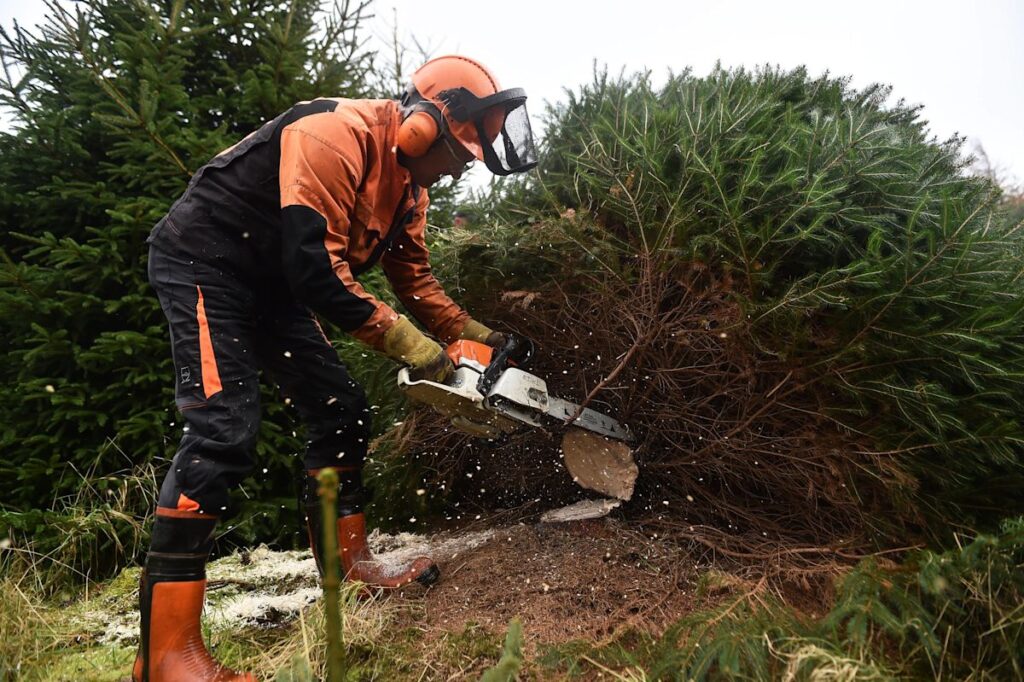
Anyone who’s winced at triple-digit prices at a neighborhood Christmas tree lot over the past few holiday seasons has a surprisingly budget-friendly—and far more memorable—alternative waiting on public lands. Across the United States, the U.S. Forest Service allows families to head into designated national forests and cut down their own fresh holiday tree for as little as $5, turning an ordinary errand into a festive winter adventure while helping thin overcrowded forest stands.
For the 2026 holiday season, permits for most participating national forests are available online through Recreation.gov, where listings are officially live now. While exact pricing and cutting windows vary depending on the region, permits typically range from $0 to $15 per tree—a fraction of what most retail lots charge.
Related: 20 Different Types of Christmas Trees
In Oregon’s Mt. Hood National Forest, for example, permits cost just $5 per tree (plus a $2.50 Recreation.gov processing fee), with a household limit of up to five trees. In New Mexico’s national forests, permits range anywhere from free ($0) to $15 depending on the specific forest and tree size. Meanwhile, popular Colorado destinations are already well into the 2026 cutting window: permits for Arapaho & Roosevelt National Forests went on sale October 8, 2026, while Pike & San Isabel National Forests remain open for cutting through December 18, 2026.
Advertisement
Advertisement
Related: America’s Hidden Treasures! Here Are 8 Off-the-Beaten Path Public Lands
Families with elementary-school kids can score an even better deal. Under the federal Every Kid Outdoors program, fourth graders with a valid Every Kid Outdoors pass (or paper voucher) are eligible for one free Christmas tree permit at participating national forests—meaning families only pay the standard $2.50 online reservation fee when booking through Recreation.gov.
Before grabbing a handsaw and heading out, travelers should review the specific forest guidelines attached to their permit on Recreation.gov. Each national forest provides downloadable motor vehicle use maps showing exact approved cutting zones, along with rules on maximum tree height, stump height limits, and prohibited areas near campgrounds, trailheads, and waterways. Most permits must also be printed out and displayed clearly on your vehicle’s dashboard while cutting, with the physical tag attached to the tree before transporting it home.
Because popular weekend cutting dates and high-demand forests can sell out—and winter weather can close high-elevation forest roads early—checking Recreation.gov now is the easiest way to lock in a 2026 permit before December deadlines hit.
Related: Looking for a Magical Holiday Family Tradition? This Vintage Steam Train Ride Includes Hot Cocoa, Cookies, and a Visit From Santa

This story was originally published by Parade on Nov 15, 2026, where it first appeared in the Travel section. Add Parade as a Preferred Source by clicking here.