
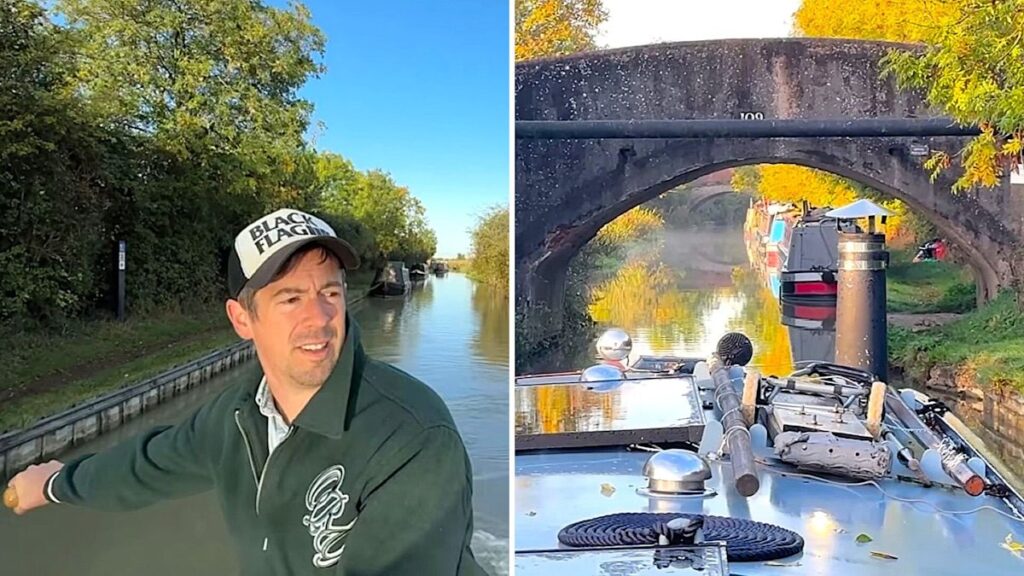
Lock closures were already restricting one novice narrowboater’s travels after just two months on the United Kingdom’s canals. While they had grand aspirations for the new adventure, they were running into some early snags.
Here’s what to know
The Nomadic Talbot (@TheNomadicTalbot) used a YouTube video to document an Oxford Canal trip investigating the closures that prevented passage farther toward Oxford.
“I had dreams of travelling the waterways, exploring new places, and enjoying the freedom of life on the canals,” the creator wrote in the caption. “Instead, lock closures have made it difficult to travel very far, leaving me to figure out this new lifestyle one day at a time.”
Advertisement
Advertisement
As they showed their adventures, including navigating narrow passes, the creator sought advice from experienced narrowboaters on handling the disruptions. The Nomadic Talbot also asked viewers whether they would trade a house for compact accommodation on the water.
More background
After a long search for somewhere to empty waste, the creator welcomed the sight of a possible disposal point along the planned route.
Engine noise rules prompted a question as the creator prepared to depart at 8 a.m. They wanted to know whether the rules apply to cruising, or only to running an engine while stationary.
“You can move whatever time of day or night you want; the canals are a transport system, not a carpark,” a viewer wrote. “What you shouldn’t do is run your engine before 8 a.m. or after 8 p.m. while stationary.”
Advertisement
Advertisement
Electricity during the winter was another concern. One commenter who had previously worried about the boat’s power supply welcomed its upgrades that included a charger for their six batteries.
“You won’t need a fridge in the winter,” another user wrote. “A cool box outside on the deck will be cold enough, so you can save a little energy that way.”
What can be done?
The creator used a Nicholson canal guide to find places to turn around before reaching the closures. It showed four winding holes — turning spaces for narrowboats — along the route from near Nimrod Bridge.
The guide was useful for planning an exit before reaching the obstruction. If the boat passed the last turning point, the creator would have to reverse back from the closed locks.
Advertisement
Advertisement
Another commenter added even more context on the engine restrictions. They warned against engaging the gears while the boat was moored, citing the potential for damage to canal banks.
A different viewer recommended mooring with a doubled rope. The loop would pass through the mooring pin and hook onto the boat’s T-stud, where it would then be secured.
One more observation from the comments was that their coal cage was upside down, which the creator thanked them for clearing up.
Overall, viewers praised the effect of the journey on the creator despite the various complications and fixes to their narrowboat journey.
Advertisement
Advertisement
“First time I’ve seen you really relaxed the whole vid — this Narrowboat thing is truly working out,” one wrote.
Where can I learn more?
The Nomadic Talbot’s questions about power and waste disposal show how much there is to figure out when moving aboard.
• The Nomadic Talbot also attempted three weeks off-grid as rain tested a minimal setup.
• In the U.K., a liveaboard barely notices power cuts aboard, but food preparation remains a gap.
Get TCD’s free newsletters for easy tips, smart advice, and a chance to earn $5,000 toward home upgrades. To see more stories like this one, change your Google preferences here.


