

When prestigious global hospitality ranking The 50 elected to hold its annual restaurant awards ceremony in Lima, Peru, this month, it was an unofficial statement: the second-biggest city in South America, the region’s only coastal capital, must own its flowers as a culinary crown jewel. After all, in Lima—a city essentially carved into a seaside cliff, boasting stunning vistas of the Pacific ocean, charming 19th-century architecture, the world’s third biggest Chinatown and what I deem its most majestic mall (yes, mall: Google “Larcomar”)—the local sport for both tourists and Limeños alike might as well be eating. Much more than a pit stop en route to Machu Picchu or other feted Peruvian landmarks, Lima is a destination in its own right, especially for foodies. Here’s how to dine your way through it.
Culinary delights at Peru Mucho Gusto
Go for Mucho Gusto This cosmopolitan New Yorker thought she knew Peruvian cuisine. Peru Mucho Gusto—an annual food fair with over 174 exhibitors, from chefs and producers to entrepreneurs and representatives from Peru’s 25 regions—revealed that in fact, I had no idea. The expansive, free festival is a mind-bogglingly delicious opportunity to enjoy history on your palate by getting a taste—literally—of the whole of Peru without leaving Lima.
The ceviche section alone had me in awe. Who knew that for every region there were both traditional methods and delightfully creative ones, like “Maki Amazonico,” which involves ingredients fresh from the Amazon and a blowtorch? There’s a Zona Brasas section, highlighting grilled meats; a dazzling variety of award-winning coffees shaped by the country’s myriad altitudes and climates; a pisco area paying homage to the local spirit’s history and peddling far more than the prosaic (yet still delicious!) pisco sour; a marketplace showcasing the absurd variety of species available for consumption in Peru: some 50 different chilis, 46 different corns (including the purple one used to make chicha, a famous local liqueur), 3000 kinds of fish and more than 4000—yes, 4000!—genres of potatoes (making the country deserving of its International Center of Potato).
Culinary excellence at Peru Mucho Gusto
I tasted things I never knew existed, like macambo nuts, snake fruit and camu camu ice cream, from a cherry-like fruit containing the most Vitamin C of all fruits. I purchased an Amazonian hot sauce and a local seasoned salt. And I reveled in live cooking demonstrations and gorgeous musical and Carnival performances, which kept the fair lively and local until well after dark, all weekend long.
Restaurante La Huaca in la Huaca Pucllana, Miraflores.
Select and Book Your Restaurants This is no easy task. The number of culinary gems in Lima—which includes last year’s winner of The 50, Maido—is intimidating. I went with AWA, by Chef Aldo Yaranga, which pays homage to the San Martin and Lareto regions of Amazon. Its name evoking both the beginning of the word “Awajun,” an Amazonian ethnic group, and “agua,” (water), which connotes life, AWA served up curried pirarucu, the largest freshwater fish in the world, alongside cassava purée with annatto and regional sausage farofa; cacao-braised beef cheek; a bursting-with-freshness heart-of-palm salad with Amazonian nut oil; and the richest, densest coffee flan I’ve ever indulged in.
Advertisement
Advertisement
Dining at Huaca Pucllana, on the site of an archeological wonder—a massive fifth-century stepped pyramid constructed from millions of handmade adobe bricks, vertically aligned with gaps in between so as to withstand earthquakes—is like being in Athens in South America. At this divine setting I indulged in causitas Pucllana, a sweet potato pile topped with langoustine and leche de tigre, the classic ají de gallina (chicken stew served over yellow potatoes and rice) and juane, a regional amazonian rice with smoked pork and shrimp.
Newcomer Fernandini, by Chef Rodrigo Fernandini—the man behind one of my favorite Peruvian restaurants in New York, Artesano—is set in a stunning antique mansion in the trendy Barranco district. I marveled at the local spirits used to concoct statement-making, performative cocktails: chili aperitivo, Black Whiskey made from corn and 1535 gin, bursting with floral flavor. An impressive menu spans Peru’s coast, mountains and jungle: Andean fish with custard-apple sauce; Anticucho-style octopus with sarandaja beans, chimichurri and olive; Short rib with potato, black corn and garlic; and, for desert, a chocolate “potato” harvested from a “dirt” of quinoia and nuts on a “river” of lucuma sauce (you have to eat it to believe it!).
By All Means Necessary, Book Central Have you ever heard of an “altitude-driven menu”? A restaurant with its own nonprofit research institute? I didn’t think so. Consider that two reasons to dine at Central, opened in 2008 by chef Virgilio Martínez and co-chef Pía León, another Peruvian gem to have topped The 50—South America’s first.
Here are 12 more reasons to eat there, even if it means selling your soul to get a reservation: every single jarringly original, magnificently crafted course on the eatery’s tasting menu, which carries you through Peru’s ecosystems, from below sea level in the Pacific Ocean to high-altitude peaks in the Andes and well in the Amazon Rainforest. Fueling the menu is Mater Iniciativa, an in-house research arm that traverses Peru to catalogue and study the indigenous, rare ingredients that stun your eyes and palate throughout.
Culinary genius at Central
It’s a bit like dining in the Museum of Natural History, guided by a team of mad scientists whose lab is a kitchen. Enter via an outdoor greenhouse that feels like a magic garden. Inside the minimalist, wood-heavy dining room you’re served courses and regional wines on fossil-like, custom-crafted tableware that feels etched from land or sea. Each dish is accompanied by a breakdown of its origin ecosystem, though all left me in a joyful state of wondrous curiosity: what exactly is that sugarcane spirit with seaweed? How do I eat the muna ice cream? Is leche de monja a double for egg nog? This is the cultural experience of a lifetime: food as archeology, as science, as ancestral reckoning, art and glorious ritual.
Cacao science at Ciclos Cafe
Don’t Forget Cacao & Coffee There are 25 different genres of cacao, and 16 of them are found in Peru. Consider that your excuse to eat a lot of chocolate in Lima. Make that official by signing up for a tasting experience at the charming Ciclos Cafe in Barranco, where Allan Vallejo of El Cacaotal Peru—consider him part historian, part scientist, part archeologist—takes you and your palate on a journey from the origins of cacao in Amazon 9000 years ago, to Montegrande, a pre-Columbian temple with cacao at its core, to the delicious morsels on your plate today, their flavor impacted by origin, species, cacao percentages and more. The coffee tasting that follows is the perfect second course.
Advertisement
Advertisement
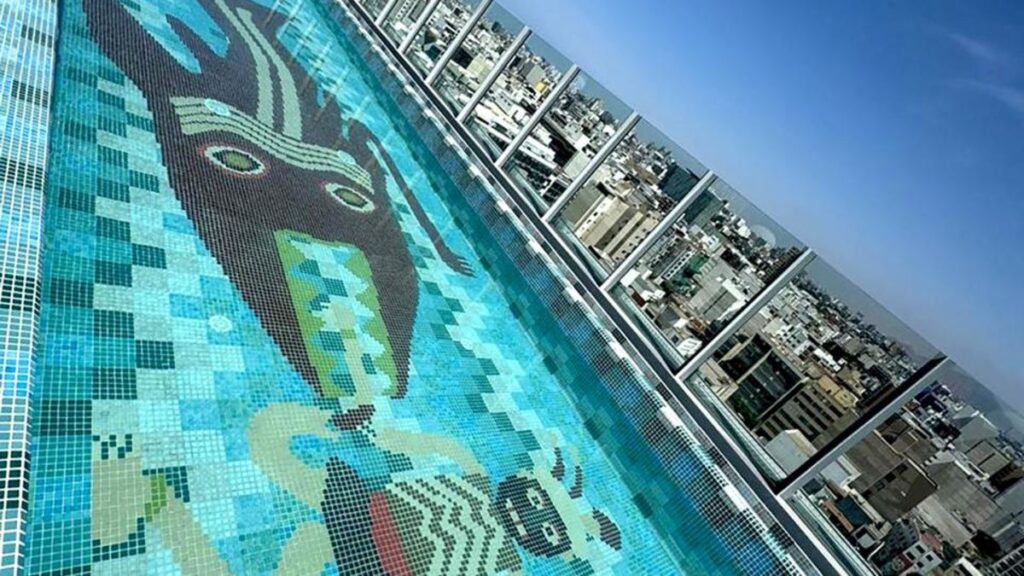
Stay at nhow Hotel Lima Opened last year as a trendy new addition to the lively Miraflores hotel scene, nhow Hotel Lima—the brand’s first in the Americas—is a masterfully designed, playfully kitschy homage to all things Peruvian, from the flaming llama in the lobby to the electric-colored walls evoking aguayo, traditional Andean woven textile, to the glorious rooftop pool adorned with Inca gods and boasting a sweeping view of the city. 243 rooms and suites across 13 floors are decked out in local decor, from straw hanging lamps to agauyo-themed wallpaper accented by, of all things, Pac-Man. The breakfast buffet is a bounty of local delights, as are the ceviche-heavy lunch and dinner menus. It’s impossible to stay at Hotel Nhow Lima and think even for a moment that you’re anywhere but Peru—and that’s exactly the point.
LOCAL TIP Hiring a tour guide might seem like the most un-local thing to do. Do it anyway, lest you miss out on local and street-food haunts, not to mention countless historical tidbits related to Lima’s extraordinary culinary history. The energetic Desiree Goderoy has extraordinary knowledge of all things Peru, and she can even teach you a local dance step or two.
This article was originally published on Forbes.com
Source link