

Window or aisle? That small seat-map decision can affect more than your view. Fees, boarding rules, sun exposure and the ability to get up without disturbing anyone all matter. Your best pick depends on which trade-offs bother you and what your airline actually offers.
You Pay Extra to Sit There
Window and aisle seats can cost more than middle seats before you even board. NerdWallet reports that American Airlines generally charges more for those seats. The price depends on your fare, route and the seat you choose. Basic Economy rules can further limit your options. Compare the total ticket price, including seat selection, instead of treating the cheapest fare as the final cost.
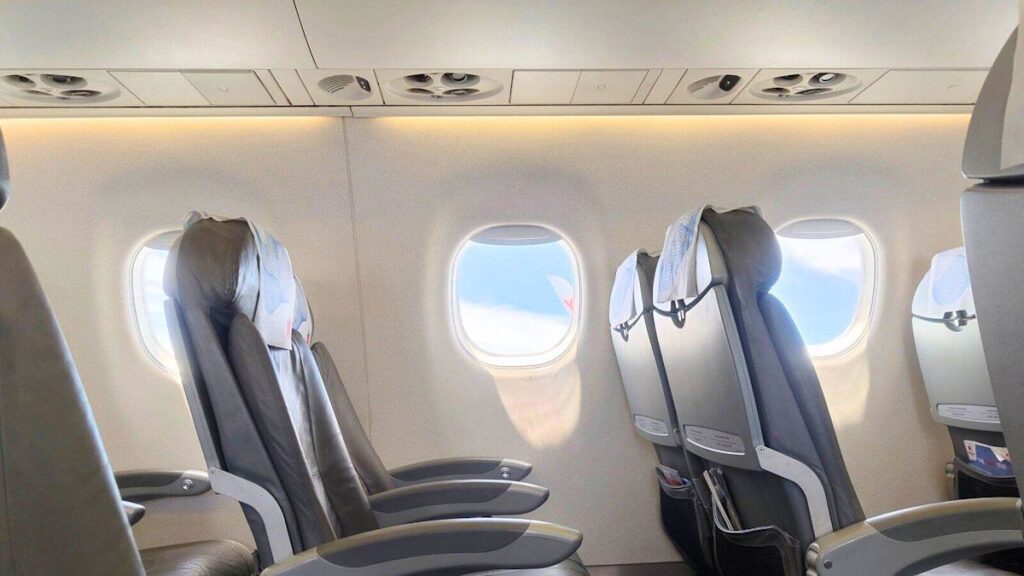
Your Window Seat Might Be a Wall
A window-seat label does not promise a view. Certain aircraft rows have missing or poorly aligned windows because of the plane’s structure and cabin layout. SeatGuru, once a popular seat-map resource, closed in 2025. Try AeroLOPA’s detailed aircraft diagrams to check window alignment, then compare them with your airline’s seat map. The assigned aircraft may change before departure.
Window Seats Can Board First
United’s window-middle-aisle boarding system, reintroduced in 2023, gives many regular economy window passengers an earlier group than aisle passengers. The aim is to reduce people climbing past each other after boarding. But priority benefits, fare type and traveling companions can change the order. Choosing a window does not guarantee room for your bag in the overhead bin.
Your Seat Letter Won’t Smooth the Ride
For turbulence, where your row sits often matters more than whether you’re beside a window or the aisle. Pilots interviewed by AFAR explain that seats near the wings, closer to the aircraft’s center of gravity, may feel steadier during certain movements. No seat removes turbulence, and the sensation varies with the aircraft and conditions. Keep your seat belt fastened whenever seated.
Aisle Passengers Get Up More Often
Want easy access to the restroom? The aisle has an advantage. In a 2018 study of transcontinental flights, Emory University researchers found that about 80% of aisle passengers got up, compared with 60% in middle seats and 40% in window seats. Those numbers describe passengers who got up at least once, not the number of bathroom trips. A window seat can mean fewer interruptions, but you may need to ask seatmates to move.
Photo credit: Depositphotos.
The Shade Is Not Always Your Choice
From the window seat, the shade is within reach, but takeoff and landing policies vary. AFAR reports that major U.S. airlines generally do not require shades to be open, while several international carriers enforce the practice. Open shades help people see outside if something goes wrong. Even when the airline treats it as a recommendation, follow any instruction from the flight crew.
The Window Also Brings UVA Exposure
Bright sun through an airplane window is more than an annoyance. The Skin Cancer Foundation says UVA rays can pass through aircraft windows, although protection differs by window type and conditions. For a daytime flight, particularly if you travel often, consider broad-spectrum sunscreen and protective clothing. Lowering the shade when allowed can also reduce direct sunlight.
Choose the Seat That Fits Your Flight
Neither seat wins every time. A short daytime hop, a long overnight flight and a trip with tight connections can call for different choices. Check the aircraft and your airline’s rules before paying for a seat so you can choose based on your needs, not just an old window-versus-aisle debate.
Source link