Reviewed by Samantha Mann

Key Takeaways
-
Children with disorganized attachment are often fearful of their caretakers.
-
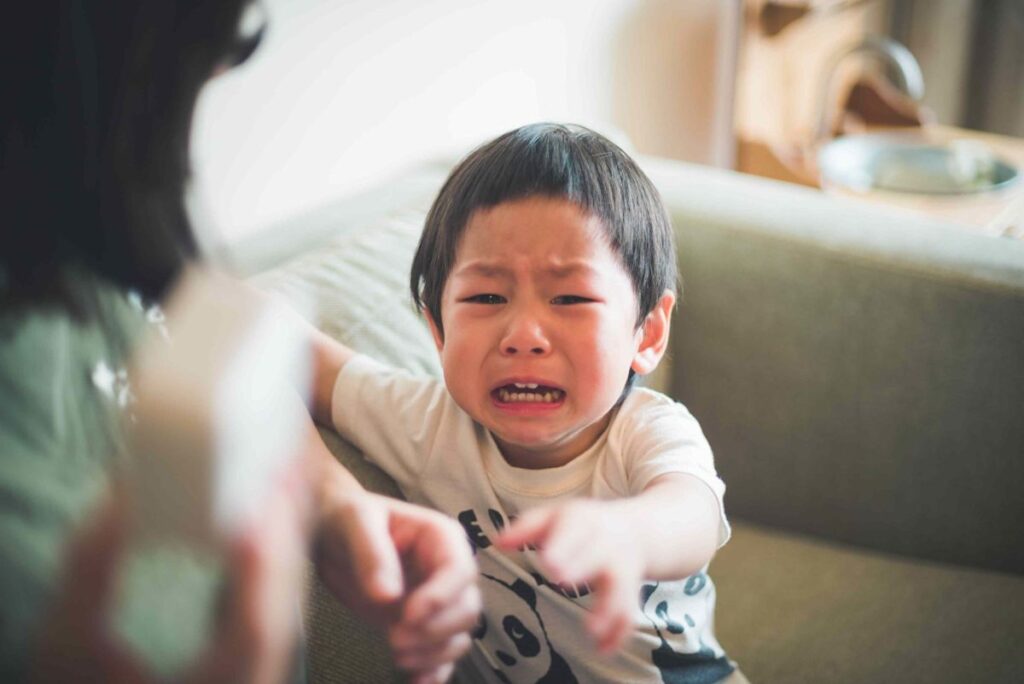
They trend to be both clinging and distant, quick to anger, and difficult to calm down.
-
If parents hope to heal their relationship with a child who has developed disorganized attachment, they should seek the help of a mental health care professional.
Healthy bonds between parents and their children are crucial for the emotional wellness of both parties, especially the latter. The way a child connects with their parents informs the nature of their future relationships—platonic, romantic, and even their relationship with themselves. The importance of the parent-child connection is the foundation of attachment theory.
Advertisement
Advertisement
Children with a disorganized attachment type exhibit several behaviors that suggest feelings of confusion or fear toward their caregiver. Concerned your child may have a disorganized attachment? Here’s how to identify if they do, and help them foster healthier bonds with the people they trust most.
What Is Disorganized Attachment?
Also referred to as a fearful-avoidant attachment, a disorganized attachment style “develops when children experience their caregivers as both a source of comfort and fear which creates an internal conflict in how they relate to others,” explains Joseph Cavins, LMFT, and Clinical Director for Southern California Sunrise Recovery Center.
It’s one of many other attachment styles. The one parents hope their child develops is called secure attachment.
The term attachment theory was coined by British psychologist John Bowlby in the 1950s to describe the “lasting psychological connectedness between human beings,” particularly between infants and their caregivers. Expanding on Bowlby’s theory, American-Canadian psychologist Mary Ainsworth defined three types of attachments: secure, insecure-avoidant, and insecure-ambivalent/resistant. Decades later, in the early 1990s, other researchers added a fourth type, disorganized attachment.
Who Experiences Disorganized Attachment?
Those who had “hot and cold childhoods” may forge such an attachment, which, in adulthood, makes them “more likely to have unstable relationships as their actions are driven by their fear of rejection,” Cavins explains. It can also manifest “bouts of emotional withdrawal” and mood swings in adulthood.
Advertisement
Advertisement
“When a child craves and receives love, followed by an unpredicted [or] unprovoked and painful experience from the caregiver, it produces emotional confusion for the child,” says Mary Kalil, LMSW, of Moving Forward Counseling, LLC. “The outcomes may result in fear [or] distrust with long term anxiety.”
Disorganized attachment styles are prevalent among young people today. A 2023 study found that 23.5% of the investigated children showed signs of a disorganized attachment. Children who came from lower-income households were more likely to show an disorganized attachment with their caregivers, as were children with a parent living with a mental illness. The study concluded there’s a significant connection between a caregiver’s stress level and the type of attachment their child makes with them.
Signs Your Child Has Developed a Disorganized Attachment
There are several behaviors a child with a disorganized attachment may exhibit. “Children who seem caught between wanting closeness and pushing away are exhibiting signs of disorganized attachment style,” Cavins explains. According to Cavins, other signs of a disorganized attachment include:
-
Unexpected fear or anger when upset
-
Freezing up around parents
-
Struggling to calm down when distressed
-
Switching between clinging to caregivers and suddenly rejecting them (This “demonstrates their inner confusion about relationships.”)
Advertisement
Advertisement
Kalil also notes to look out for children withdrawing from other people or who suffer from severe separation anxiety when their parents are at work or they are at school. She recommends parents and caregivers look out for any regressions in behavior, such as “increased bedwetting post potty training” and “thumb sucking at a later age.” Social phobia may also be a sign a child may be struggling with a disorganized attachment style.
Tips To Help Your Child Address Their Disorganized Attachment
Both Cavins and Kalil emphasize the importance of patience and understanding when supporting a child who has developed a disorganized attachment style.
Prioritize consistency and stability
Children and families healing from disorganized attachment are going to face challenging behavior from their children. The key for parents is to forgo discipline or punishment in those moments, and remember that their child is expressing a deep need to feel loved and safe.
“Parents need to understand that their children acting out or withdrawing comes from a place of deep fear and not just simple defiance,” Cavins explains. “These children have learned that relationships aren’t consistently safe so they develop unusual ways to handle stress. The seemingly erratic behavior they exhibit is their best attempt to manage overwhelming feelings, not an attempt at manipulation.”
Advertisement
Advertisement
Kalil explains it’s crucial for caregivers “to begin to provide consistent feelings of safety.”
Stability in the household can go a long way in helping a child struggling with conflicting feelings towards their caregivers. Create predictable routines around bedtime and in the morning before school drop-off, for instance.
Cavins recommends “focusing on being consistent and calm during emotional outbursts” to make children feel safe and establish a healthier normal. When big feelings do come up, help your child name their feelings.
Introduce a Comfort Object
Kalil also suggests caregivers agree on an item that is beloved to both of you, to help them forge a healthier connection.
Advertisement
Advertisement
“I would recommend that young school age children carry a sentimental piece of their loving caregiver, rub or stroke it if they begin to feel anxious,” she explains. “This reminds the child that their caregiver is waiting for this piece to return with the child when they get home. You could use, for example, a necklace or scarf. They could also carry a stress ball or toy in their pocket to squeeze when anxious.”
Seek the help of a professional
Children who have developed a disorganized attachment almost always need extra support from a professional mental health expert. “Working with a therapist who specializes in attachment and behavior is crucial,” says Kalil. ” [And] showing your child they’re safe with you consistently is the goal.”
Other techniques, like teaching children “deep breathing exercises” and making eye contact while speaking to them can be helpful, Kalil adds. She also encourages enrolling children into extracurricular activities to help them connect with others, and find them a therapist who can implement strategies like exposure therapy and cognitive behavioral therapy.
The parents themselves might also strongly consider pursuing therapy for themselves in order to develop healthier strategies for relating to their kids, and managing their own emotions and expectations around parenting.
Advertisement
Advertisement
“Perhaps the most dangerous misconception is that love alone can fix it,” Cavins adds. “While love is essential, most children need specialized mental health support to heal.”
Read the original article on Parents