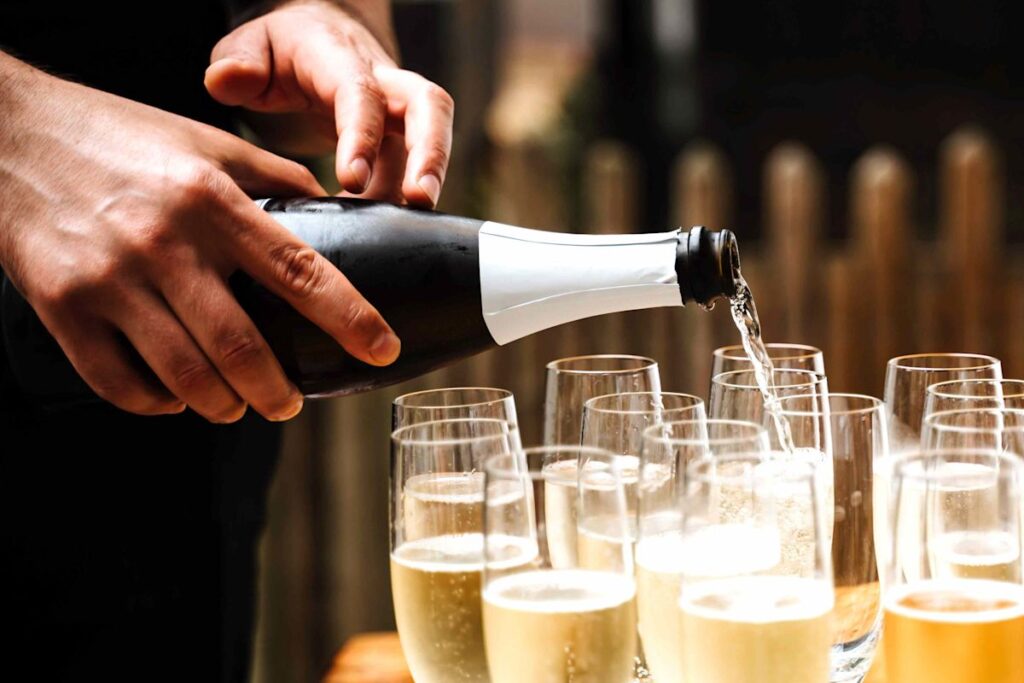
When you think of luxury wine, Champagne may be the first word that comes to mind. Because it tends to be more expensive and is often the drink of choice for celebrations, buying a bottle of Champagne can be slightly intimidating. Terms like “brut,” “blanc de blancs,” and small abbreviations can help you know what to buy — if you know what they mean.
The good news is that Champagne labels aren’t as difficult to decode as they might seem. Once you understand a handful of key terms, you can discern a lot about a bottle before you even taste it, including how sweet it is and who made it.
At this year’s Food & Wine Classic in Charleston, Food & Wine’s executive wine editor, Ray Isle, is hosting a seminar titled “Champagne Talks: Great Stories and Exceptional Sparklers.” He’ll be joined by wine experts Anthony Giglio and June Rodil to pair world-class bottles with memorable moments. Ahead of the event, Isle is sharing his tips for decoding Champagne labels so you can shop for your next bottle with confidence.
The label has to say “Champagne”
Great sparkling wines are made all over the world, but true Champagne comes only from the Champagne region in northern France. This might seem obvious, but it’s also the most important tip. If the bottle doesn’t say “Champagne” on the label, it’s not Champagne.
How to tell if a bottle is dry or sweet
Isle notes that most Champagnes sold in the United States will say “brut” on the label, indicating a dry flavor profile. This term, along with others like “sec,” “demi-sec,” and “brut nature,” indicates a wine’s level of sweetness. This is determined by its residual sugar and the wine’s dosage, a mixture of sugar and wine added to the Champagne just before it’s corked, which determines how sweet the final product will be.
Brut nature, brut, sec, and demi-sec Champagnes have increasing levels of dosage, in that order. With no dosage, brut nature is the driest option, while demi-sec is on the sweeter end. “Champagne is all about balance,” Isle explains. “It’s a wine that natively has very high acidity, so while a Brut champagne has a small amount of added sugar, that doesn’t make the wine taste sweet.”
Look for a code that indicates who made the wine
“Somewhere on the label, there will be a two-character code explaining what kind of Champagne producer made the wine,” Isle says. For example, major houses such as Veuve Clicquot, Moët & Chandon, and Bollinger are NM (négociant manipulant) producers. This means the company buys all or some of its grapes or base wine from independent growers and then produces the Champagne itself.
The other category you’re likely to see is RM, or récoltant manipulant. Isle notes that this code identifies a producer that makes Champagne from grapes grown in its own vineyards. This is colloquially known as “grower Champagne.”
Related: How Much Sugar Is Actually in Your Glass of Champagne?
There are a few other less common categories, such as CM (coopérative de manipulation), which indicates a cooperative of growers that pools grapes to make wine at a central location.
“These letters are usually in tiny type on Champagne labels, often on the back label, but they’re useful to know,” Isle says. If your tastes lean toward smaller “grower” Champagnes, look for the RM code on the label. If you prefer the classics from the long-established grand marques, look for NM on the label — but realistically, you already know those names anyway.
Decide between vintage-dated or non vintage-dated
Unlike most bottles of Cabernet Sauvignon or Chardonnay — which usually display their vintage, the year the grapes were grown and harvested, on the label — most Champagne is sold as non-vintage, or NV. Isle points out that producers don’t need to print “NV” on the label. Instead, you just won’t see a vintage date at all, which usually means the Champagne is a blend of vintages.
“This came about because Champagne historically had awful weather, and it was a way of ensuring consistency for your house’s main bottling over the years,” Isle explains. Vintage-dated Champagnes make up about 10–15% of production, and nearly all prestige cuvées, like Dom Pérignon or Cristal, are vintage-dated. Heads up: If there is a vintage on the label, you’ll probably pay more for the bottle.
Isle points out that both vintage and non-vintage Champagnes have their advantages. Vintage wines express the character of a specific year, while non-vintage blends are the best way to learn a house’s style. If you’re new to Champagne, start with non-vintage brut blends (like Bollinger’s Special Cuvée or Laurent-Perrier La Cuvée) to learn which styles you prefer. If you’re not a neophyte, vintages offer an opportunity to dive a bit deeper.
Why you won’t see grapes listed on a Champagne bottle
Isle notes that one thing you won’t see on most Champagne labels is the grape variety used to make the wine. Champagne is usually crafted from a blend of grapes — specifically Chardonnay, Pinot Noir, and Pinot Meunier, he says. However, most labels don’t list the exact percentages of each grape on the bottle because they’re a key component of a Champagne house’s style.
Related: Machines Are Replacing This Centuries-Old Sparkling Wine Tradition
That said, there are a few subcategories that are helpful to know. For instance, Blanc de Blancs Champagne is made exclusively from white grapes (usually 100% Chardonnay), while Blanc de Noirs is made from red grapes (Pinot Noir and/or Pinot Meunier) with minimal skin contact, so it still produces a white or pale gold wine.
Find producers you like
The producer on the front label is the most important piece of intel at your disposal, says Isle. “More than any other wine, Champagnes are defined by house style. Veuve Clicquot has its own distinct signature, which is quite different from Bollinger, which is again quite different from a grower Champagne producer like Pierre Péters.”
A good guideline is that if you like the basic non-vintage blend from a particular Champagne house, you will probably enjoy other Champagnes from the same house. That just means you have to start tasting.
A Champagne label cheat sheet
There’s plenty of useful information on a Champagne label, once you know what to look for. Here’s a quick guide to the terms that can help with picking a bottle.
-
Brut: A dry style and a common starting point for anyone new to Champagne.
-
Brut nature: The driest end of the spectrum, with no added sugar in the dosage.
-
Sec: Despite translating to “dry,” this style is sweeter than brut.
-
Demi-sec: A sweeter style than sec.
-
Blanc de blancs: Made entirely from white grapes, usually Chardonnay.
-
Blanc de noirs: A white Champagne made from red grapes, Pinot Noir and/or Pinot Meunier.
-
NM: Short for négociant manipulant. The producer buys some or all of its grapes or base wine from independent growers to make its Champagne.
-
RM: Short for récoltant manipulant. The grower makes Champagne from grapes grown in their own vineyards.
-
A vintage year: Identifies the year the grapes were harvested.
-
No vintage year: Usually indicates a blend of harvest years. Don’t expect to see “NV” printed on the bottle.
Read the original article on Food & Wine