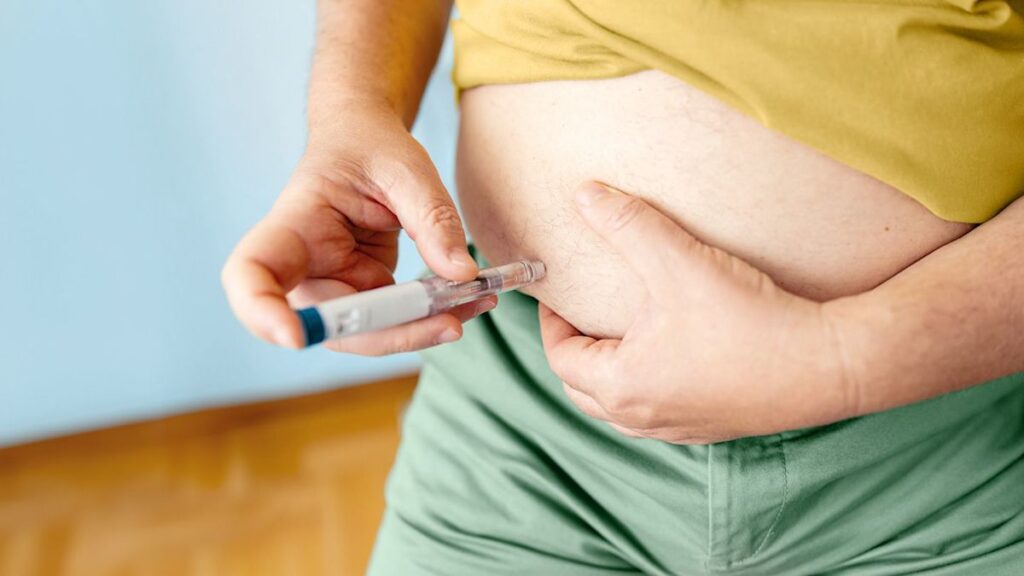


If you’re new to injectable diabetes and obesity medications like Ozempic (semaglutide) and Zepbound (tirzepatide), it could be the first time you’ve ever given yourself a shot. Understandably, you might feel a little anxious.
You may worry it’ll hurt, or that you’ll harm yourself or waste medication by messing up the protocol, which includes measuring out the dose, disinfecting the injection site, and inserting the needle.
If you’re a first-timer, knowing the fundamentals of self-injection can help you feel calmer and more in control. But even if you’ve been on these medications for a while, you may find that a better sense of the dos and don’ts can help you do the best job you can and avoid common mistakes.
Different Injection Methods
There are three main injection options:
Advertisement
Advertisement
Single-Use Auto-Injector The needle rests inside a spring-loaded pen. You press the pen against your skin, push a button or press down, and a needle comes out to provide a single preset dose. After using the pen once, you throw it away.
Multidose Dial Pen One pen contains enough medication for several weeks (usually four doses). You attach a tiny, fresh disposable needle to the tip each week, turn a dial to select your exact dosage, then push a plunger to inject it.
Vial and Syringe This is the traditional injection type: You carefully draw the appropriate measure from a vial into a syringe and inject your dose.
None of these methods utilizes a long, thick needle. Needles for these medications are short, ultrafine, and constructed to go into the fatty tissue just under the skin (subcutaneous), rather than all the way into muscle.
“Generally speaking, it’s painless,” says Mehmet Furkan Burak, MD, an endocrinologist and instructor at Brigham and Women’s Hospital/Harvard Medical School and a spokesperson for the Endocrine Society. “It might feel like a mosquito bite, but that’s it.”
Auto-injectors and multidose dial pens are designed for simplicity and convenience. “I have never had anyone refuse to use the auto-injector or pen after I administered their first injection in the office to show them how easy it is to use,” says Wayne Ho, MD, a spokesperson for the Obesity Society as well as an internal medicine and obesity specialist at Keck School of Medicine in Los Angeles.
Advertisement
Advertisement
The vial-and-syringe method requires more effort and skill. “You have to make sure that the air is out of the syringe, and then make sure that you draw the material back into the syringe without seeing a lot of bubbles, because the bubbles will affect how much you might be able to inject,” says Dace Trence, MD, president of the American Association of Clinical Endocrinology and professor of medicine in the division of metabolism, endocrinology, and nutrition at the University of Washington Medicine in Seattle.
The manufacturers of medications like Zepbound, Mounjaro, Ozempic, and Wegovy have detailed instructions on their websites that indicate how to prepare and give yourself a shot.
Storing Your Medication and Setting Up for Your Shots
When it comes to storing the medicine and then getting ready to use it, the process is fairly failsafe, according to our experts.
Dos
Do stash medication in the fridge. Once you take it out, the drug can be kept at room temperature, away from direct sunlight, for at least 14 days. (Check the instructions for your medication brand, as each one has specific limits on room-temperature storage.)
Do wash your hands thoroughly with soap and water before an injection. “This helps prevent introducing bacteria or other microbes into the body,” says Dr. Burak.
Do clean the injection site with alcohol. This will also help you avoid infections.
Don’ts
Don’t store medication in the freezer or a place where it can get overheated. If the medicine gets too cold or hot, the active molecules can break down, making the drug less effective or completely inactive.
Don’t use cloudy, discolored, or particle-filled medication. The liquid should look clear and colorless.
Don’t inject expired medication. Always check the use-by date.
Picking an Injection Site
You should inject the medication in parts of your body where there is a lot of fatty tissue to properly absorb the drug.
Advertisement
Advertisement
“There is no difference among the sites in weight loss efficacy, so choose the site you are most comfortable using,” says Dr. Ho.
Peminda Cabandugama, MD, an endocrinologist and obesity medicine specialist at Cleveland Clinic in Ohio and a spokesperson for the Obesity Society, offers the following tips:
Dos
Do inject in the abdomen. But avoid areas within 2 inches of the belly button, which may have less fat and more nerve endings.
Do inject in the top middle of the thigh. Avoid the inner thigh, which can have a high concentration of nerves and blood vessels. Always target areas with a good amount of fat under the skin, rather than muscle.
Do consider rotating injection sites. Rotating can help prevent lumpy spots (known as lipohypertrophy), local infections, and injection-site reactions, although these risks are low, given the small size of the needle and the once-a-week frequency of the shots.
The back of the upper arm can be a suitable injection site as well, according to some doctors. But you might find it difficult to reach on your own, so you may need someone else’s help.
Don’ts
Don’t inject the medication into a muscle or vein or over a bone or joint. The medications are formulated for release through fatty tissue. If injected elsewhere, they may be less effective and possibly cause discomfort or pain.
Don’t inject into scarred, damaged, lumpy, or hardened tissue. This may cause poor drug absorption. The same goes for any area of skin with an active rash.
Rules for Auto-Injectors and Multidose Pens
Auto-injectors and multidose pens are the most common ways to inject the medicines. Here are dos and don’ts to keep in mind:
Dos
Do attach a fresh needle, as per manufacturer instructions. Also, perform a flow check/priming step if required by the manufacturer.
Do remember to take the cap off prior to pressing the button. “I have had many patients forget to do this and waste a dose of medication,” says Ho.
Do press and hold the dose button completely. Keep the button down for the instructed count (usually 5 to 10 seconds), before pulling the needle out, to ensure full dose delivery.
Don’ts
Don’t touch the needle tip. When you need to attach the needle to the pen, you can usually use the outer needle cap as your handling tool.
Don’t share a multidose pen with anyone else. You want to avoid any possibility of contracting or passing along a blood-borne infection.
Postinjection Care and Safe Needle Disposal
Once the medication goes into your body, there are a few things to keep in mind.
Dos
Do dispose of injection devices correctly. Use a U.S. Food and Drug Administration-cleared sharps container or a heavy-duty plastic household container, such as an empty laundry detergent bottle. “Be sure to label the container clearly,” says Dr. Trence.
Advertisement
Advertisement
Check with your local government to see if there is a drop-off site or recycling program that will accept needle containers or if you can just dispose of them in your household trash.
Don’ts
Don’t rub or massage the injection site right after injecting. This can affect medication absorption and possibly cause bruising.
Don’t worry if you develop a mildly itchy rash or other temporary skin reaction around the injection site. There is around a 10 percent risk of this occurring with tirzepatide (Zepbound, Mounjaro). The rash will usually go away on its own, but you can also treat it with a cold compress or a skin soother like an antihistamine cream.
Don’t throw used needles or pens straight into the garbage. Tossing loose needles or used pens directly into household trash or recycling bins puts other people at risk of getting poked.
Injection Mistakes and Other Issues That Should Prompt Medical Attention ASAP
According to Ho, you should contact a health care provider if you:
Suspect that you have given yourself an incorrect dose
Develop signs of an infection, such as painful swelling, tenderness, or pus around an injection site
Break a needle off in your skin
Experience bleeding after an injection that will not stop with at least five minutes of pressure
Advertisement
Advertisement
Other issues that should prompt you to seek out emergency care include:
Excessive nausea, vomiting, or diarrhea
Severe, sharp abdominal pain that radiates to your back (a potential sign of pancreatitis, or inflammation of the pancreas)
Signs of an allergic reaction, such as swelling of the face, lips, or throat, or trouble breathing
The Takeaway
Always inject into fatty parts of your body (abdomen, upper thigh, back of the arms), cleaning the area first with alcohol.
Don’t touch the needle tip or share a multidose pen with anyone else.
If signs of an infection develop at an injection site, seek medical care.
EDITORIAL SOURCES
Everyday Health follows strict sourcing guidelines to ensure the accuracy of its content, outlined in our editorial policy. We use only trustworthy sources, including peer-reviewed studies, board-certified medical experts, patients with lived experience, and information from top institutions.
Advertisement
Advertisement
Resources
Zhou A et al. Comparison of Usability, Accuracy, Preference, and Satisfaction Among Three Once-Weekly GLP-1 Receptor Agonist Pen Devices. DiabetesSpectrum. November 2018.
Peri R et al. Designing GLP-1 Delivery: Structural Perspectives and Formulation Approaches for Optimized Therapy. Nutrition & Diabetes. November 23, 2025.
Mehta A et al. Glucagon-Like Peptide-1 Receptor Agonists and Pancreatitis. Cleveland Clinic. December 11, 2025.
Meet Our Experts
See Our Editorial Policy Meet Our Health Expert Network

Adam Gilden, MD, MSCE
Medical Reviewer
Diplomate of American Board of Obesity Medicine Foundation
Advertisement
Advertisement
Adam Gilden, MD, MSCE, is an associate director of the Obesity Medicine Fellowship at University of Colorado School of Medicine and associate director of the Colorado University Me…
See full bio
Don Rauf
Author
Don Rauf has been a freelance health writer for over 12 years and his writing has been featured in HealthDay, CBS News, WebMD, U.S. News & World Report, Mental Floss, United Press …
See full bio
See Our Editorial Policy Meet Our Health Expert Network
Source link