

Colombia and Peru sit next to each other on the map, yet they ask very different things of a family. One rewards you for staying flexible and moving between cities. The other revolves around a handful of timed tickets and a few high altitude mornings.
If you’re weighing both for a trip with children, the details matter more than the postcards. Here’s how the two countries compare on paperwork, safety advisories, altitude, logistics, timing and what there is to do.
Why These Two Countries Keep Landing on Family Lists
Why These Two Countries Keep Landing on Family Lists (Image Credits: Pexels)
Colombia has been one of Latin America’s busiest tourism stories lately. It welcomed a record 3,137,210 international visitors between January and August 2025.[1] That was a 5.3% increase over the same period in 2024, according to ANATO.[1]
Advertisement
Advertisement
Peru’s recovery has been slower. One analysis put the country’s 2025 total at 3.4 million international visitors, 22% lower than in 2019,[2] while Colombia recorded a rise of 48% over 2019.[2] Other sources give a higher figure for Peru, around 3.8 million, so the exact number depends on how arrivals are counted.
Entry Rules and Getting Through the Airport
Entry Rules and Getting Through the Airport (Image Credits: Pixabay)
Colombia asks for a bit of online homework. The US State Department advises travelers to complete the free online Check Mig form 72 hours before a flight to or from Colombia.[3] It also notes that Colombia may deny entry without a return ticket,[3] which is worth remembering if you plan to exit through a different country.
Air access is broad on both sides. Colombia reported 1,520 weekly international flight frequencies by November 2025, connecting it to 29 nations through 29 airlines.[4] In Peru, Lima’s Jorge Chávez airport handles over 66% of international arrivals,[5] so most families will pass through the capital before heading to Cusco.
Reading the Safety Advisories Calmly
Reading the Safety Advisories Calmly (Image Credits: Unsplash)
The headline for Colombia sounds alarming. The State Department’s advisory sits at Level 3, Reconsider Travel, issued on March 31, 2026.[3] Yet the advisory is specific about geography. One local agency points out that the do not travel zones are Arauca, Cauca except Popayán, Valle del Cauca except Cali, Norte de Santander and the area within 10 km of the Venezuela border.[6]
Advertisement
Advertisement
The same agency notes that Cartagena, Bogotá, Medellín, the Coffee Region, Santa Marta, Tayrona and San Andrés all sit outside those restricted zones.[6] Demonstrations are another practical issue, since they are common throughout Colombia and can interrupt travel within and between cities.[3] For Peru, read the current advisory separately before you book, and recheck both closer to departure because they change.
Altitude Is the Real Planning Question
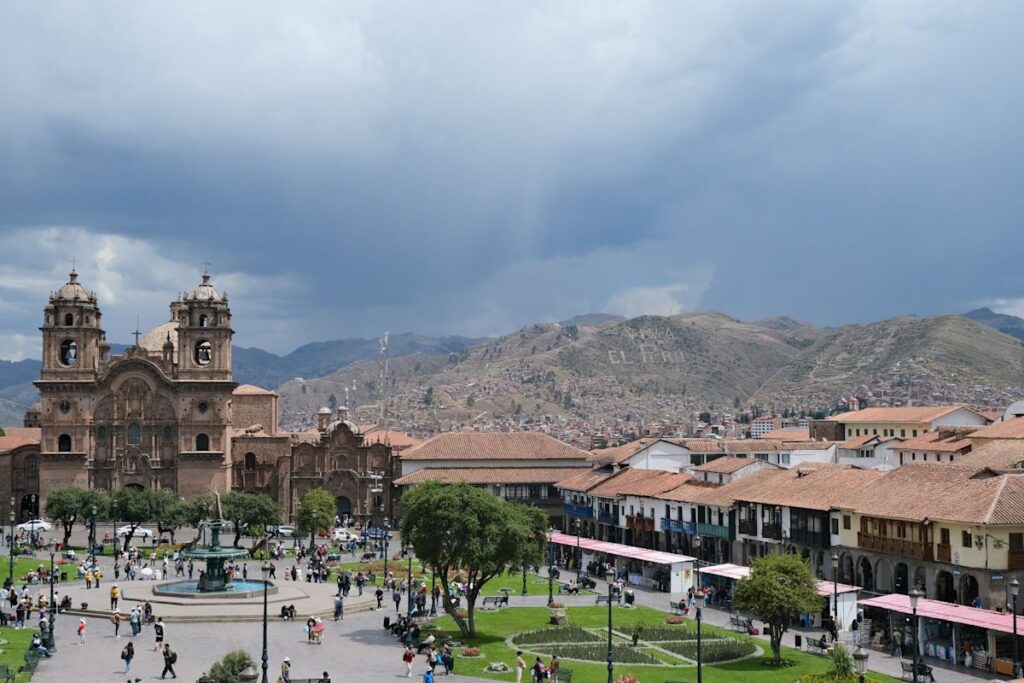
Altitude Is the Real Planning Question (Image Credits: Unsplash)
Many parents worry about crime and overlook elevation. Cusco sits at roughly 3,400 meters, about 11,000 feet, and children can feel it as much as adults do. Headaches, poor sleep and low appetite are the usual early signs, so it’s sensible to talk to a pediatrician before going.
Colombia is gentler overall, though not flat. Bogotá is around 2,600 meters, Medellín roughly 1,500, and Cartagena is at sea level. In Peru, many families start in the Sacred Valley, which is lower than Cusco, and Machu Picchu itself is lower still at around 2,400 meters. Building in a slow first day makes either trip easier.
Machu Picchu Rewards Planning Ahead
Machu Picchu Rewards Planning Ahead (Image Credits: Unsplash)
Peru’s anchor attraction runs on a strict system. As of 2026, Machu Picchu operates with three circuits and ten sub routes, hourly entry windows from 6:00 to 15:00, and a strict 30 minute grace period.[7] Daily capacity is 4,500 in the regular season and up to 5,600 on designated high season dates.[7] Tickets are tied to identity, so you need the same passport used to purchase.[8]
Advertisement
Advertisement
Booking early is the safest approach with kids in tow. One operator recommends buying at least 2 to 3 months ahead, especially in high season from June 19 to November 2.[9] Child pricing varies by source: one lists $18 USD for children aged 3 to 17,[10] while another says children under 8 enter free. Confirm the rules on the official ticketing site before you pay, and plan on about 2.5 to 4 hours inside, depending on the circuit.[8]
Colombia Works Best as a Chain of Cities and Landscapes
Colombia Works Best as a Chain of Cities and Landscapes (Image Credits: Unsplash)
Where Peru funnels you toward one site, Colombia spreads the interest around. Bogotá is the top international destination, with 472,941 foreign visitors in the first three months of 2025.[11] Medellín is described as the fastest growing tourism destination within Colombia.[12]
Beyond the big cities, the country is known for the beaches and landscapes of Tayrona National Park and the scenic Coffee Triangle.[1] That variety suits children who need a change of scenery every few days. It also means more internal flights or long drives, so budget energy as well as money for the hopping around.
Timing, Crowds and What You’ll Spend
Timing, Crowds and What You’ll Spend (Image Credits: Unsplash)
Season shapes both trips. In Peru, 2025 monthly arrivals peaked at 317,090 in July, with February the lowest at 258,090.[13] Since high season at Machu Picchu runs through early November, school holiday travel means competing for the best entry slots.
Advertisement
Advertisement
Colombia’s busiest stretches are different. December, January and July were the peak months for international tourism in 2025.[14] On costs, one compilation estimated that the average spend per international visitor was around USD 1,632 in 2023,[15] though your own total will depend on flights, hotels and how many internal legs you add.
Culture, Nature and Food for Curious Kids
Culture, Nature and Food for Curious Kids (By tinou bao, CC BY 2.0)
Peru’s draw is deep history. Its tourism is directed toward archaeological monuments, Amazon ecotourism, colonial cities and gastronomy.[16] Machu Picchu remains the top draw, attracting more than 190,000 visitors in just the first two months of 2025.[5]
Colombia leans toward living culture and nature. Its appeal is described as a mix of colonial cities, Caribbean beaches, coffee region landscapes, music culture and biodiversity.[15] For children, that often means more hands on days, like farm visits or beach time, rather than long guided walks through ruins.
Choosing Between the Two Trips
Choosing Between the Two Trips (Image Credits: Unsplash)
Peru suits families who want one signature historical site and are willing to plan around altitude and timed entry. Colombia suits families who prefer variety, lower elevations in most places and a looser schedule, with the Level 3 advisory and its regional exclusions kept in view.
Advertisement
Advertisement
Both countries are growing destinations, with Colombia reaching record arrivals and Peru projected to approach around 4.0 million foreign tourists in 2026.[17] Check the latest advisory, ticket rules and entry forms for each country shortly before you travel.
Source link