

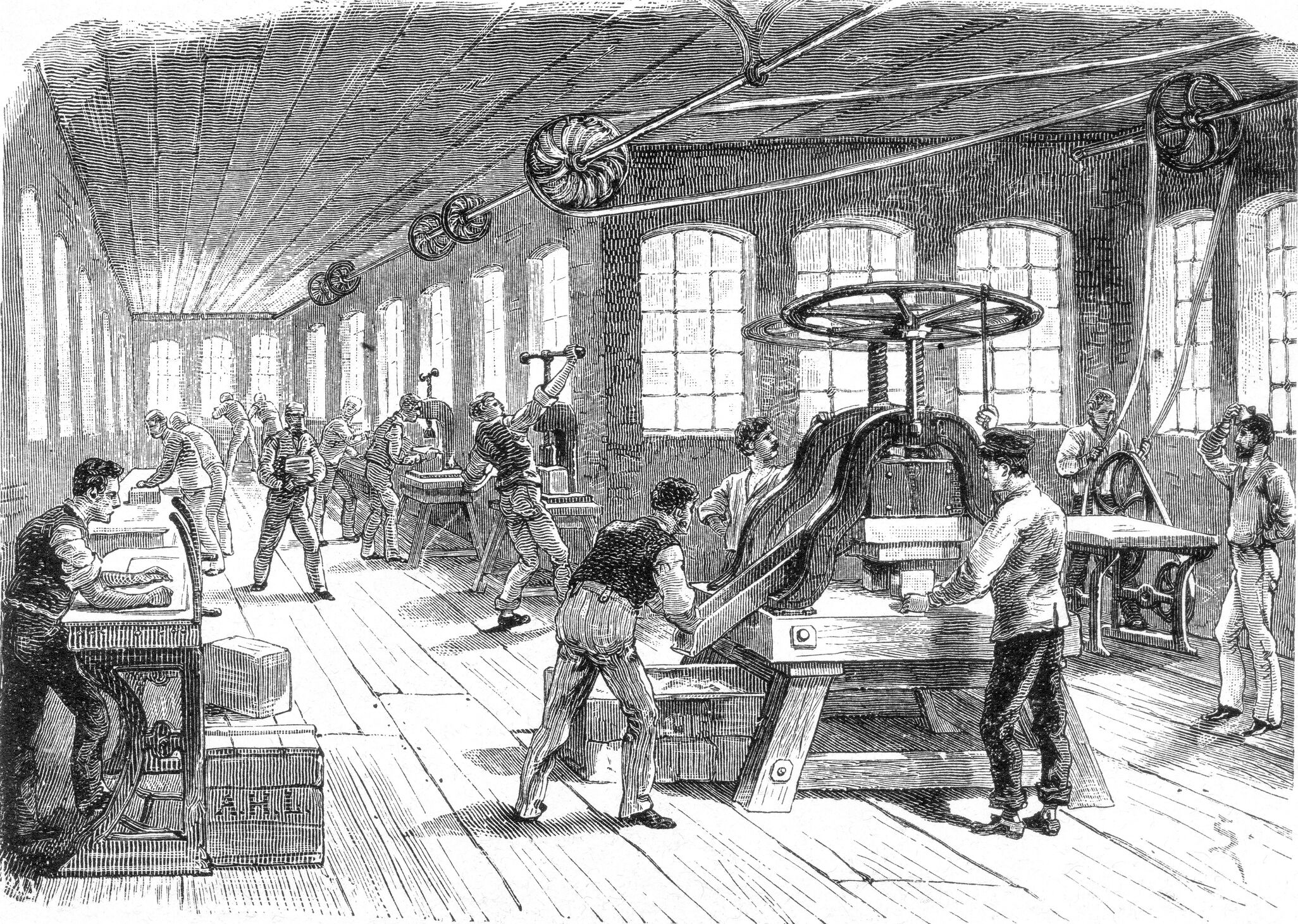
The Industrial Revolution reshaped how Americans worked and lived, but those early factories were still anchored to the physical world. Business owners did not yet worry about someone on the other side of the globe shutting down their operations with a single keystroke.
As the United States marks its 250th anniversary, WTOP presents “250 Years of America,” a multipart series examining the innovations, breakthroughs and pivotal moments that have shaped the nation since 1776.
Knox Systems is proud to partner with WTOP to bring you this series.
The Industrial Revolution in the United States was not a single moment but a sweeping transformation that unfolded over more than a century. As the Library of Congress notes, it marked the shift from goods crafted in small home-based workshops to mass production powered by machines inside factories. This transition reshaped how Americans worked, lived and understood the very nature of economic opportunity.
A defining milestone came near the end of the 18th century. Having absorbed new manufacturing technologies in Britain, Samuel Slater, an industrialist who later became known as the “Father of the American Industrial Revolution,” brought those innovations across the Atlantic and established the first U.S. cotton mill in Beverly, Massachusetts. His work is often credited with helping spark industrialization in America by showing how quickly new ideas could alter the trajectory of an entire economy.
Those early factories, however, were still anchored to the physical world in ways that feel almost quaint today. They required direct access to water, power, reliable transportation systems such as railroads and proximity to suppliers and labor. The risks that factory owners worried about were similarly tangible. Machines could break. Workers could be injured. Raw materials might not arrive on time. Production delays and safety concerns were local problems with local solutions — visible, immediate and concrete.
What owners didn’t worry about was someone on the other side of the globe shutting down their operations with a single keystroke. They never imagined that a factory’s greatest vulnerability might not be a snapped belt or a jammed loom, but a compromised password, a malicious link or a software vulnerability buried deep inside a global supply chain.
The evolution of risk from physical to digital mirrors the broader evolution of industry. Just as machines accelerated production, modern technology has accelerated exposure by connecting businesses to vast opportunities and equally vast vulnerabilities. Supply chains that once stretched a few miles now span continents. Workforces that once operated on factory floors now collaborate through cloud systems. And operations that once relied on mechanical certainty now depend on digital trust.
In this environment, risk is no longer contained within factory walls. It is diffuse, global and often invisible. Cyberattacks can disrupt manufacturing lines. Data breaches can expose proprietary designs. Ransomware can force entire companies offline. Threats can originate from competitors, criminal networks or even nation-states — actors early inventors could never have imagined operating in arenas they never conceived.
This shift demands a fundamentally new approach to resilience. Just as the Industrial Revolution required new systems of labor, production and transportation, the digital age requires new systems of protection. Businesses must now build security into everything they design, operate and connect. They must anticipate threats that evolve rapidly, cross borders effortlessly and exploit weaknesses instantly.
The pioneers of the Industrial Revolution reshaped the world through innovation. Today’s businesses must protect that world through the same spirit of innovation by designing systems ready for risks that are no longer mechanical but digital, no longer local but global, no longer visible but increasingly hidden.
Get breaking news and daily headlines delivered to your email inbox by signing up here.
© 2026 WTOP. All Rights Reserved. This website is not intended for users located within the European Economic Area.