

BANGKOK (AP) — A Thai court on Tuesday ruled that the operator of a major gold mine in northern Thailand…
BANGKOK (AP) — A Thai court on Tuesday ruled that the operator of a major gold mine in northern Thailand is responsible for environmental damage and health impacts on nearby villagers, in a long-awaited verdict that could set a precedent for climate litigation in the country.
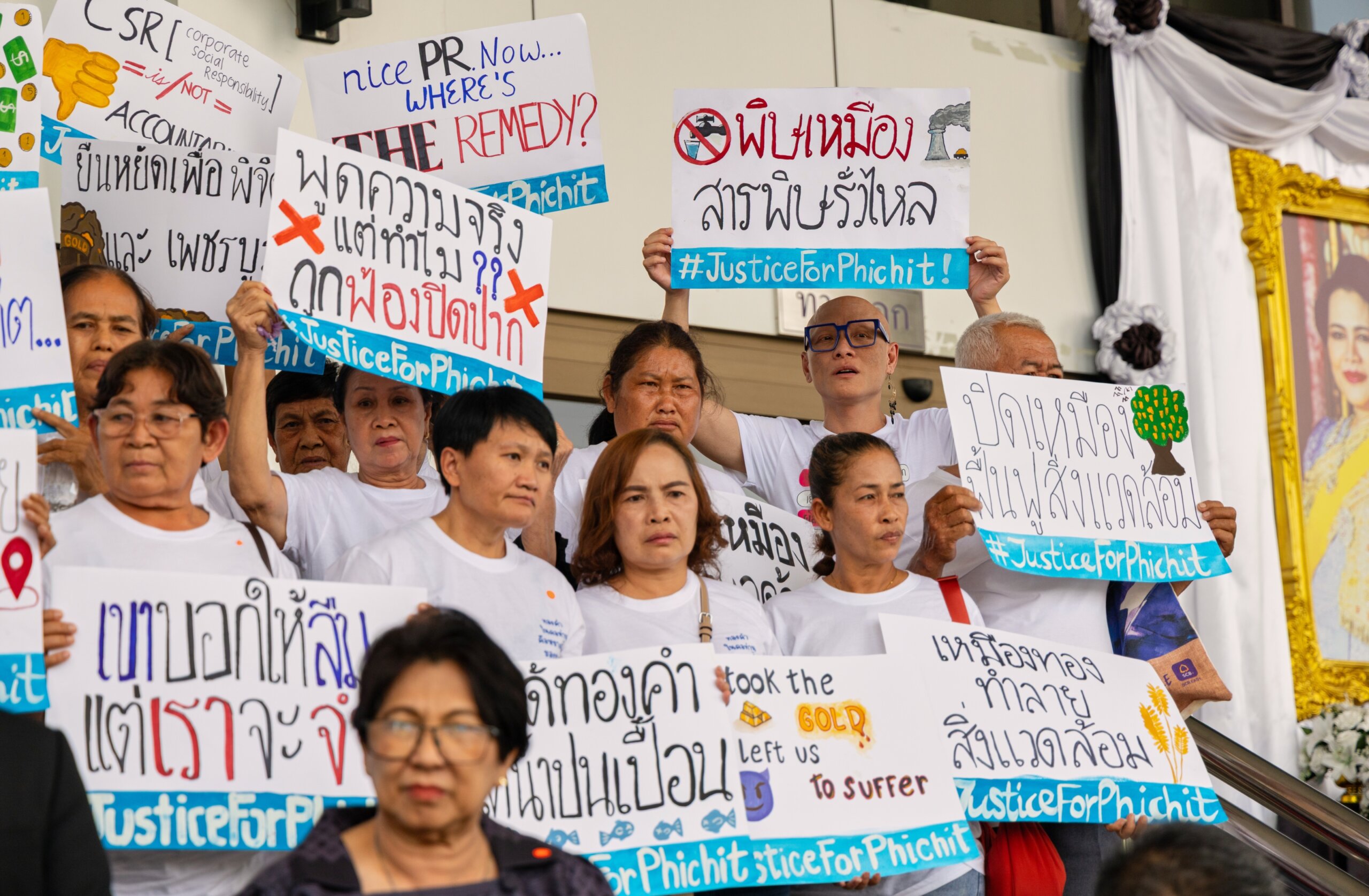
The case stems from a 2016 class action lawsuit filed by hundreds of villagers in Phichit province, who accused the Australian-owned Chatree Gold Mine of causing toxic contamination through its operations. The Bangkok Civil Court found the company liable and ordered compensation for affected residents.
The ruling could shape whether communities view the courts as “a pathway or a dead end,” said Emilie Palamy Pradichit of the Bangkok-based human rights group Manushya Foundation that has been supporting the villagers in the lawsuit.
This decision could set a positive precedent for future climate cases in Thailand and establishes a new benchmark for environmental law in Southeast Asia, legal analysts say. These types of “polluter pays” cases are becoming more common across the region, mirroring a global trend of increasing climate litigation.
The verdict is a “clarion call for many of the cases that are currently taking place” in other Southeast Asian nations, like the Philippines and Indonesia, said Jameela Joy Reyes with the Grantham Research Institute on Climate Change and the Environment.
Courts often look to rulings in other jurisdictions to guide decisions, even if those precedents aren’t binding, according to Reyes, who said this is especially true in new legal fields like climate litigation.
Thailand verdict could set precedent
More than 300 villagers filed the case against Akara Resources, operator of the Chatree Gold Mine, which is Thailand’s largest and is owned by Australia-based Kingsgate Consolidated. The case was the country’s first environmental class action following a 2015 legal amendment allowing such lawsuits.
They alleged toxic runoff from the mine, with medical surveys showing elevated levels of heavy metals, including arsenic, cyanide and manganese, among residents. On Tuesday, the judge said the company failed to prove the contamination was unrelated to its operations and ordered compensation ranging from 50,000 ($1,535) to 200,000 baht ($6,143) per affected individual, plus payments for medical care and emotional distress.
Chatree’s legal controversy spans multiple cases, several medical surveys and a counter lawsuit. There was also a direct intervention from former Prime Minister Prayuth Chan-ocha, who used sweeping powers under the post-coup military government to shut down mining operations.
Kingsgate then sued the Thai government in 2017 for unfair license revocation. Both sides reached a settlement last year.
Thanyalak Boontham, one of the plaintiffs, said her blood tests showed toxin levels exceeding safety standards. While the compensation fell short of expectations, she welcomed the ruling.
“The fight is also for our future generation,” she said outside the court after the verdict. “I’d like them to be able to grow up in a good environment.”
Cherdsak Utha-aroon, Akara Resources’ general manager for sustainability, who was present at the hearing, told the AP afterward that the company respects the court’s ruling and that its legal team will discuss the next steps. He declined to comment further.
Southeast Asia’s watershed ‘polluter pays’ cases
These ‘polluter pays’ cases, where communities sue corporations over environmental damage, are becoming more common in climate litigation, said Georgina Lloyd, an environmental law expert with the United Nations Environment Program.
“Asia’s share of climate and environmental litigation is increasing,” Lloyd said. “We continue to see this trend growing both in the volume of cases but also the geographical scope of jurisdictions.”
Around 225 climate litigation cases were filed in 2024, according to the Grantham Research Institute, which tracks nearly 3,000 case across 60 countries.
The number of climate cases in climate-vulnerable regions like Southeast Asia, which have been battered by deadly extreme weather events that have caused billions of dollars’ worth of damages, is expected to increase, said Reyes of the Grantham Research Institute.
Two watershed ‘polluter pays’ cases in Southeast Asia are taking a novel legal approach in attempting to hold companies liable for “climate harms” triggered by their climate change -causing emissions, Reyes said.
Survivors of 2021 Super Typhoon Odette in the Philippines sued the energy giant Shell in the United Kingdom last year on the basis that Shell’s emissions greatly contributed to climate change and thus the intensity of the typhoon.
A Swiss court in 2025 also allowed a case to proceed that was filed by fisherfolk from Indonesia’s Pari Island against the cement company Holcim over emissions they say contribute to the flooding and sea-level rise that threatens their homes and livelihoods.
These two cases, as well as Thailand’s Chatree verdict, are a “very poignant call for discussions on climate justice,” Reyes said.
Regardless of compensation, Reyes said, “the fact that the court made a proclamation of liability is a win in and of itself. That could be translated to other jurisdictions and be used as a cautionary tale for other companies moving forward.”
___
The Associated Press’ climate and environmental coverage receives financial support from multiple private foundations. The AP is solely responsible for all content. Find AP’s standards for working with philanthropies, a list of supporters and funded coverage areas at AP.org.
Copyright
© 2026 The Associated Press. All rights reserved. This material may not be published, broadcast, written or redistributed.