

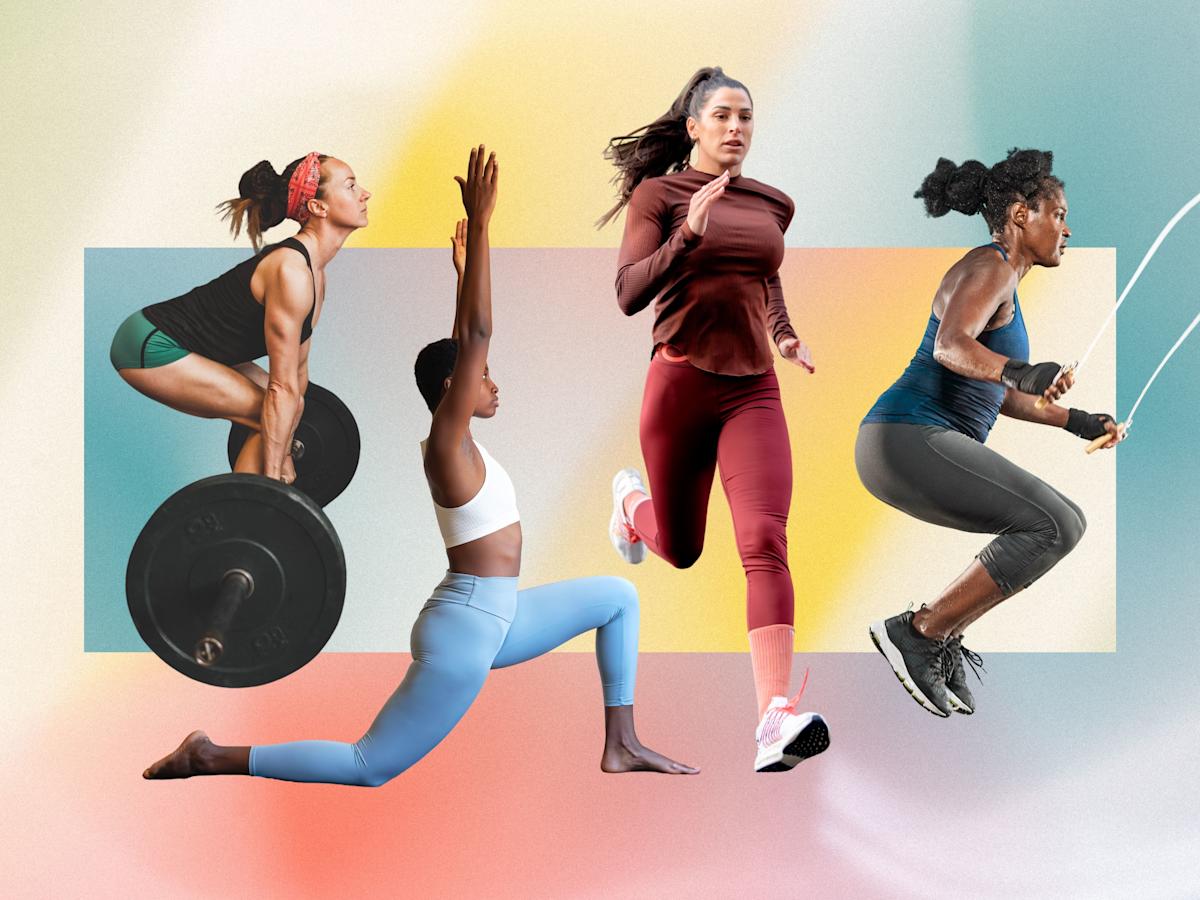
Collage: Self; Source Images: Oleg Breslavtsev/Daniel de la Hoz/Carrastock/Erik Isakson/Getty Images, corelens
Fitness advice typically hammers home one core message: move more. But a new large-scale study suggests that for an exercise program to be truly effective, you need variety.
According to new research published in BMJ Medicine, people who regularly do a mix of different physical activities (not just one go-to workout) tend to live longer, even when their total amount of exercise stays the same.
The study followed more than 111,000 adults for more than 30 years, collecting data from two large cohorts. Researchers tracked participants’ exercise routines including walking, running, cycling, weight training, stair climbing, and racquet sports, and analyzed how exercise type and exercise variety impacts lifespan.
It’s all about variety
It’s no surprise that researchers found that more physical activity tends to result in longer lifespan, but the most interesting finding came when researchers zeroed in on how people were moving.
Participants who consistently did multiple types of exercise, for example, combining walking with strength training or mixing cardio with racquet sports, had a significantly lower risk of dying than those who stuck to just one activity. Even after evaluating how much people exercised overall, those with the highest activity variety had about a 19% lower risk of death compared to those with the least variety of exercise types.
In other words: Two people could log the same weekly workout time, but the one who spreads that time across different types of activities may come out on top.
Why mixing workouts may matter
Bringing variety into your exercise routine challenges the body in different ways, which may help explain the results. Aerobic activities like walking, running, or cycling improve cardiovascular fitness and metabolic health. While strength training builds muscle, supports bone density, and helps us maintain mobility and independence as we age. Then there’s activities that require coordination, like tennis or pickleball, that can support balance and agility. The benefits of changing things up goes beyond physical health. It boosts brain health too.
“Physical activity is going to increase our longevity beyond heart health and our emotional wellbeing,” Hilary Cauthen, Psy.D., CMPC, a clinical sport psychologist and certified mental performance consultant tells SELF.
“Doing a variety of things is where we actually improve the growth in our brain, our heart and our muscles. We’re fending off the declining thing that will happen [mortality], because our brain will eventually lose neural pathways as we age.”
By engaging multiple systems and planes of motion, exercise variety might have more health benefits than repeating the same movement over and over. Mixing up your routine can also reduce overuse injuries and burnout, two common reasons people stop exercising altogether.
“If you start doing different things then your brain can keep growing. We also eliminate boredom,” Dr. Cauthen says.
Almost every activity counts (with one exception)
The study found that most individual activities—including walking, jogging, running, weight training, rowing, stair climbing, and racquet sports—were associated with lower mortality risk. Walking stood out as particularly beneficial in the study because it delivered longevity benefits without requiring a lot of time, speed, or intensity—about 150 minutes per week of brisk walking, or 30 minutes a day, five days a week.
There was one exception: swimming didn’t show the same clear benefit as other activities. The researchers note this doesn’t mean swimming doesn’t count, just that the study didn’t find a clear long-term benefit once other lifestyle and health factors were taken into account. This could be because of differences in intensity, frequency, or factors related to who tends to swim regularly.
You don’t need extreme workouts to benefit
This new research offers an encouraging takeaway: Health advantages tend to hit a wall at moderate levels. For most activities, longevity benefits leveled off when these activities were done at high intensity. That’s great news, because it means you don’t need to train like a professional athlete. Regular, moderate movement—especially when it includes more than one type—can go a long way.
What this means for your workout routine
If you’ve ever felt pressured to find your go-to workout and stick with it forever, this new research tells us there’s no need to limit yourself. In fact, you’re better off finding multiple ways to move that fit your lifestyle and that you can regularly enjoy.
Maybe that’s walking, plus a couple days of strength training. Or a couple of easy jogs each week, plus a group fitness class with a friend. Even everyday movement like climbing stairs counts. The amount of time you spend exercising matters, but having a workout plan that spices up your routine—and keeps you excited and engaged—matters even more.
Related:
Get more of SELF’s great service journalism delivered right to your inbox.
Originally Appeared on Self