

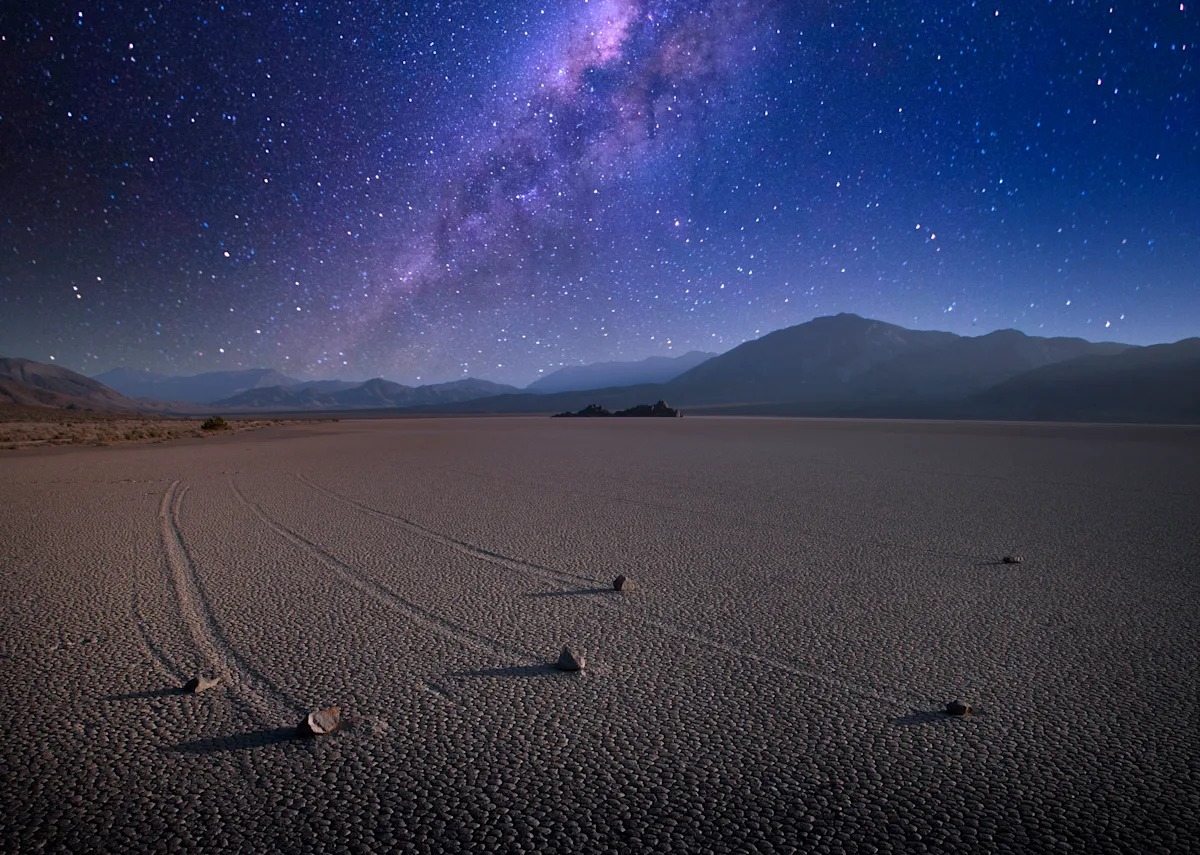
When the sun sets, the landscapes come to life in America’s national parks. The trails turn to silhouettes, the animals stir, and starlight teases out textures hidden by the daylight. It’s called noctourism, the art of exploring after dark.
The National Park Service has supported the movement through dark-sky programs, with dozens of parks now recognized by DarkSky International. Places like Denali National Park and Preserve and Death Valley National Park are just as alluring at night as they are during the day. In these national parks, darkness is an invitation to see a different side of the nation’s most iconic landscapes.
Denali National Park & Preserve, Alaska
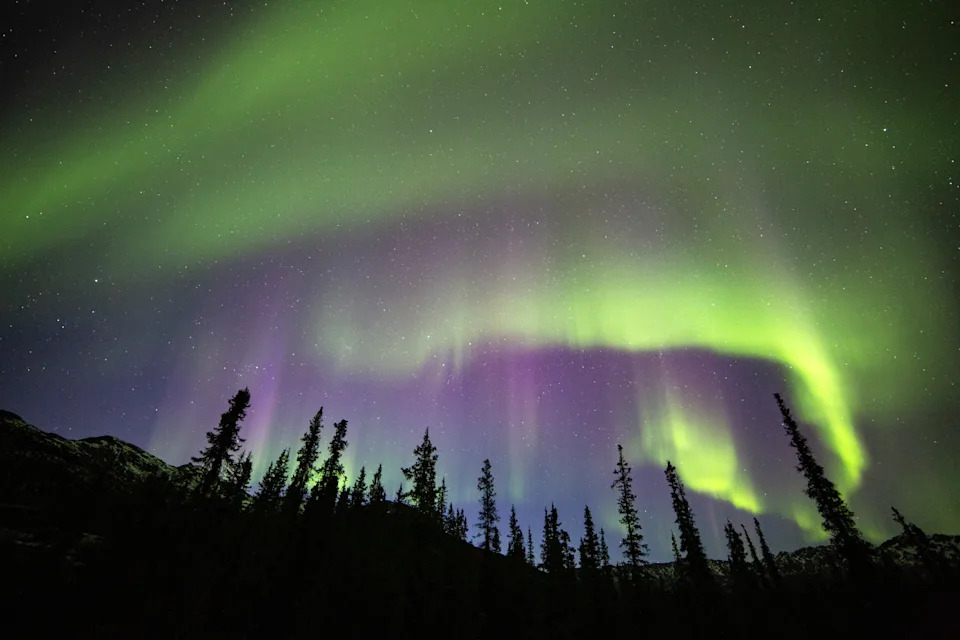
The Northern Lights over Denali National Parkin Alaska.
(Daniel A. Leifheit via Getty Images)
With six million acres and almost no artificial light, Denali National Park & Preserve offers some of the clearest skies in North America. In the dark, you may catch a glimpse of the Northern Lights dancing over the Alaska Range. When they finish, the Milky Way glitters like diamonds across the horizon. The park service notes that its lack of light pollution makes it one of the best stargazing locations in the U.S. Travelers who venture out after dark often describe the silence as complete, interrupted only by the crunch of grass or snow and the rustle of wind through spruce.
Death Valley National Park, California
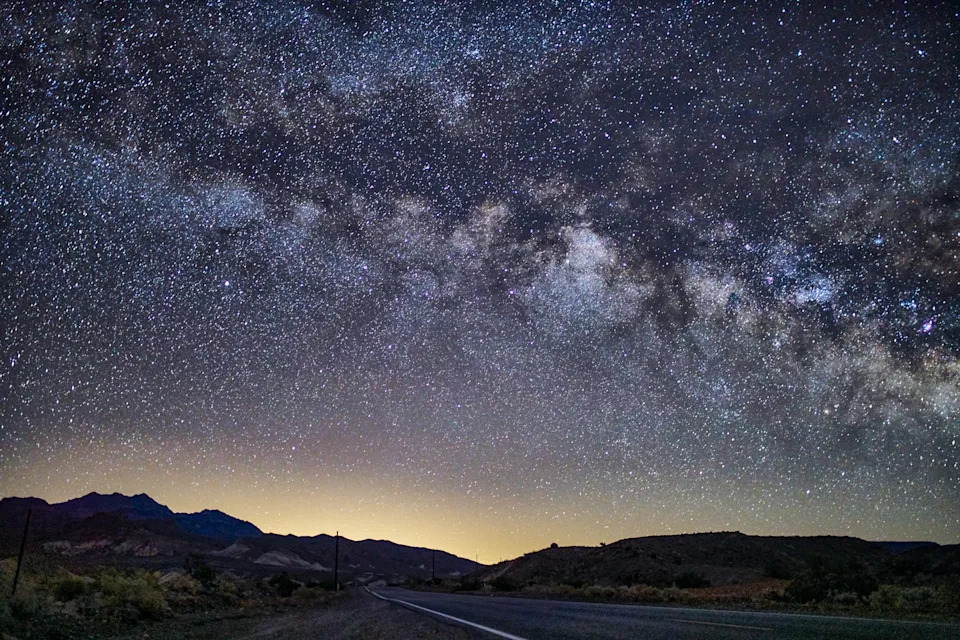
stars and milky way at night in death valley california at night
(rez-art via Getty Images)
During the day, the desert is harsh and extreme. At night, it softens. Death Valley National Park holds a Gold Tier Dark Sky designation from Dark Sky International, meaning its skies are among the darkest in the world. At Mesquite Flat Sand Dunes, visitors stretch out on cool sand as constellations dangle above them. Ranger-led astronomy nights and the annual Dark Sky Festival draw travelers who come not for the heat but for the stars.
Arches National Park, Utah
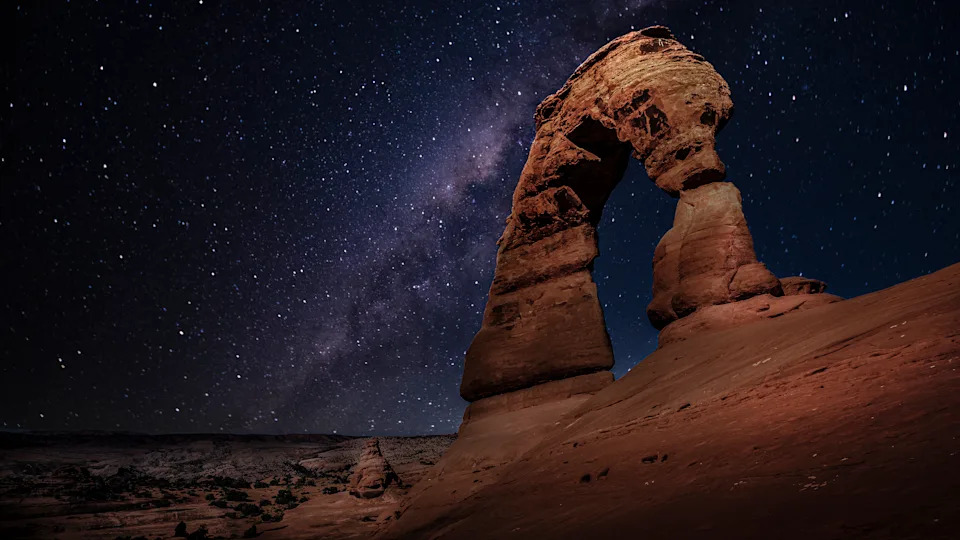
Photo taken in Moab, United States
(EyeEm Mobile GmbH via Getty Images)
The sandstone arches that glow orange in the sun turn black against the stars at night. Arches National Park is an International Dark Sky Park, showcasing the contrast between the sculpted rock and the hypnotic sky.. Visitors hike to Delicate Arch with red-light headlamps to watch meteor showers reflected on the desert floor. The park service advises arriving after 10 p.m., when crowds disperse and the Milky Way appears like a river of light.
Big Bend National Park, Texas
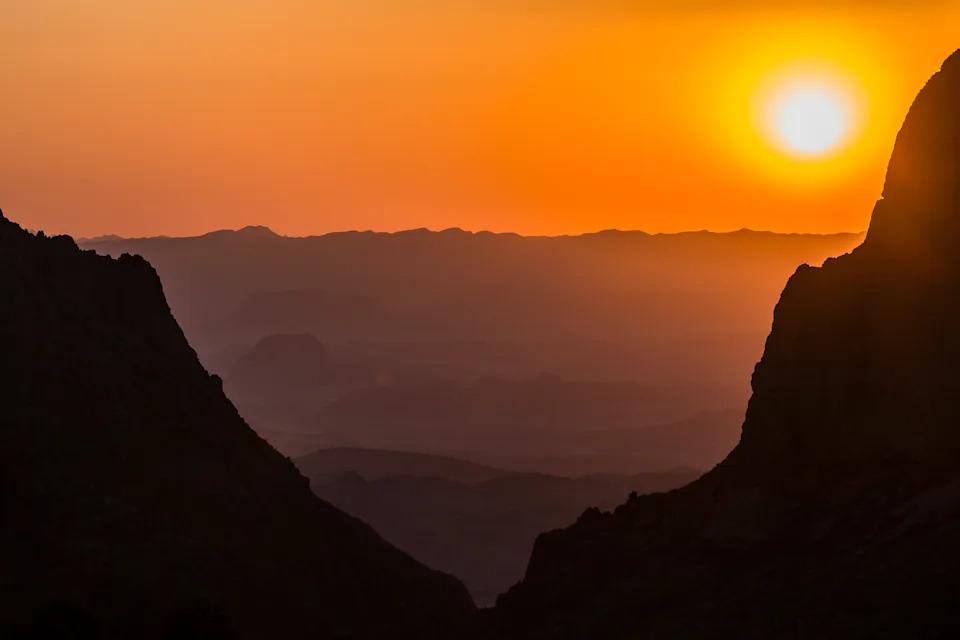
Sunset at The Window in Big Bend National Park in Texas.
(BlueBarronPhoto via Getty Images)
Big Bend National Park is blissfully apart from the glare of city lights. According to DarkSky International, the remote location leads to one of the darkest skies in the United States. Campers along the Rio Grande often describe seeing satellites and the faint shimmer of the Milky Way with the naked eye. The Chisos Basin and Rio Grande Village are popular night-sky points, but even roadside pullouts can feel like a planetarium.
Voyageurs National Park, Minnesota
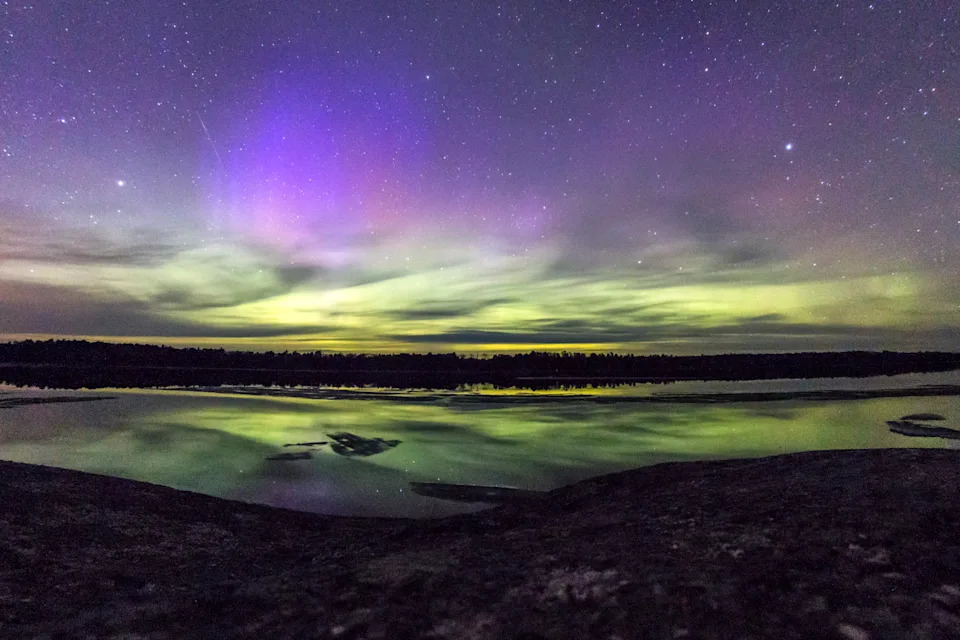
The Northern Lights over the waters of Voyageurs National Park in Minnesota, near the Ash River Visitor Center.
(BlueBarronPhoto via Getty Images)
In northern Minnesota, Voyageurs National Park offers a watery wilderness that seems designed for stargazing. With an absence of urban lights, the lakes reflect the stars, making it one of the premier dark-sky destinations in the Midwest. On crisp nights, travelers paddle beneath the Milky Way or watch for colorful auroras hanging above the water. Loons call, the air cools, and reflections double the stars above.
Great Basin National Park, Nevada
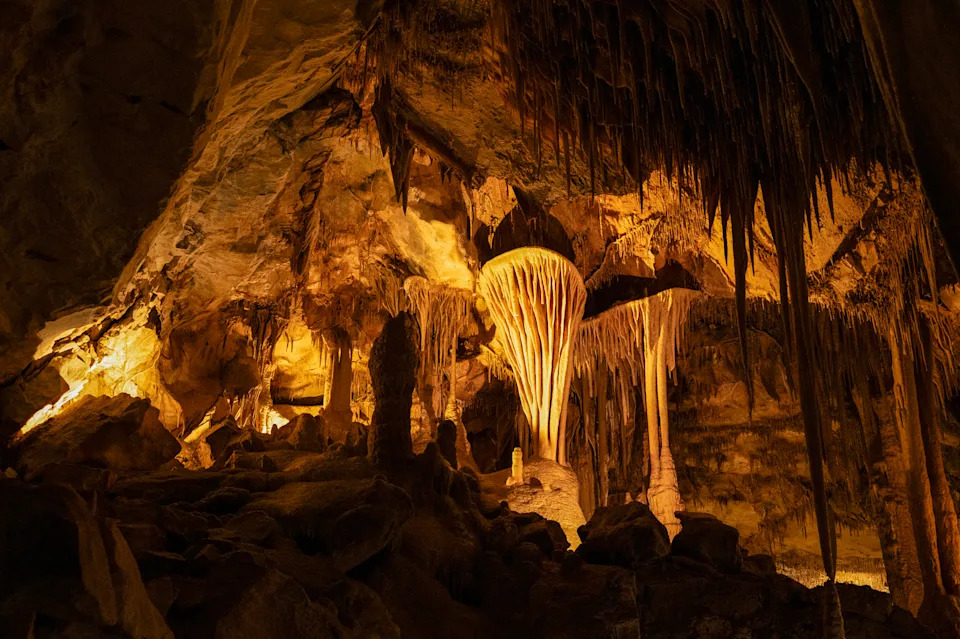
Parachute Shield rock formation (speleothem) in Grand Palace area of Lehman Caves, Great Basin National Park, Nevada, USA.
(NNehring via Getty Images)
Great Basin National Park’s isolated location has created one of the darkest parks in the nation. The park’s Wheeler Peak summit is far from light pollution, and its annual Astronomy Festival draws observers from around the world. Visitors join rangers for telescope sessions or wander the Lehman Caves by lantern, discovering an underground night that mirrors the stillness above.
Acadia National Park, Maine
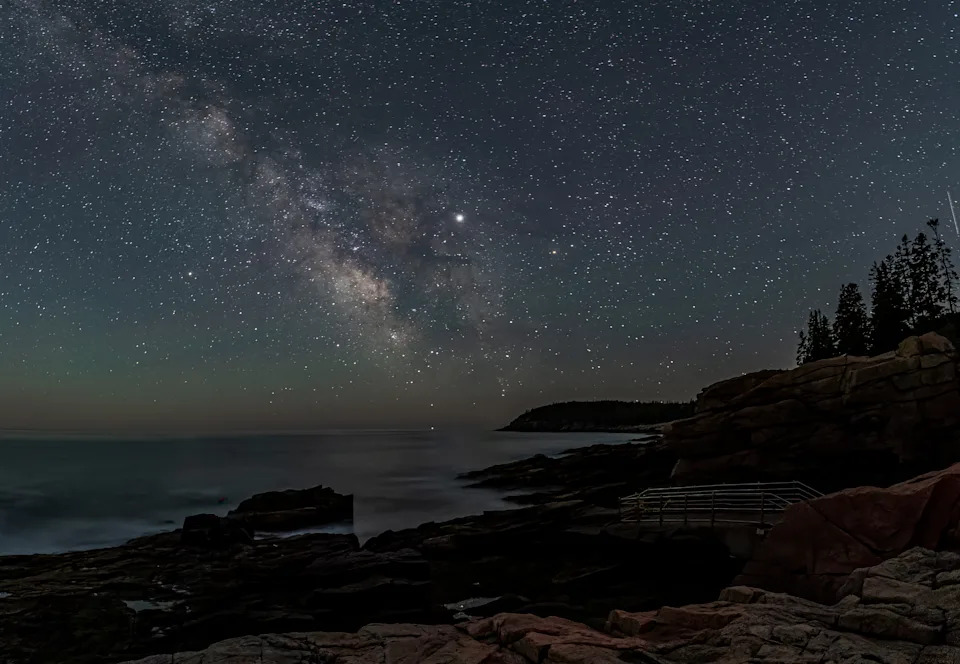
Milky Way over Acadia National Park in Maine
(Harry Collins via Getty Images)
The stars peek from between the clouds lurking above the ocean in Maine’s Acadia National Park. In September, the Acadia Night Sky Festival combines astronomy, photography, and coastal storytelling. Stargazers are especially ardent about Cadillac Mountain, where visitors can watch moonlight glint across the ocean like liquid metal.
Grand Canyon National Park, Arizona
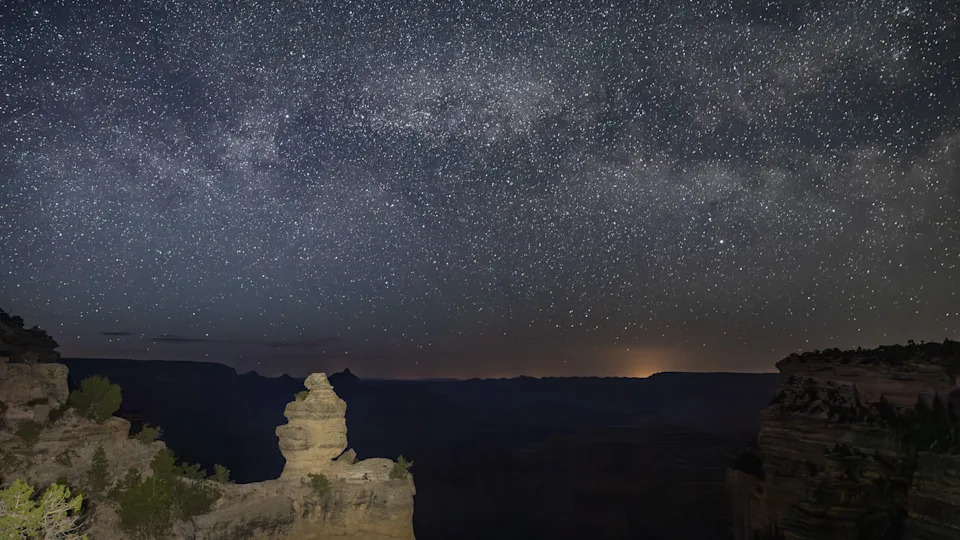
Cosmic Canyon Duck on a Rock Viewpoint Grand Canyon National Park Arizona June 2023
(James Marvin Phelps / 500px via Getty Images)
Few places convey the grandeur and scale of the American landscape like Grand Canyon National Park. The canyon’s North and South Rims are both recognized as Dark Sky Parks. Rangers lead night sky events throughout the year. On moonless nights, visitors standing at Mather Point describe feeling suspended between two voids, one above and one below.
Everglades National Park, Florida
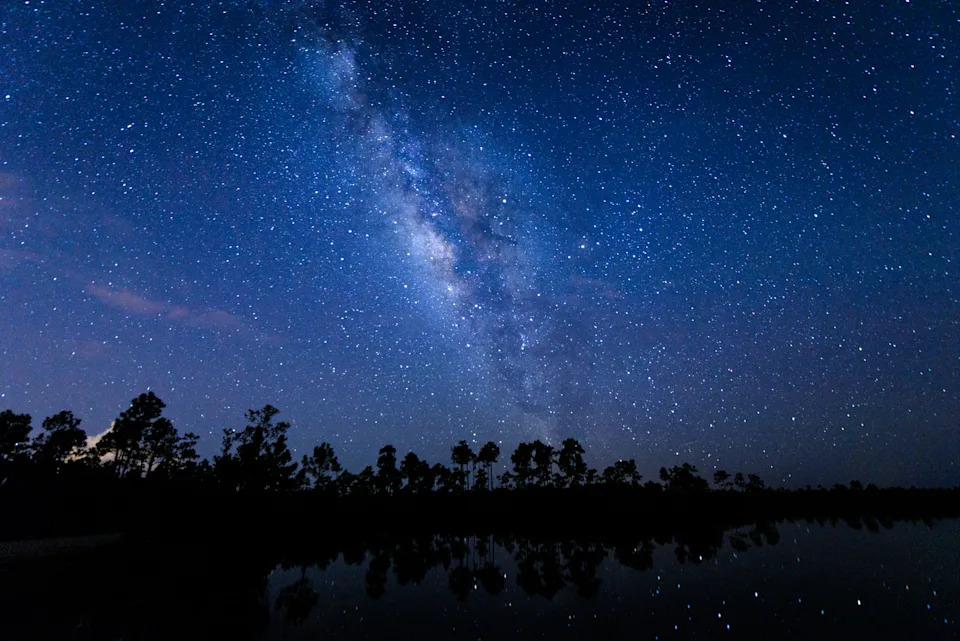
Everglades National Park, FL. US. Constellation Norma
(Alejandro Cupi via Getty Images)
Inside Florida’s Everglades National Park in South Florida, the sky comes alive at night. Away from Miami’s glow, the southern reaches of the park open to a surprisingly dark horizon. Kayakers paddle through mangrove tunnels, guided by bioluminescent plankton that shine like stars in the water, making night paddles one of the region’s most unforgettable experiences.
These parks are proof that the day doesn’t have to end when the sun falls. For many, the adventure might be just beginning.