

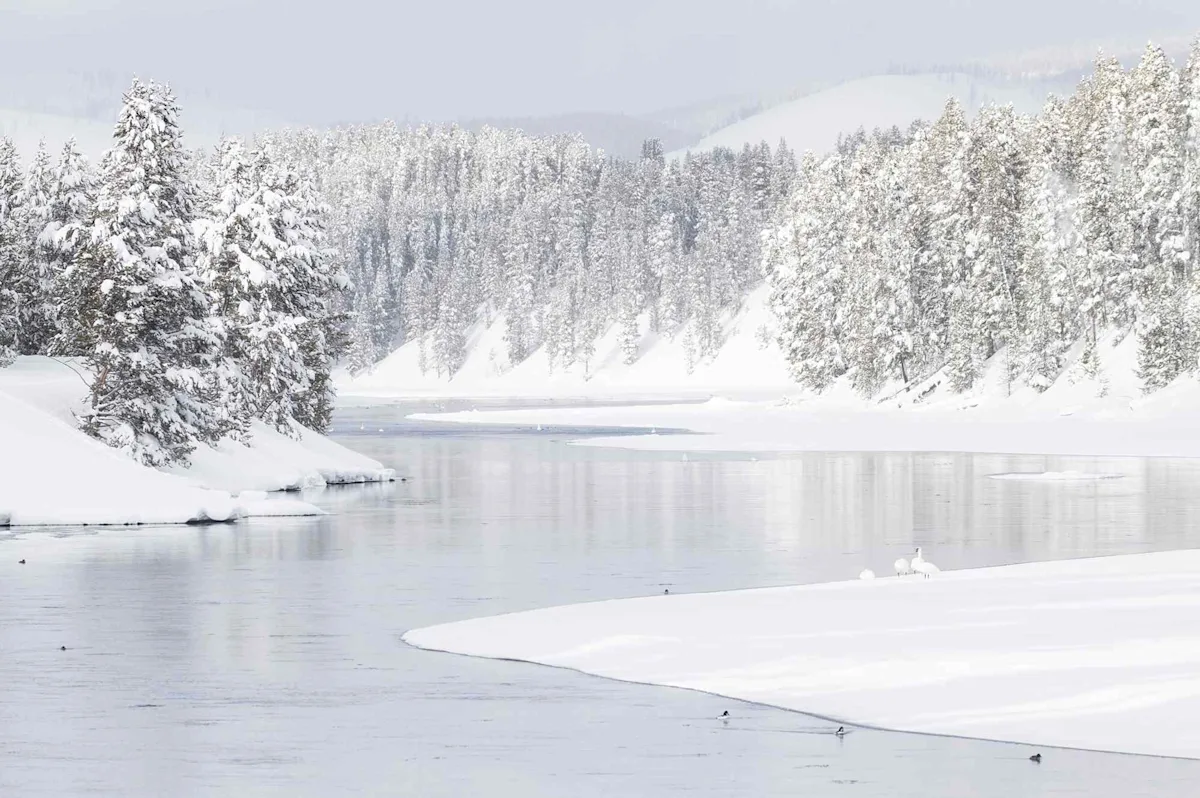
The winter months are just around the corner, and while the colder weather and shorter days may be having you dreaming of warm-weather escapes, some travel pros have a better idea for you: explore one of America’s most pristine national parks. Because, as they say, it’s even better.
We reached out to the travel community to ask a simple question: which U.S. national park is best in winter? And travel guides, hotel owners, and Travel + Leisure A-List advisors agreed by an overwhelming margin that Yellowstone is the best of the bunch. Here’s what they said makes it so spectacular for the coming season.
We Dug Through Millions of Amazon Cyber Monday Deals to Find Epic Ones From Samsonite, Yeti, and More — Up to 90% Off
The scenery in winter is out of this world.
Yellowstone, Joe Cronin, the president of International Citizens Insurance, said, turns into a drama-filled scene you just have to see in the winter. “During winter, Yellowstone National Park transforms into a vast, icy wonderland. Steam rising from Old Faithful and Yellowstone’s other geothermal features creates a beautiful winter landscape,” he told T+L. “Watching bison, elk, and wolves in the snow-covered plains is a unique experience in and of itself.”
The wildlife-viewing opportunities peak in winter.
Speaking of wildlife, experts say it only gets easier to spot animals in the winter. Kevin Jackson, the cofounder of EXP Journeys and a T+L A-List Advisor, shared, “Winter in Yellowstone is amazing for seeing wolves. The visibility is much easier, and they are more active throughout the day than in the summer months.”
Mike O’Neil, the director of activities and outdoor pursuits at Montage Big Sky, agreed, explaining that the snow in the high elevations “pushes animals into the lower valleys, concentrating them in places like Lamar Valley,” which helped it earn the nickname “The Serengeti of North America.” “Wolf packs are most active in winter from late January through February during breeding season, and bison roam the geyser basins and hot spring areas of the park using geothermal warmth to help stave off the harsh winter weather,” he said. “Coyotes, bald eagles, and river otters can all be spotted on a winter excursion in Yellowstone.”
There’s a rare quiet in the air.
The stillness of Yellowstone in winter is one of its biggest draws, according to the pros. After day-trippers leave Old Faithful, Andrea Affinati, founder of VoyagedMagazine.com, told T+L, “it goes silent in a way that’s hard to describe.” She added, “It’s amazing just sitting there watching miles of snow and steam and sometimes bison blocking the road like it’s normal.”
The park’s geothermal wonders are on full display.
Yellowstone’s thermal features are always a big draw, but according to O’Neil, they become all the more vivid against the stark winter backdrop. “The geothermal features become even more dramatic against the snow and frozen air, steam billowing from geysers and hot springs, their colors bright against the snowy landscapes,” he shared.
Jim Ligori, the executive director of Teton Valley Ranch Camp, also cited this visually rich experience as a top reason to visit. “The jagged peaks—sharper and more defined in cold air—rise like cathedrals above the snowfields,” Ligori said. “Their granite faces catch pink alpenglow each morning and are reflected in frozen alpine lakes. The park’s main corridor remains open year-round, making it easy to experience solitude without straying too far from the comforts of town. From a peaceful stroll along the Teton Park Road to heart-pounding backcountry descents, this landscape offers winter adventure for every level of adventurer.”
There are a ton of experiences you can’t have during the summer.
As the experts have already shared, much of the park is closed in the winter; however, there are still a few distinct ways to visit. “From mid-December to mid-March, the park’s interior roads are closed to regular traffic and only accessible by snowcoach or snowmobile,” O’Neil said. “That limited access is part of what makes it so special. You’re traveling over snow, deep into the heart of the park, and seeing it in a way few people do. These guided tours are intimate, and they leave right from the West Entrance of the park, just 45 minutes south of Big Sky.”
It will make you feel like an insider.
Those who live and work in the region almost universally recommend winter as Yellowstone’s best time because of the simple fact that it will make you feel like a local. As Ligori summed up, “Those of us who live here year-round know the secret: winter is when these landscapes truly reveal themselves.”
Read the original article on Travel & Leisure