

Javier Pardina/Stocksy/Adobe Stock
About two years ago, I started experiencing constant vertigo. I was plagued by an internal sense of rocking and swaying, trouble sitting or standing with my eyes closed, and a fear of walking. Several doctors’ appointments and tests later, I was assigned to vestibular rehabilitation—a.k.a. physical therapy for your body’s balance systems. I was later diagnosed with vestibular migraine, a version of the disorder that causes dizziness. But the exercises I performed to strengthen my balance aren’t just useful for someone like me—they’re important for anyone looking to maintain stability in their body.
Balance comes from three different internal locations, Carmen Navarrete, PT, DPT, a senior physical therapist at NewYork-Presbyterian The One tells SELF. The vestibular system, which is located in the inner ear, the somatosensory system, which controls your movements and helps your brain understand what your body is sensing, and vision all play a role in your overall balance.
Sometimes, like in my case, an internal factor causes one of these systems to go haywire. Anything from medication to inner ear disorders like Meniere’s Disease might contribute to dizziness and loss of balance. On the other hand, aging—something that happens to all of us, even the longevity bros—naturally strains our bodies’ balancing skills. A 2024 study found that the ability to balance on one leg decreases significantly throughout the later years and is therefore one of the most important measurements in determining how well someone is aging.
Protecting these balance systems is extremely important, whether you’re in your 40s or your 70s. “As you age, your bone density decreases. If you fall, you have a higher likelihood of a spine or hip fracture, which leads to a higher likelihood of mortality,” Madison Oak, PT, DPT, a physical therapist who runs Vestibular Group Fit, a program for people with vestibular disorders, tells SELF. Additionally, muscle strength tends to take a nosedive, which also correlates with worsening balance because it increases sedentary tendencies, Dr. Oak says.
Exercises to improve your balance
Practicing your balancing act is a lot simpler—and quicker—than it might seem. Below, find nine easy exercises to incorporate into your weekly schedule. For good balance hygiene, perform each one anywhere from three times a week to every day. The best way to remember to practice numbers one, two, and four is by doing them twice a day while brushing your teeth. However, the exercises can also be done while waiting for the microwave to beep or for your pasta to boil—or any other idle 30-60-ish-second period, Dr. Oak says.

Julio Rodriguez/ADDICTIVE STOCK/Adobe Stock
Slight wobbling or swaying slightly during the exercises is normal, explains Dr. Navarrete. But if doing these exercises is a lot harder than anticipated, consider seeing a physical therapist who specializes in vestibular rehabilitation. Call your doctor right away if you have have trouble walking in dim lighting, dizziness when looking up or down, feel “drunk” while crossing the street or walking through a busy store, or imbalance while getting in or out of bed, Jennifer L. Kelly, PT, DPT, the administrative director of the Ear Institute at the New York Eye and Ear Infirmary of Mount Sinai tells SELF.
1. Feet together stance. Position yourself near a wall or chair, away from any other object that could get in your way. While barefoot on a hard, flat surface, place your feet directly next to each other with no or nearly no space in between. Stand like this for 60 seconds to ensure you can balance with a narrow stance, Dr. Kelly says. Grab onto the wall or chair if you feel unsteady. For a more challenging version, stand barefoot on a soft surface like a yoga mat or towel. Once you’ve mastered that, try closing your eyes while standing on a hard surface, then keep them closed while standing on a soft surface. This exercise will improve your ability to walk in the dark, Dr. Kelly adds.
2. Heel-toe standing. While barefoot on a hard, flat surface, place your right foot directly in front of your left, right heel to left toes. Stand like this, unassisted, for 30 to 60 seconds, then switch your feet and repeat. To make this more challenging, close your eyes, stand on a soft surface, or turn your head side to side, which will train your visual system to stay calm in the face of stimuli, Dr. Navarrete says (think grocery shopping or walking through a party).
3. Tandem walking. Find a long, open space with a firm surface, like a hallway. While barefoot, slowly place one foot in front of the other, keeping your heels as close to your toes as possible, Dr. Oak instructs. Keep your focus trained on something in front of you. Walk for about 30 seconds (or until you’ve hit the end of your hallway). If this is easy, consider closing your eyes every few paces, if you can do so safely.
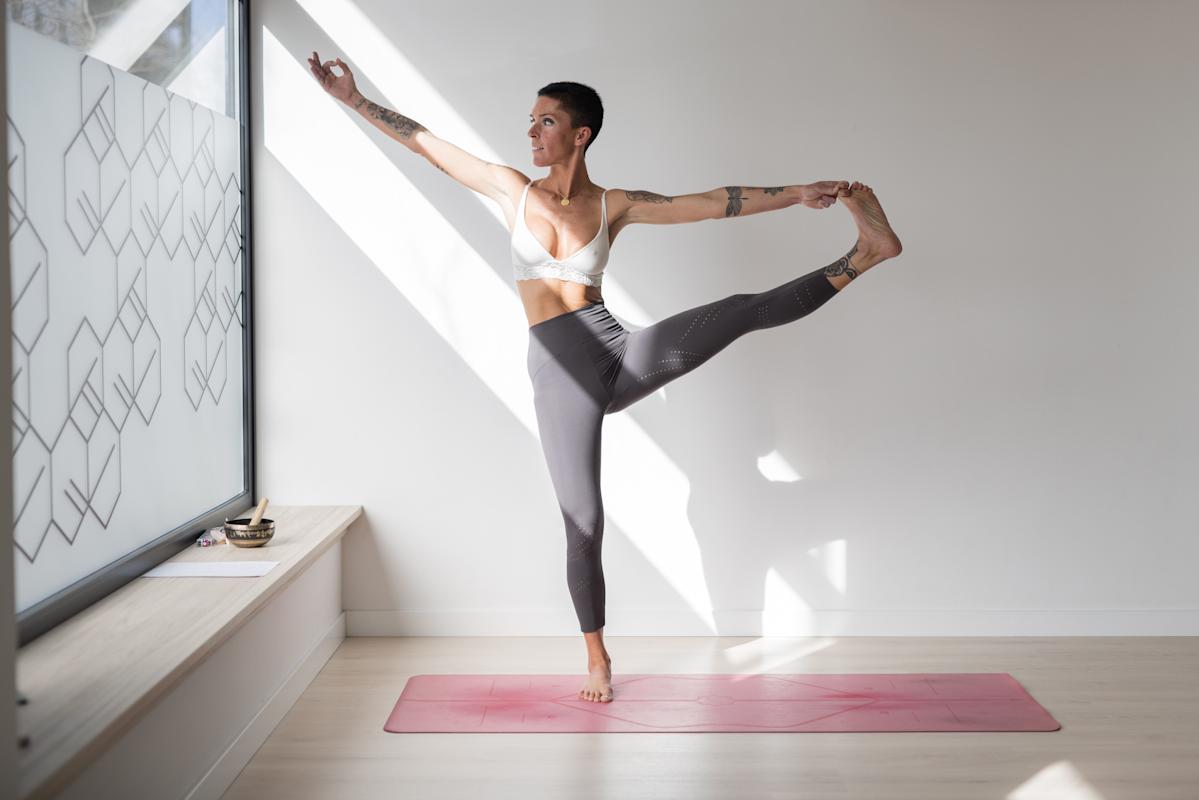
4. Single-leg stands. For the easiest variation, wear flat-soled shoes or slippers and stand on a hard, flat surface. Lift your right leg up and hold for 30 to 60 seconds. Then switch legs and repeat. A moderate version can be done barefoot on the same surface. If those versions are a breeze, consider closing your eyes (if it can be done safely), turning your head side to side, or tilting your torso forward slightly. And if you can only stand this way for 10 or 15 seconds, you’re still improving your balance and reducing your risk of falls, Dr. Oak says.
5. Four-square step. Stand in an open space where you can move forward, backward, and side-to-side without bumping into anything. While barefoot, step forward, then to the right, then backward, then to the left as quickly as you can. Repeat five times without looking at your feet, Dr. Kelly instructs. This exercise will challenge how well you can shift weight and change directions, both integral pieces of the balance puzzle.
6. Stand without assistance. Being able to stand up from a seated position without using your arms to help is one of the strongest indicators of longevity and will also help practice balance. Try doing this exercise around 10 times each day, Dr. Kelly says. Vary the height by trying to get up from a low, soft couch, a higher chair with arms, or even the floor.
7. Walk or hike on uneven surfaces. Dr. Oak jokes that every single person should hike in their free time because it’s both a strength and cardiovascular exercise, and it’s good for balance. But if you don’t have access to a hiking trail nearby, you can reap similar balance benefits by walking for a minimum of 15-30 minutes every day on various surfaces like grass or sand, Dr. Navarrete says.
8. Calf raises. Strengthening your ankles is critical to good balance, Dr. Oak says. The main way to do so is through calf raises, which, coincidentally, will build more muscle to help maintain balance anyway. If you’re not already including calf exercises in your regular workout routine, throw some calf raises in while brushing your teeth or waiting for an Uber.
9. Continue other types of workouts. If your balance is waning, you may be tempted to quit the pilates or barre classes. But keeping a steady stream of yoga, pilates, Tai Chi, strength training, and/or cardio exercises in your routine is necessary. Aging causes flexibility and muscle loss, Dr. Kelly says, so anything that can be done to prevent or slow that is useful to maintaining balance.
Related:
Get more of SELF’s great relationship reporting delivered right to your inbox—for free.
Originally Appeared on Self