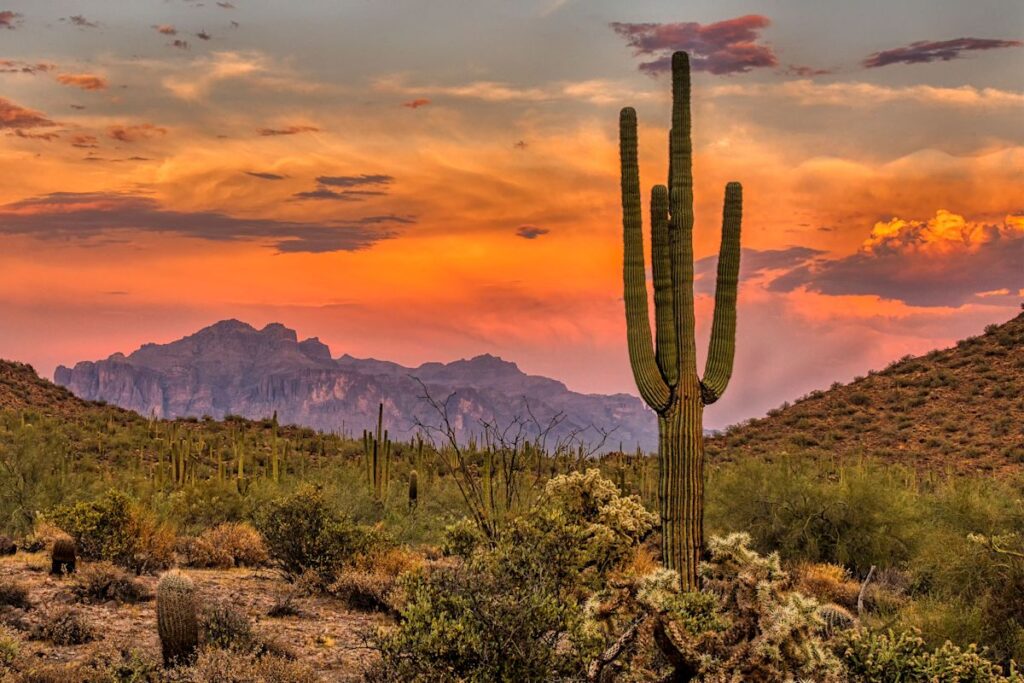


When it comes to winter vacations, mountain towns and beach getaways are obvious choices. Skiing, hot springs and snow-covered scenery lure visitors to the mountains, while tropical islands and coastal destinations provide an escape from cold weather.
But there are plenty of other reasons to travel during the colder months, and some familiar destinations are actually better in winter. Desert landscapes become more comfortable to explore, major cities get a break from the crowds and seasonal wildlife migrations create unforgettable opportunities you won’t find other times of year.
In some places, winter is already the most popular time to visit, and for good reason. In others, it’s an overlooked season that offers a different way to experience a familiar destination. From national parks to major cities, these eight U.S. destinations make for great winter getaways.
New Orleans, La.
There’s plenty to celebrate during a winter trip to New Orleans.
(Getty Images)Despite New Orleans’ notoriously hot and humid summers, the city still attracts plenty of visitors during the warmer months. Winter, meanwhile, is generally one of the city’s quieter periods for tourism (outside Mardi Gras), and it’s arguably a better time to visit, with daytime temperatures in the 60s instead of the 90s. Activities such as cemetery tours, walking excursions through the Garden District and nearby swamp tours are much more comfortable this time of year.
Advertisement
Advertisement
Weather isn’t the only thing winter has going for it in New Orleans; it’s also a great time to eat and drink. October through April is prime oyster season, an excellent time to visit historic oyster bars such as Casamento’s or Felix’s for freshly shucked Gulf oysters. December visitors can enjoy a traditional Réveillon dinner — a multicourse holiday meal rooted in the city’s French Creole heritage — and check out the Celebration in the Oaks, which illuminates City Park’s centuries-old live oak trees with more than a million holiday lights.
Carnival season begins in early January, with local bakeries selling king cakes (ring-shaped pastries traditionally decorated in Mardi Gras colors) as parades and other Carnival festivities build toward Fat Tuesday. Crawfish season also begins picking up in late winter, with seafood boils becoming more common as spring approaches.
Everglades National Park, Fla.
Low water levels make winter a great time to spot wildlife like the American alligator in Everglades National Park.
(Getty Images)Winter is the dry season in South Florida, making it one of the best times to visit its beaches. That’s why plenty of travelers head to the Florida Keys, Miami and the southern Gulf Coast this time of year. Follow the crowds to Florida, but while everyone else is lounging on the sand, head out and explore one of the most underrated national parks.
For all its ecological importance, Everglades National Park attracts a fraction of the visitors who flock to Yellowstone or Yosemite. And while its wetlands can be brutally hot, humid and mosquito-ridden during the summer, winter brings cooler temperatures, fewer bugs and some of the best wildlife viewing of the year. As water levels decline during the dry season, alligators, wading birds and other wildlife concentrate around the remaining water sources and are easier to spot.
Advertisement
Advertisement
Start at the visitor center near Homestead, then follow the park road toward Flamingo, stopping at the Anhinga Trail to look for alligators, turtles and birds. Continue to the Pa-hay-okee Overlook for views of the sawgrass prairie, or head to Flamingo to look for American crocodiles and manatees. Or, start at Shark Valley, which has a 15-mile paved loop that visitors can explore by bicycle or guided tram tour.
Maui, Hawaii
Winter is a great time to spot humpback whales as they migrate to Hawaii.
(Getty Images)I guide tours in Hawaii, and as I tell my guests, there’s really no need to overthink a trip to Hawaii. After all, it’s a year-round destination. But the winter months of January and February are among my favorites because they offer a few experiences you can’t get during the summer.
For example, thousands of humpback whales migrate here from Alaska, especially between November and March. The majority gather off the west coast of Maui, with numbers peaking between January and March. Winter also brings massive swells, attracting professional surfers from all over the world to compete in competitions; visitors can casually watch big-wave surfing at places like Honolua Bay.
It’s true that some beaches experience rough surf in winter, and that parts of the islands receive more rain. So, it’s not always the best time of the year for sunbathing day in and day out. But Maui still enjoys plenty of clear, sunny days, particularly on the drier leeward sides of the island near Wailea, Kihei and Kaanapali. And if you prefer an active vacation, the cooler temperatures are ideal for hiking, exploring Haleakala Volcano and sightseeing.
Los Angeles, Calif.
Take advantage of cooler weather while hiking the trails in Griffith Park.
(Getty Images)Los Angeles might be famous for its beaches and sunshine in the summer, but winter may be a better season for travelers interested in exploring the city itself. With average daytime temperatures ranging from the 60s to the 70s and a combination of warm sun and cool ocean air, it’s ideal for hiking, beach walks and city sightseeing.
Advertisement
Advertisement
Check out the Griffith Observatory for panoramic views of Los Angeles, then explore the surrounding trails in Griffith Park, including routes with views of the Hollywood Sign. For a more challenging hike, head to Topanga State Park. Spend an afternoon walking or biking along the waterfront between Santa Monica and Venice Beach, drive a stretch of the Pacific Coast Highway or take a whale-watching cruise to spot migrating gray whales offshore.
For a touch of classic Hollywood, book a Warner Bros. Studios. Tour or explore movie history at the Academy Museum of Motion Pictures. Art lovers can visit the Getty Center for its collections, architecture and gardens. Downtown, browse the Mexican marketplace along Olvera Street, grab lunch at Grand Central Market and admire the historic Bradbury Building before exploring the shops and restaurants of Little Tokyo or the murals and galleries of the Arts District.
Tucson, Ariz.
Tucson is a reliable choice for winter sunshine and outdoor activities in nearby parks, like Organ Pipe Cactus National Monument.
(Getty Images)Phoenix is always a popular choice for snowbirds in the winter, but Tucson’s Sonoran Desert is another great Arizona getaway this time of year. Unlike the state’s northern destinations such as Sedona or Flagstaff, downtown Tucson doesn’t usually get snowfall, making it a reliable choice for winter sunshine and outdoor activities.
Spend a couple of days exploring Saguaro National Park, where you can hike through dense stands of tall saguaro cacti, or follow trails that climb into the Rincon Mountains (where you could encounter snow). Take a day trip to Organ Pipe Cactus National Monument near the Mexican border — it’s the only place in the U.S. where large stands of organ pipe cacti grow in the wild.
Advertisement
Advertisement
Back in Tucson, explore the colorful adobe houses of the historic Barrio Viejo neighborhood, the Presidio San Agustín del Tucson Museum and the Mission San Xavier del Bac. Along the way, discover why the city has earned a reputation for being a great place to eat. Tucson’s culinary traditions draw on centuries of Indigenous and Mexican influences, with local specialties ranging from carne seca (a traditional dried-beef dish) to recipes featuring native chiltepin peppers, tepary beans and mesquite.
Washington, D.C.
It’s a relatively laid-back time to explore the capital’s most famous landmarks.
(Getty Images)The U.S. capital is appealing in winter not just for its weather but also for its many year-round indoor attractions, including numerous museums. Spring’s cherry blossoms and summer school vacations attract large crowds, but January and February are more laid-back, and arguably the perfect time to explore the capital’s most famous landmarks.
Begin with the Smithsonian museums along the National Mall, including the National Museum of American History and the National Museum of Natural History. The National Air and Space Museum is another highlight. Between museum visits, walk to the Washington Monument and Lincoln Memorial, which are particularly scenic during sunset and when illuminated after dark.
Beyond the Mall, visit the Library of Congress to admire the murals, mosaics and marble staircases of the Thomas Jefferson Building, one of Washington’s most revered interiors. Tour the U.S. Capitol with an advance reservation, or head to the National Archives to see the original Declaration of Independence, Constitution and Bill of Rights.
Death Valley National Park, Calif.
It’s no surprise that the best time to visit one of the hottest places on Earth is when it’s a little less hot.
(Getty Images)Death Valley is one of the hottest places on Earth, with summer temperatures routinely exceeding 115 degrees. But visit in winter, especially between November and February, when daytime temperatures are often in the 60s and 70s, and the experience is entirely different.
Advertisement
Advertisement
Winter is the park’s prime hiking season, by far the best time to explore its low-lying salt flats, canyons and sand dunes without the oppressive heat. The season also brings longer nights for stargazing — a highlight, since Death Valley is one of the darkest places in the country.
Begin at Badwater Basin, the lowest point in North America at 282 feet below sea level, where you can hike out into the salt flats. Nearby, Artists Drive passes colorful mineral deposits, and Zabriskie Point overlooks the park’s eroded badlands. Hike through Golden Canyon, or explore the Mesquite Flat Sand Dunes in the early morning or late afternoon; it can be a life-changing experience to lie flat on your back atop a sand dune during sunrise or sunset.
Las Vegas, Nev.
Winter is a great time to visit Vegas, whether you want to stay on the Strip or venture outside the city.
(Getty Images)Las Vegas is famous for its casinos, shows and nightlife, and it’s one of those towns where it doesn’t matter what the weather’s doing since you can spend all your time inside.
But Las Vegas is much more than the Strip and its air-conditioned casinos, and winter is a great time to venture outside and explore the city’s lesser-known attractions and the surrounding Mojave Desert.
Advertisement
Advertisement
Red Rock Canyon National Conservation Area is just 20 miles west of the Strip, where a 13-mile scenic drive winds past colorful sandstone cliffs and provides access to hiking trails of varying difficulty. For a longer excursion, head to Valley of Fire State Park, about an hour northeast of Las Vegas, to explore its striking red rock formations and ancient petroglyphs. Both are especially rewarding in winter, when cooler temperatures allow for longer walks.
Back in town, explore the Arts District, where former industrial buildings house galleries, vintage shops, breweries and restaurants. Visit the Springs Preserve, built around the natural springs and lush meadows that gave Las Vegas its name, with botanical gardens, walking trails and exhibits on local history. Downtown, the Neon Museum and Mob Museum offer a look at the city’s colorful past. And, of course, there’s always the Strip, where visitors can catch a show at the Sphere or choose from countless restaurants and performances any time of year, even in the dead of winter.
Source link