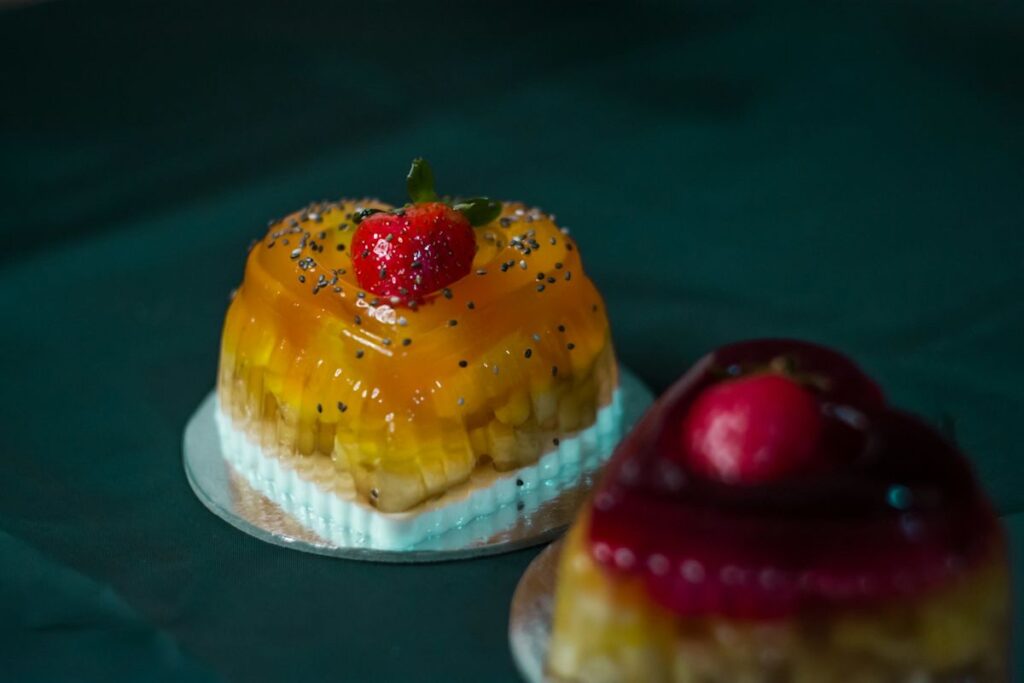
For about twenty years, from the early 1950s through the late 1960s, the gelatin mold occupied the center of the American party table the way a roast chicken occupies one now. Women’s magazines ran full-color spreads of them. Church cookbooks gave them their own chapters. The copper ring molds and fluted aluminum fish molds sold in department store housewares sections were not decoration; they were a kind of status. A hostess who could unmold a shimmering, perfectly set ring onto a cold platter had shown, in one gesture, that she had both the patience and the technique to pull it off.
The seven dishes here cover the forms that made gelatin salads worth the trouble: bright fruit molds that sat alongside the rolls at a covered-dish supper, a savory vegetable mold that stood in for green salad, and a couple of showpieces that earned their place at the good table. Every recipe includes a full ingredient list with exact measurements, the water-to-gelatin ratios that actually hold, and the unmolding sequence that keeps the whole thing intact when you flip it.
1. Golden Glow Salad (lemon gelatin with carrots and pineapple)
Golden Glow Salad is three pantry items: a small box of lemon gelatin, a can of crushed pineapple, and a pile of grated carrots. The lemon Jell-O boxes that stacked in postwar kitchens were three ounces each and dissolved in exactly one cup of boiling water. Crushed pineapple came packed in sweet juice, already broken down fine enough to fold straight in. The carrots you grated yourself, on the fine side of the box grater, until you had a loose, almost feathery handful that would drift through the thickening gelatin rather than sink.
Most cooks used a ring mold, which unmolded onto a platter with a hole in the center you could fill with a small mound of cottage cheese or a few leaves of iceberg. A loaf pan worked too, and it sliced clean for the buffet table. Either way, the job of the cook was to catch the gelatin at the right moment before folding anything in: not still liquid and not yet set, but thick enough to coat a spoon, which old recipes described as the consistency of unbeaten egg whites. Get that timing right and the carrots and pineapple stayed suspended in the finished mold. Rush it, and everything dropped. The same dish turns up in community and church cookbooks under the name ‘Sunshine Salad’: lemon gelatin, grated carrot, crushed pineapple, the same three ingredients, just a different name on the index card.
Ingredients (Serves 6 to 8)
-
1 package (3 oz) lemon-flavored gelatin
-
1 cup crushed pineapple, well drained
-
1 cup finely grated carrots (about 2 medium carrots)
-
Cooking spray or neutral oil, for the mold
Instructions
1. Dissolve the lemon gelatin in the boiling water, stirring for about 2 minutes until no granules remain.
2. Stir in the cold water. Let the mixture cool to room temperature, then refrigerate until it thickens to the consistency of unbeaten egg whites, 45 minutes to 1 hour.
3. While the gelatin chills, drain the crushed pineapple in a fine-mesh strainer, pressing firmly to remove as much liquid as possible. Finely grate the carrots on the small holes of a box grater.
4. Lightly coat a 4-cup ring mold, standard loaf pan, or 8-inch square baking dish with cooking spray or a thin film of neutral oil.
5. Fold the drained pineapple and grated carrots into the partially set gelatin until evenly distributed. Pour into the prepared mold.
6. Refrigerate until fully firm, at least 4 hours or overnight.
7. To unmold, run a thin knife carefully around the inner edge and outer rim of the mold to break the seal. Then dip the bottom of the mold in warm (not hot) water for 10 to 15 seconds. Place a chilled serving plate face-down over the mold, invert both together, and lift away the mold.
2. Spiced Peach Gelatin Mold
Spiced peaches were a Southern pantry standard long before the gelatin version, whole peaches put up in syrup with cinnamon sticks and cloves every August. The gelatin version of that preserve shows up in mid-century community cookbooks, and the recipes differ mostly in how heavy a hand they take with the cloves.
A tablespoon of apple cider vinegar stirred into the liquid before it chills gives the mold an edge of acidity that keeps the cloves reading sharp rather than sweet, which is what makes the dish interesting instead of just sugary. The peaches go in only after the gelatin has thickened to the consistency of loose egg whites, so they stay suspended rather than sinking to the bottom. Versions that cut the cloves entirely and lean on cinnamon alone give a milder dish but lose the contrast that makes a cold spiced peach actually taste like something.
Ingredients (Makes 1 six-cup mold, serves 6 to 8)
-
Cooking spray or neutral oil, for the mold
-
2 packages (3 oz each) peach-flavored or orange gelatin
-
1 cup liquid: the reserved syrup from the canned peaches plus enough water to make 1 cup, at room temperature
-
1 tablespoon apple cider vinegar
-
1/2 teaspoon ground cinnamon
-
1/4 teaspoon ground cloves
-
1 can (15 oz) sliced peaches in heavy syrup, drained (syrup reserved) and cut into 3/4-inch pieces
Instructions
1. Lightly coat a 6-cup mold, ring mold, or 9×5-inch loaf pan with cooking spray and place it in the refrigerator to chill while you work.
2. Pour the boiling water over the gelatin in a medium bowl and stir for 2 minutes, until the granules are completely dissolved and the liquid is clear.
3. Stir in the 1 cup of syrup-and-water, the cold water, apple cider vinegar, cinnamon, and cloves.
4. Refrigerate the gelatin mixture until it thickens to the consistency of unbeaten egg whites, 60 to 90 minutes.
5. Fold in the peach pieces, distributing them evenly through the mixture.
6. Pour into the chilled prepared mold and refrigerate until completely firm, at least 4 hours or overnight.
7. To unmold: run a thin knife around all edges of the mold (and around the center tube if using a ring mold) to break the seal between the gelatin and the pan walls. Then dip the bottom of the mold in warm water for 10 to 15 seconds. Invert onto a chilled platter and lift away the mold.
3. Under the Sea Salad (lime gelatin with pear halves and cream cheese)
The name does the work. Lime gelatin sets to a pale, glassy green, and cream cheese stirred into it at the right moment breaks apart into soft pale wisps that stay suspended through the mold like something seen through shallow water. Canned pear halves go into a clear bottom layer of the lime gelatin cut-side up, the cream cheese layer goes over them, and once you flip the whole thing onto a cold platter, their rounded backs show at the top of the green, pale curves against the translucent lime. The dish has a calm, still quality that fits a buffet table in a way that a bowl of dressed fruit never does.
Cream cheese dropped into liquid gelatin sinks. The gelatin needs to reach partial set before the cream cheese goes in, and that takes about 45 to 60 minutes in a standard refrigerator. At partial set the mixture looks like thick, slightly jiggly syrup and leaves a visible trail when a spoon passes through it. Stir the softened cream cheese in at that stage, and it breaks into uneven white clouds that stay put when the mold chills the rest of the way. Skip the waiting step and the cream cheese sinks straight through the layer, which leaves a dense white band on the finished salad with no variation through it.
Unmolding is the moment the dish was built for. Run a thin knife around the edge, dip the mold in warm water for a few seconds, set a chilled plate over the open top, and flip. Holding it still for about thirty seconds is usually enough for the mold to release. What you get is the clear pear layer on top, the pears arranged in a row with their rounded sides upward, pale against the lime-green ground, and the cloudy cream cheese layer underneath. The name fits: looking down at it, the pear halves really do hang in the green the way objects rest on a shallow ocean floor.
Ingredients (Serves 6)
-
1 package (3 ounces) lime gelatin
-
1 can (15 ounces) pear halves in syrup, drained, 1/2 cup syrup reserved
-
4 ounces cream cheese, softened, cut into small pieces
Instructions
1. Drain the pear halves over a bowl. Measure out 1/2 cup of the syrup and set it aside. Set the pears aside as well.
2. Dissolve the lime gelatin in the 1 cup boiling water, stirring for about 2 minutes until the gelatin is completely clear.
3. Stir in the cold water and the 1/2 cup reserved pear syrup. Pour the mixture into a medium bowl. Refrigerate for 45 to 60 minutes, until the gelatin is partially set. It should have the consistency of unbeaten egg whites and leave a visible trail when a spoon is drawn through it.
4. Rinse a 4-cup mold or a medium bowl with cold water and do not dry it. Pour about 1 cup of the partially set gelatin into the mold. Arrange the pear halves cut-side up in it, pressing them down gently so the gelatin comes up around them. Refrigerate the mold for 15 to 20 minutes, until the layer is tacky to the touch. Leave the rest of the gelatin on the counter meanwhile; it stays soft enough to stir.
5. Drop the cream cheese pieces into the remaining partially set gelatin and stir gently until the cream cheese is mostly distributed in soft, uneven wisps. Do not try to make it smooth; the cloudiness is the point.
6. Spoon the cream cheese mixture over the pear layer and smooth the top. Once inverted, the clear pear layer will be on top and the rounded backs of the pears will face upward.
7. Refrigerate until fully set, at least 4 hours or overnight.
8. To unmold, run a thin knife around the edge of the mold, then dip the bottom of the mold in warm (not hot) water for 10 to 15 seconds. Set a chilled serving plate face-down over the top, flip the two together, and hold still for about 30 seconds until the mold releases. Serve immediately.
4. Bing Cherry Cola Salad (cherry gelatin with cola and dark sweet cherries)
A box of cherry gelatin, a can of dark sweet Bing cherries and a bottle of cola were all cheap grocery-shelf staples, and together they put something on the table that looked like it came from a hotel banquet. That math is what made this salad a favorite at church dinners and holiday spreads through the 1960s.
The cola does not firm up the mold or thicken anything. What it adds is flavor: a caramel bitterness underneath all that cherry sweetness, a faint edge that keeps the whole thing from tipping into candy. Bing cherries stay suspended through the set mold, so when you unmold it onto a cold plate you get a kind of stained-glass cross-section, dark fruit hanging in ruby red. It’s a simple trick, and it worked every time.
Ingredients (Serves 6 to 8)
-
1 package (3 oz) cherry-flavored gelatin
-
3/4 cup cola, at room temperature
-
1/4 cup reserved cherry juice (from the canned cherries)
-
1 can (15 oz) dark sweet Bing cherries, drained, juice reserved
-
Nonstick cooking spray or neutral oil, for the mold
Instructions
1. Pour the boiling water over the cherry gelatin in a large bowl and stir until the gelatin is completely dissolved, about 2 minutes.
2. Drain the cherries into a measuring cup to catch the juice; set the cherries aside. Add 1/4 cup of the reserved cherry juice and the cola to the dissolved gelatin and stir gently.
3. Refrigerate the gelatin mixture until it has thickened to the consistency of heavy syrup and just begins to mound slightly on a spoon, about 1 hour to 1 hour 30 minutes.
4. Lightly coat a 4-cup mold or an 8-inch square baking dish with cooking spray or a thin film of oil.
5. Fold the drained cherries into the partially set gelatin, then scrape everything into the prepared mold.
6. Refrigerate until fully firm, at least 4 hours or overnight. To unmold, run a thin knife around the edge to break the seal, dip the bottom of the mold in warm water for 10 seconds, and invert onto a chilled serving plate.
5. Ginger Ale Fruit Mold (ginger ale gelatin with canned fruit cocktail)
The ginger ale fruit mold occupied a specific position on the table: sweeter than a vegetable aspic, plainer than a cream cheese mold, and transparent enough that the suspended fruit showed through the pale amber body. It was served as a salad course, sitting on a leaf of iceberg lettuce on the good china, though everyone at the table knew it was essentially dessert. Cold from the refrigerator, it trembled slightly when you set the platter down.
In plain physical terms: cold, sweet, soft. A fork cut through it cleanly if it had chilled overnight, and it held its shape on the plate for a few minutes before the edges started to weep. No salt, no bitterness, no sharp note of any kind. The flavor was fruit cocktail syrup with a faint back warmth from the ginger ale, and both the temperature and the give of the gelatin were carrying nearly all of it.
Most experienced hostesses made this the night before, because overnight refrigeration gives the gelatin full strength through the center and produces a cleaner release from the mold than the minimum four hours does. A ring pan or a standard loaf pan was the right vessel; shallow dishes don’t give you the height that made carrying it to the table worth doing. The version that held its shape and came away from the pan in one clean piece was the one people talked about. Vernors Ginger Ale, which Detroit pharmacist James Vernor first served at his soda fountain in 1866 by the company’s own account and which bills itself as America’s oldest ginger ale, was the one many home cooks in Michigan and the surrounding region would have reached for when a recipe said ginger ale.
Ingredients (Serves 8)
-
2 packages (3 ounces each) lemon or orange gelatin powder
-
2 cups chilled ginger ale
-
1½ cups canned fruit cocktail, well drained
-
Cooking spray or neutral oil, for the mold
Instructions
1. Pour the boiling water into a large heatproof bowl. Add both packages of gelatin and stir for 2 full minutes until completely dissolved with no granules remaining.
2. Pour the chilled ginger ale slowly down the side of the bowl to reduce foaming. Stir gently just once or twice. The mixture will look slightly hazy.
3. Refrigerate uncovered until the gelatin has thickened to the consistency of unbeaten egg whites, about 45 minutes to 1 hour. Check at 40 minutes; it should mound slightly on a spoon but not yet hold a firm shape.
4. Fold in the drained fruit cocktail until evenly distributed through the mixture.
5. Lightly coat a 6-cup ring mold or a 9×5-inch loaf pan with cooking spray or a thin film of neutral oil.
6. Pour in the gelatin and fruit mixture. Cover and refrigerate until completely firm, at least 4 hours or overnight.
7. To unmold: run a thin knife around the inner and outer edges of the mold to break the adhesion completely. Then dip the bottom of the mold in warm water for 10 to 15 seconds. Place a chilled serving platter face-down on top, invert quickly and firmly, and lift the mold away. Serve immediately.
6. Cranberry Walnut Gelatin Mold
Cranberry walnut gelatin mold was the kind of dish a church league hostess assembled on a Wednesday or Thursday, tucking it into the back of the refrigerator so it would be completely firm by Saturday’s bridge luncheon. The deep ruby color set it apart from every other mold on the buffet. Walnuts gave it the only real crunch on a plate that was otherwise all softness. The gelatin needs to chill until it has the drag of unbeaten egg whites before the cranberries go in, because that is what keeps the fruit and nuts suspended through the middle of the mold instead of sinking to the bottom. Chopping the cranberries coarsely by hand rather than running them through a food processor gives each slice distinct pockets of tart fruit rather than a uniform pink paste.
Ingredients (Serves 8 to 10)
-
2 packages (3 ounces each) raspberry-flavored gelatin
-
2 cups fresh or frozen cranberries, coarsely chopped
-
1 cup coarsely chopped walnuts
-
2 stalks celery, finely diced (about 1/2 cup)
-
Cooking spray or neutral oil, for the mold
Instructions
1. In a medium bowl, combine the chopped cranberries and sugar. Stir well and let stand for 15 minutes; the sugar will draw out some juice.
2. In a large bowl, pour the boiling water over the gelatin. Stir for 2 full minutes until the granules are completely dissolved. Stir in the cold water.
3. Let the gelatin cool to room temperature, about 20 minutes, then refrigerate until it thickens to the drag of unbeaten egg whites, 45 minutes to 1 hour.
4. Coat an 8-cup ring mold or a 9×13-inch baking dish with cooking spray or a thin film of neutral oil.
5. Fold the cranberry mixture (including any accumulated juice), walnuts, and celery into the thickened gelatin until evenly distributed.
6. Pour into the prepared mold and refrigerate until fully set, at least 4 hours or overnight.
7. To unmold, run a thin, flexible knife around the outer edge and the center tube of the mold. Set the bottom of the mold in warm water for 10 seconds, then invert onto a chilled serving platter. If the mold does not release, dip again for 5 more seconds.
7. Cucumber Sour Cream Gelatin Salad
A cucumber sour cream gelatin salad didn’t last past the second day. Cucumbers push water as they sit, and by the following afternoon the mold had gone slightly soft and was pooling liquid at the edges of the platter. Hostesses knew this, so the salad appeared at dinner and again at lunch the next day, a slice or two on a smaller plate alongside crackers, and then it was gone. The leftover slices lost their sharp corners but kept their cool, tangy bite, and nobody complained. It was the sort of thing you ate standing at the refrigerator, fork in hand, before closing the door.
Ingredients (Serves 6 to 8)
-
1 package (3 oz) lime-flavored gelatin
-
1 tablespoon cider vinegar
-
1 medium cucumber (about 1 cup once diced), peeled, seeded, and finely diced
-
2 tablespoons finely minced yellow onion
-
Cooking spray or neutral oil, for the mold
Instructions
1. Pour the boiling water over the gelatin in a medium bowl and stir for about 2 minutes, until no granules remain.
2. Stir in the cold water and the cider vinegar. Let cool to room temperature, about 20 minutes.
3. Whisk in the sour cream until smooth and no white streaks remain.
4. Refrigerate the mixture, stirring every 15 minutes, until it thickens to the consistency of unbeaten egg whites, about 45 minutes to 1 hour.
5. Fold in the cucumber, onion, and salt.
6. Lightly coat a 4-cup ring mold or loaf pan with cooking spray. Pour in the gelatin mixture and smooth the top. Refrigerate until fully set, at least 4 hours or overnight.
7. To unmold, run a thin knife around the inner edge of the mold (and around the center post if using a ring mold) to break the seal. Dip the bottom of the mold in warm water for 10 to 15 seconds, then invert onto a chilled plate.
These molds fell out of fashion in the 1970s, but the recipes still work exactly as written, and the copper ring molds that made them famous turn up at thrift stores for a few dollars.