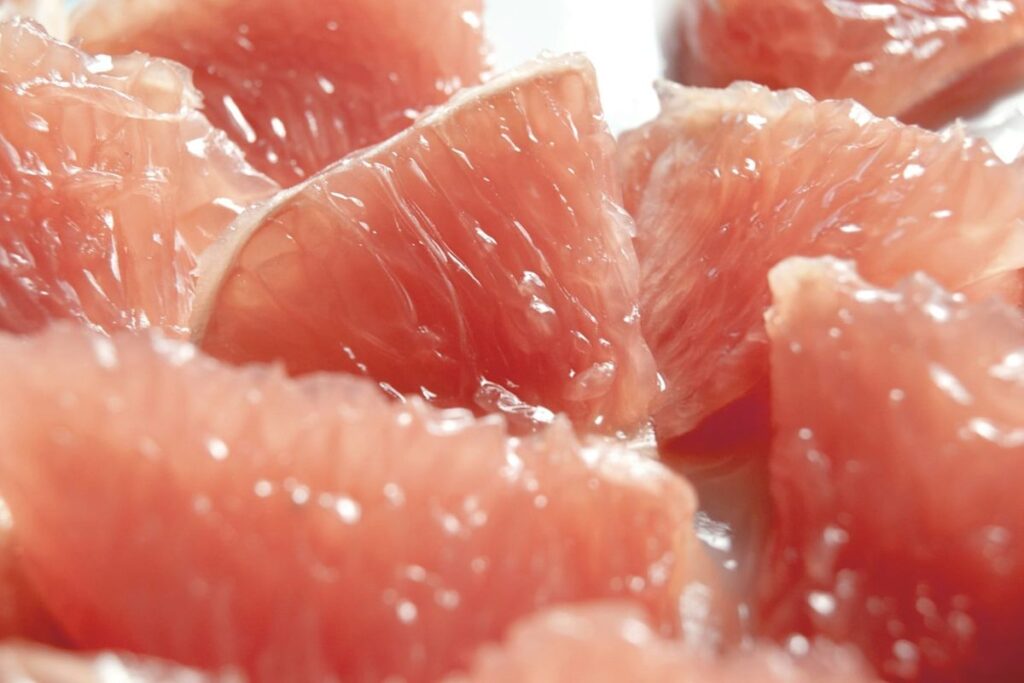
In a lot of towns the citrus sale started right after the fall concert. The high school band, and in farm country the FFA chapter, sent kids door to door with order forms for crates of Florida navel oranges and red grapefruit, and neighbors signed up for a half box or a full one because they knew the kid. Nobody saw the fruit again until a semi pulled into the school parking lot in early December and the band parents spent a cold Saturday handing out boxes from the back of it.
Then the box sat on the back porch, where it stayed cold enough to keep, and the mother of the house had forty pounds of citrus to get through before it went soft. Some of it went into lunch bags and some got eaten standing at the counter, but a good share of it turned into cooking. Here are seven of the dishes that crate turned into, with a full recipe for each.
1. Fresh orange muffins
These were Saturday morning muffins, stirred together by whoever got up first while the cartoons ran in the next room. With a crate on the porch there was no shortage of juice or zest, and an orange muffin used both, so two oranges disappeared into one pan and nobody had to think hard about it. A mother who baked on Saturday could also send a few to school in Monday’s lunch bags, wrapped in waxed paper.
Older kids made them too. A muffin batter is forgiving enough for a twelve-year-old as long as the dry ingredients and the wet ones get mixed separately and then folded together with only a dozen or so strokes, because overbeaten muffin batter bakes up with tunnels and a tough, peaked top. A spoonful of orange glaze over the warm tops was the finishing touch most families expected.
Ingredients (Makes 12 muffins)
-
2 teaspoons baking powder
-
1 tablespoon finely grated orange zest (from about 2 navel oranges)
-
1/2 cup plus 1 1/2 tablespoons fresh orange juice, divided (from 2 to 3 navel oranges)
-
1/2 cup (1 stick) unsalted butter, melted and cooled
Instructions
1. Heat the oven to 375°F. Line a 12-cup muffin pan with paper liners or grease the cups.
2. In a large bowl, whisk together the flour, granulated sugar, baking powder, baking soda, salt and orange zest.
3. In a second bowl, whisk 1/2 cup of the orange juice with the milk, eggs and melted butter.
4. Pour the wet ingredients into the dry ones and fold with a spatula just until no dry flour shows. The batter should be lumpy.
5. Divide the batter among the muffin cups, filling each about three-quarters full.
6. Bake 18 to 22 minutes, until the tops spring back when pressed and a toothpick in the center comes out clean.
7. While the muffins bake, stir the powdered sugar with the remaining 1 1/2 tablespoons orange juice until smooth.
8. Let the muffins cool in the pan 5 minutes, then move them to a rack and spoon the glaze over the warm tops.
2. Orange-glazed chicken
Orange-glazed chicken was a weeknight dinner that looked like company. The pieces went into a hot oven plain, and halfway through they got brushed with a sauce of fresh juice, brown sugar, butter and dry mustard that cooked down into a shiny, sticky coat. It needed one pan and two or three oranges, which mattered in a month when the crate on the porch was not getting any fresher.
The leftovers did more work than the dinner did. A cold drumstick wrapped in foil went into a lunch box the next day, and the glaze that pooled in the bottom of the pan got scraped into a jar and spooned over rice later in the week. Some cooks pulled the meat off the leftover breasts, chopped it, and mixed it with mayonnaise, celery and a few orange sections for a chicken salad that went on lettuce or between slices of white bread.
That chicken salad is worth making on purpose. The orange sections need to be cut free of their membranes with a knife, or they turn stringy in the dressing, and the salad tastes best after an hour in the refrigerator, once the cold has firmed up the mayonnaise.
Ingredients (Serves 4 to 6)
-
3 1/2 to 4 pounds bone-in, skin-on chicken pieces (thighs, drumsticks and breast halves)
-
1/2 teaspoon black pepper
-
1 cup fresh orange juice (from about 3 navel oranges), divided
-
1/3 cup packed light brown sugar
-
2 teaspoons finely grated orange zest
-
2 tablespoons unsalted butter
Instructions
1. Heat the oven to 400°F. Pat the chicken dry and arrange it skin side up in a 9-by-13-inch baking pan.
2. Mix the salt, pepper and paprika and sprinkle it over both sides of the chicken. Bake 30 minutes.
3. While the chicken bakes, stir the cornstarch into 2 tablespoons of the orange juice until smooth.
4. In a small saucepan, combine the remaining orange juice, the brown sugar, dry mustard, orange zest and butter. Bring to a simmer over medium heat, stir in the cornstarch mixture, and cook, stirring, 1 to 2 minutes, until thickened and glossy. Remove from the heat.
5. Brush half of the glaze over the chicken and return it to the oven for 10 minutes.
6. Brush with the rest of the glaze and bake 5 to 10 minutes more, until the glaze is sticky and an instant-read thermometer reads 165°F in the thickest part of the breast and 175°F in the thighs, away from the bone.
7. Let the chicken rest 5 minutes and spoon the pan juices over it before serving.
3. Grapefruit and avocado salad with poppy seed dressing
A grapefruit salad was what came out when the bridge club met or the minister came for Sunday dinner. Sections of red grapefruit alternated with slices of avocado on a bed of soft lettuce, and a sweet poppy seed dressing went over the top, the kind department store tea rooms had made famous in the 1950s. It looked like a restaurant plate and it used up two grapefruit at a time.
The grapefruit in those boxes was usually red-fleshed, which was still a fairly new thing to a lot of families. The pink and red varieties are sweeter than the old white grapefruit, and they hold their shape when sectioned. Cutting the sections free of the membrane takes a sharp paring knife and a few minutes over a bowl, which also catches the juice the dressing needs. Boxes from these sales often carried the words Indian River, which named a growing district rather than a farm: a strip along Florida’s Atlantic coast running roughly from Daytona Beach down into Palm Beach County, where the sandy soil and the warmth off the lagoon were known for producing thin-skinned, juicy grapefruit. The Ruby Red variety itself came from Texas, found as a natural sport on a pink grapefruit tree in the Rio Grande Valley in 1929.
Ingredients (Serves 4)
-
1 small head butter or Boston lettuce, leaves separated, washed and dried
-
3 tablespoons grapefruit juice, saved while sectioning
-
1 tablespoon finely minced onion
Instructions
1. Cut a slice off the top and bottom of each grapefruit. Stand it on a cutting board and cut away the peel and white pith in strips, following the curve of the fruit.
2. Working over a bowl, cut between the membranes to release each section. Squeeze the leftover membranes over the bowl to collect the juice.
3. For the dressing, measure 3 tablespoons of the collected juice into a jar. Add the oil, honey, onion, dry mustard, salt and poppy seeds, close the jar and shake until blended.
4. Halve the avocados, remove the pits, peel them and cut each half into 4 or 5 slices.
5. Arrange the lettuce on 4 plates. Alternate the grapefruit sections and avocado slices on top in a fan.
6. Shake the dressing again and spoon it over the salads just before serving.
4. Orange ambrosia
Ambrosia was the citrus dish that left the house. It went to Christmas dinner at the grandparents’ in a cut-glass bowl with a plate set on top for a lid, wedged between somebody’s feet on the floor of the car, and it showed up on church supper tables all through December in the South and anywhere Southern families had moved. The old version was nothing but oranges, coconut and sugar, and the pineapple and cherries came later as it traveled north and into the Jell-O years. The oranges are best cut into clean sections with a knife rather than peeled by hand, because the white pith turns bitter as the bowl sits, and the bowl wants four or five hours in the refrigerator so the sugar can pull the juice out of the fruit and soak the coconut.
Ingredients (Serves 8)
-
1 1/2 cups sweetened flaked coconut
-
1 cup canned pineapple tidbits, well drained
-
2 tablespoons granulated sugar
-
1/2 cup maraschino cherries, drained and halved
Instructions
1. Cut a slice off the top and bottom of each orange. Stand it on a cutting board and cut away the peel and all of the white pith in strips.
2. Working over a large bowl, cut between the membranes to release the sections, or slice the peeled oranges into rounds 1/4 inch thick and cut each round in half.
3. Add the coconut, pineapple and sugar to the oranges and their juice, and stir gently.
4. Scatter the cherries over the top.
5. Cover and refrigerate at least 4 hours, and up to 6, before serving cold.
5. Navel orange marmalade
Marmalade was where the last of the box went once the oranges started to soften, and a day of it filled the kitchen with steam and the smell of boiling peel. The jars lined the windowsill afterward and went out as gifts to teachers and the mailman, which meant some of the fruit the band sold came back to the school in a different form.
Navel oranges make a sweeter, milder marmalade than the bitter oranges the British use, and they need help setting. Lemons supply the acid, and the lemon seeds and pith, tied up in a square of cheesecloth and simmered with the fruit, supply much of the pectin that makes the marmalade gel.
The peel has to be completely tender before any sugar goes into the pot, because sugar firms the peel and stops it softening, and a peel that is still chewy when the sugar goes in will stay that way in the jar. Test a strip between your fingers first. After the sugar is in, the marmalade is done when it reaches 220°F, which is 8 degrees above the boiling point of water at sea level, and a spoonful dropped on a chilled plate wrinkles when pushed with a finger. The navel orange in American markets traces back to 1873, when the U.S. Department of Agriculture sent Eliza Tibbets in Riverside, California, young trees budded from a navel orange grown in Bahia, Brazil. It has almost no seeds, which is why a navel marmalade borrows its seeds from lemons.
Ingredients (Makes about 6 half-pint jars)
-
3 large navel oranges (about 1 1/2 pounds)
-
About 5 cups granulated sugar (1 cup for every cup of cooked fruit)
Instructions
1. Scrub the oranges and lemons and trim the ends off each one, saving the lemon ends. Cut the fruit in half from end to end, then slice each half crosswise as thinly as you can, about 1/8 inch. Pick out every seed as you go and save the lemon seeds.
2. Tie the lemon seeds and the lemon end pieces in a square of cheesecloth.
3. Put the sliced fruit, the cheesecloth bag and the water in a large, heavy pot. Bring to a boil, then simmer uncovered, stirring now and then, 45 minutes to 1 hour, until the peel is completely tender and the mixture has reduced by about half.
4. Remove the cheesecloth bag, squeezing it against the side of the pot. Measure the fruit and liquid; you should have about 5 cups. Return it to the pot and add 1 cup of sugar for every cup of fruit.
5. Stir over medium heat until the sugar dissolves, then raise the heat and boil hard, stirring often, until the marmalade reaches 220°F on a candy thermometer, 15 to 25 minutes. To double-check, drop a spoonful on a plate chilled in the freezer, wait 1 minute, and push it with a finger; it should wrinkle.
6. Take the pot off the heat, skim off any foam, and let it stand 5 minutes so the peel stays suspended.
7. Ladle into clean, hot half-pint jars, leaving 1/4 inch of headspace. Refrigerate for up to 1 month, or seal with new lids and process in a boiling-water canner for 10 minutes for shelf storage (15 minutes at 1,001 to 6,000 feet, 20 minutes above 6,000).
6. Candied orange and grapefruit peel
Candied peel cost almost nothing to make, because the raw material was the part of the fruit everyone else threw out and the only thing bought for it was sugar. A family going through a crate produced a bowl of peels every day or two, and a mother who saved them could fill a coffee can with sugared strips by Christmas, enough for the plate of candy set out for company and for chopping into fruitcake, which was a good deal cheaper than the tubs of candied peel at the grocery store.
Ingredients (Makes about 3 cups)
-
Peels from 4 navel oranges, or from 2 oranges and 1 grapefruit
-
2 cups granulated sugar, plus 3/4 cup more for coating
Instructions
1. Cut each peel into quarters from top to bottom and pull it off the fruit. Slice the quarters into strips about 1/4 inch wide.
2. Put the strips in a saucepan, cover them with cold water, and bring to a boil. Boil 5 minutes, then drain. Repeat this two more times with fresh cold water to take out the bitterness; grapefruit peel may need a fourth time.
3. In the same saucepan, bring 2 cups sugar and 1 cup water to a boil, stirring until the sugar dissolves.
4. Add the drained peel and simmer gently, stirring now and then, 40 to 50 minutes, until the strips look translucent and most of the syrup has been absorbed.
5. Lift the strips out with a slotted spoon and spread them on a wire rack set over a baking sheet. Let them drain and cool 1 hour.
6. Toss the strips in the remaining 3/4 cup sugar until coated, then spread them out again and let them dry at room temperature 8 hours or overnight.
7. Store in an airtight container at room temperature for up to 1 month.
7. Fresh grapefruit pie
Grapefruit pie tastes the way the fruit does when it comes straight off the porch in December: cold, sharp and juicy, with a bitter edge underneath the sugar. The sections sit whole in a crisp baked crust under a clear red glaze that sets firm when chilled, and a cap of whipped cream softens the bite. The sections need a full half hour in a colander before they go into the shell, since wet fruit thins the glaze and turns the crust soggy by the next day.
The texture is what people remember. The glaze cuts clean and holds each wedge together on the plate, the sections pop when you bite them, and the cream on top is the only soft thing in the slice. It is best the day it is made. The grapefruit is a fairly young fruit. It was first described in Barbados in 1750 by the Welsh naturalist Griffith Hughes, who called it the forbidden fruit, and botanists now know it as a natural cross between the pomelo and the sweet orange.
Ingredients (Makes one 9-inch pie, 8 slices)
-
1 baked and cooled 9-inch pie crust
-
1 cup grapefruit juice, saved while sectioning, topped up with water if needed
-
3 tablespoons strawberry gelatin powder
-
2 tablespoons powdered sugar
Instructions
1. Cut the peel and white pith off the grapefruit and, working over a bowl, cut the sections free of the membranes. Squeeze the membranes over the bowl to collect the juice.
2. Put the sections in a colander set over the bowl and let them drain 30 minutes. Measure 1 cup of the collected juice, adding water if you are short.
3. In a saucepan, whisk the sugar, cornstarch and salt together, then whisk in the 1 cup juice. Cook over medium heat, stirring constantly, until the mixture boils, turns clear and thickens. Boil 1 minute more, stirring.
4. Take the pan off the heat and stir in the gelatin powder until it dissolves completely. Let the glaze cool to room temperature, about 20 minutes, stirring now and then.
5. Pat the drained sections dry with paper towels and arrange them in the pie crust.
6. Pour the cooled glaze evenly over the fruit. Refrigerate the pie until set, at least 3 hours.
7. Whip the cream with the powdered sugar to soft peaks and spread it over the pie, or spoon it onto each slice, just before serving.
By the middle of January the box was down to a few oranges rolling around in the bottom, and somebody usually found one that had gone soft and blue in the corner. The empty crate went out to the garage to hold Christmas ornaments or canning jars, and by then the order forms for next year’s sale were already being printed.