


When you buy through links on our articles, Future and its syndication partners may earn a commission.

Credit: Shutterstock
Rotating between exercises helps keep things interesting and engaging, making you more likely to stick with a workout routine. Still, it also means you need a reliable bank of exercises you can turn to that work and feel progressive.
I’ve got the perfect four hip mobility exercises you can use to open your lower body, increase range of motion and boost mobility. Add these to your exercise bank, and notice how you feel freer and move more easily over time.
You can work with your bodyweight only, but I add a loop band above my knees to add tension for my glutes, hips, adductors and hamstrings. I also recommend one of the best yoga mats to help support your knees and spine.
Watch Sam’s 4-move routine:
Aim for a few rounds of each of the movements. I personally stick to 2 sets of 8-12 reps first thing in the morning or before a workout. I find playing some music helps me connect with my breath and relax, but this is completely optional.
The best way to improve mobility is to move with focus, precision and control, maximizing your range of motion during every exercise. Don’t force anything and don’t rush your reps; try to feel into every exercise and what your body is doing. It should be a mindful practice rather than a chore.
It should be a mindful practice rather than a chore.
It’s about building the mind-muscle connection, which will also improve the quality of your movements when you exercise and especially when you lift weights.
Although you’ll feel looser going into your day or workout after trying this mobility routine, true mobility takes time to build. I’ve been training my dad for almost six years now, and we’re reaping the rewards of the effort he put in during these very testing months and years at the start, when his mobility was poor from years of running and a frozen shoulder.
Most of all, it’s about having patience and practicing mobility routines consistently. The goal of this routine is to be functional so that everyday activities, as well as exercise, feel improved.
The routine starts with the hip flexors, which run along the front of your body between the hip bones and thighs. When your knees draw closer toward your body, the hip flexors move into flexion; when you straighten your legs, like when standing from a squat, they extend and lengthen. Both are important movement patterns, and this first exercise, called supine hip marches, deals with both.
Next, we move into standing hip abduction, which means moving your leg away from your midline to open your hip, working the outer glute, known as the gluteus medius muscle. Lateral movement requires your hips to move this way, so it’s an important plane of motion to train in. Alongside this, I add a hip hinge, activating the hamstrings on the opposite side and testing your balance and leg and core stability.
Credit: Getty Images
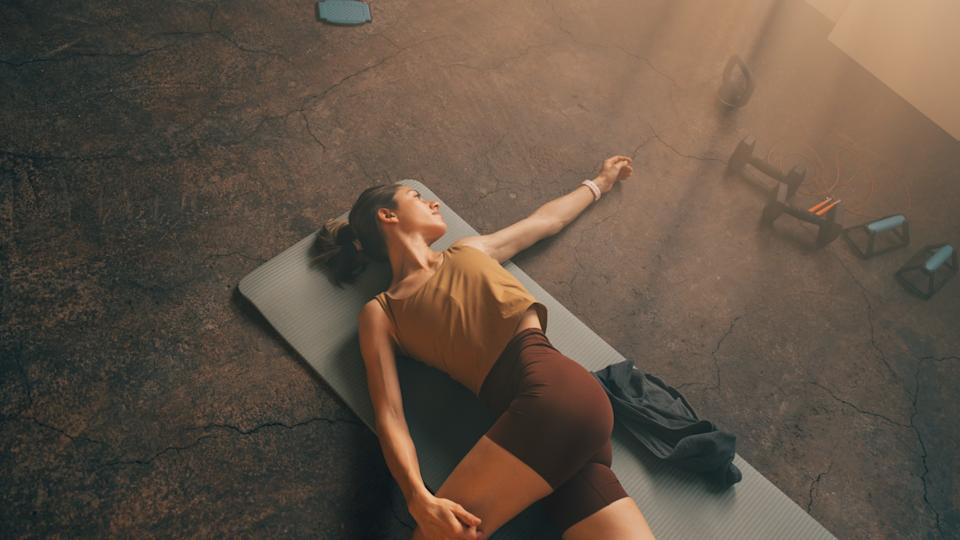
The third move is a supine internal hip rotation, which means moving on to your back and drawing one knee toward your midline, rotating the hip inward. Again, an important movement that allows you to move the leg closer and across your body.
Finally, I demonstrate half-kneeling leg lifts. I use a yoga block in the video, but you could use anything you have to hand or even work with your bodyweight at first. You’ll move with one leg at a time, which will test balance, control and stability, and you’ll also use your hip flexor muscles to help lift the knee up and over to the side.
Try to avoid slamming your leg down and move slowly while keeping your torso upright.


Follow Tom’s Guide on Google News and add us as a preferred source to get our up-to-date news, analysis, and reviews in your feeds.