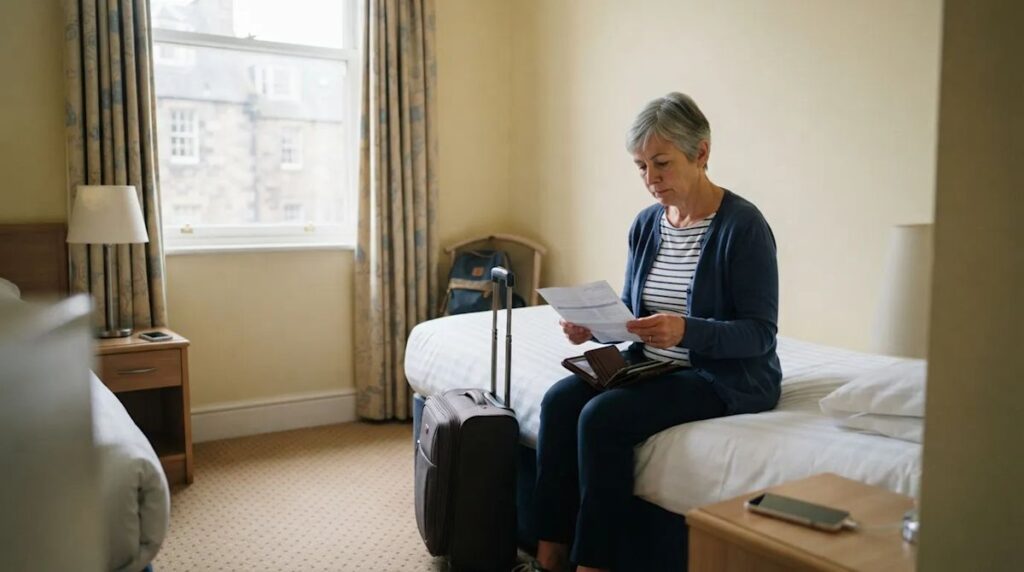


She’s 74, travelling alone, and somehow she never had to ask for a good seat, a quiet room or a friendly table. She just glided through the trip. Yes, there is a reason for that, and it has a name badge and a clipboard.
Experienced tour managers handle a surprising number of details for older solo guests and almost never announce them. Some of these moves are quietly brilliant. A couple are debatable. One of them may change how you see the person at the front of the bus.
#17 – The “Random” Bus Seat That Is Never Really Random
#17 – The “Random” Bus Seat That Is Never Really Random (Image Credits: Gemini)
On many escorted tours, seat rotation is sold as a fair, cheerful routine. But a good tour manager is often watching who struggles with the steps and who needs the aisle. Someone who moves slowly can end up near the door without anyone noticing. The “random” rotation often has a thumb on the scale.
Advertisement
Advertisement
Plenty of travellers over 70 would hate being singled out for a front seat, so nobody makes an announcement. The traveller simply believes they got lucky. Meanwhile, nobody has to climb a long aisle or fight a queasy stomach in the back row.
Why It Stands Out
Seats near the door mean fewer steps to manage on every stop.
The aisle is easier on anyone who needs to stand up often.
Front rows tend to be kinder to guests prone to motion sickness.
Nobody is put on the spot, so the guest keeps their dignity.
#16 – A Hotel Room Chosen for the Walk, Not the View
#16 – A Hotel Room Chosen for the Walk, Not the View (Image Credits: Gemini)
Room assignments look like a lottery. When managers or operators have a say, though, an older solo guest may land close to the elevator or lobby. That means fewer long corridors and fewer stairs after a full day on their feet. It can also mean a room away from the ice machine and the late-night bar.
Most guests never learn it was a choice. A room three doors from the elevator can be the difference between a rested morning and a skipped excursion. By day five, nobody remembers the view. They remember whether their legs still worked.
Advertisement
Advertisement
Insider Tip: If a hotel’s layout worries you, tell the operator before departure. Asking about stairs, walking distances and elevator access is exactly what travel reviewers recommend for older travellers.
#15 – A Dinner Table Where Nobody Gets Left Eating Alone
#15 – A Dinner Table Where Nobody Gets Left Eating Alone (Image Credits: Gemini)
Solo travellers dread one thing above all: the half-empty table for one. Skilled managers see it coming. They wave a solo guest toward a table where a conversation is already going, or they sit down there themselves for the first course. Many tour companies design social activities specifically to help single travellers connect.
It takes seconds and looks entirely casual. The guest feels welcomed instead of managed. Some critics call it social engineering. Plenty of solo travellers call it the reason they booked a second trip.
The Psychology Behind This: Being invited feels warmer than having to ask. People who walk into a ready-made conversation rarely notice it was set up, and that is why it works.
#14 – The “Relaxed” Morning Schedule That Is Really a Safety Buffer
#14 – The “Relaxed” Morning Schedule That Is Really a Safety Buffer (Image Credits: Gemini)
Departure times often have padding built in. A manager who says “meet at 8:30” may be planning for a bus that really rolls out at 8:45. Those extra minutes are rarely about the bus. They’re for guests who need a little more time with a zipper, a pill organizer or a steep hotel staircase.
Advertisement
Advertisement
Some operators openly rate their trips by pace and activity level. Tauck, for one, publishes activity and pace ratings for its tours. The padding inside the daily plan is the part nobody prints, and it’s often the part that keeps the morning calm.
At a Glance
What you hear: a firm meeting time in the lobby.
What’s planned: a small cushion before the wheels actually roll.
Who it helps: anyone with pills, stairs or a slow start to manage.
Where to check: the operator’s published pace and activity rating before you book.
#13 – Suitcases That Move Without Being Asked
#13 – Suitcases That Move Without Being Asked (Image Credits: Gemini)
On most escorted tours, someone else handles the luggage. Bags travel from the coach to the room while the guest is still taking off a jacket. An older solo traveller has no companion to lift, watch or chase a bag. So the manager quietly makes sure the porter has the right tag and the right room number.
Here’s what few people notice. A missing bag hits a solo traveller harder, because nobody else is carrying a spare toothbrush or a day of medication. That’s why good managers count suitcases twice, especially on the first night.
Advertisement
Advertisement
Did You Know: Travel advisers often suggest packing essential medication and a change of clothes in your carry-on, since checked bags are the ones that can go astray.
#12 – Bathroom Breaks Disguised as “Photo Stops”
#12 – Bathroom Breaks Disguised as “Photo Stops” (Image Credits: Gemini)
Nobody over 70 wants to be the person who asks the whole bus to pull over. So smart managers plan stops before long drives. They announce them as “a quick stretch” or “a photo opportunity.” A good share of those photo stops are really comfort breaks.
It’s a tiny act of kindness that spares everyone embarrassment. Younger guests often end up grateful too. They just never realise why the stops were so well timed.
#11 – A Lifeguard’s Eye on Heat, Water and Quiet Fatigue
#11 – A Lifeguard’s Eye on Heat, Water and Quiet Fatigue (Image Credits: Gemini)
On sightseeing days, a seasoned manager scans the group the way a lifeguard scans a pool. They look for slowed steps, flushed faces and someone drifting to the back. Water bottles tend to appear just as the sun peaks. Shady benches somehow turn up near the busiest monuments.
Advertisement
Advertisement
The most valuable skill isn’t trivia. It’s noticing who has stopped talking. A solo traveller has no companion to say “you look pale.” So the manager fills that role without a word.
The Science Behind This: Older adults can be less sensitive to thirst, which is why many health agencies advise sipping fluids regularly in hot weather rather than waiting until you feel thirsty.
#10 – The Room-Sharing Deal That Gets Settled Behind the Scenes
#10 – The Room-Sharing Deal That Gets Settled Behind the Scenes (Image Credits: Gemini)
Solo travellers often pay extra for a private room. Many operators soften that sting. Some offer roommate matching, and some waive or reduce the single supplement. The solo guest never sees the back-and-forth that makes it happen.
Here’s the debatable part. Plenty of travellers love the savings, but many seasoned solo guests say a private room is worth every dollar at this stage of life. Privacy, snoring and bathroom schedules matter. A waived supplement can be a bargain, but not if it costs you a week of sleep.
Quick Compare
Shared room: lower cost and a built-in travel buddy, but less privacy and a gamble on snoring.
Private room: a higher bill, but your own bathroom schedule and a quiet night.
The deciding question: how well do you sleep around strangers?
#9 – A Full Emergency Plan Nobody Wants to Talk About
#9 – A Full Emergency Plan Nobody Wants to Talk About (Image Credits: Gemini)
Behind the cheerful welcome speech sits a protocol. Managers typically have emergency contacts, medical notes and the nearest hospital location ready before a problem arises. Tauck advertises a Global Response Team to manage emergencies, and larger operators generally keep a similar backstop, though the details differ.
Advertisement
Advertisement
A solo traveller has no spouse in the next seat to make decisions. So the manager becomes first responder, translator and family liaison in one. Most guests never learn how much was already prepared until they actually need it.
Try This: Give the tour manager your emergency contact, medication list and any allergies on day one, in writing. It takes two minutes and removes guesswork if something goes wrong.
#8 – Rest Stops Hidden Inside the Itinerary
#8 – Rest Stops Hidden Inside the Itinerary (Image Credits: Gemini)
Free time looks like a perk. It’s often a recovery window. Travel experts advise companies running single-traveller tours to build in enough free time for rest and socialising. Some itineraries also include step-on, step-off stops that avoid long walks.
Collette, for instance, is described as offering slower-pace itineraries, step-on/step-off rest stops and medical alert access. Guests see a relaxed afternoon. That gap is often the reason the group still has energy for the final-night dinner.
Advertisement
Advertisement
Why It Works: Rest scheduled in advance doesn’t feel like giving up. Travellers who skip nothing on day two tend to have more energy left for day nine.
#7 – A Head Count That Is Secretly a Check on You
#7 – A Head Count That Is Secretly a Check on You (MangakaMaiden Photography, Flickr, CC BY 2.0)
Every manager counts heads when the group boards. Most guests assume it’s just logistics. But for a solo traveller over 70, that count also confirms they’re present, steady and not lost in a crowded market.
If someone is missing, the manager notices in seconds. There’s no travel partner to say “she went to the restroom,” so the count is the safety net. The best managers also pick clear landmarks and repeat the meeting point twice.
#6 – The Quiet Steer Toward the “Lovely Cafe Option”
#6 – The Quiet Steer Toward the “Lovely Cafe Option” (Image Credits: Gemini)
On a day with a steep climb or a cobblestone alley, a manager may casually mention a lovely cafe nearby. Often that’s an easy exit. It lets an older solo guest skip the hard part without announcing a limitation.
Advertisement
Advertisement
Plenty of seasoned travellers say that’s exactly what they want. Others call it patronizing and argue that adults should hear the whole route and decide for themselves. The best managers describe every option honestly and let the guest choose.
Editor’s Note: There’s a fine line between care and condescension. The kindest version offers a choice in plain words, never a decision made for someone behind their back.
#5 – The Missed-Breakfast Knock That Is Really a Wellness Check
#5 – The Missed-Breakfast Knock That Is Really a Wellness Check (Image Credits: Gemini)
If a guest doesn’t appear at breakfast, a good manager notices. A quick phone call or knock follows. It sounds like a casual “just checking you’re up,” but for a solo traveller it can be the only wellness check of the day.
On a group tour, nobody else is going to wonder why one room stayed dark. So the manager does. It’s the kind of small habit that never makes the brochure.
Advertisement
Advertisement
Insider Tip: If you plan a slow morning, tell your manager the night before. A quick heads-up prevents a worried phone call and a bus held for you.
#4 – Dinner Plates Fixed Before Anyone Has to Complain
#4 – Dinner Plates Fixed Before Anyone Has to Complain (Image Credits: Gemini)
Dietary details, allergies and texture issues are usually passed ahead to restaurants. When the plate arrives, the guest may assume the kitchen just got it right. Often the manager made a call earlier in the day.
Solo travellers over 70 are often less likely to make a fuss in front of strangers. Many simply eat whatever arrives rather than draw attention. Managers who know this check quietly with the waiter, so the guest never has to.
Worth Knowing
Allergies and dietary needs are best shared at booking, then repeated on day one.
Texture or chewing difficulties count too, even if they feel too small to mention.
A short written note to the manager is easier than explaining it at the table.
Kitchens can only fix what they hear about in advance.
#3 – A Small Group Built on Purpose, Not by Accident
#3 – A Small Group Built on Purpose, Not by Accident (Image Credits: Gemini)
Group size shapes everything for older solo guests. One review of senior travel options recommends groups of fewer than 24 travellers. Intrepid Travel, for example, reports an average of around 10 travellers per tour. Smaller groups mean shorter waits and fewer people to lose.
Many travellers never realise the size and mix of their group was designed. Intrepid says more than half of its travellers are solo. On a well-planned departure, a solo guest is rarely the only one. The person in the next seat may be doing the same thing.
By The Numbers: Over half of Intrepid’s travellers are reported to be solo. A solo traveller on that kind of tour is often in the majority, not the exception.
#2 – The Honest Warning That Says “This Trip May Not Suit You”
#2 – The Honest Warning That Says “This Trip May Not Suit You” (Image Credits: Gemini)
Not every arrangement is a favour. Some are limits. Tauck warns that travellers with mobility issues must bring their own assistance, as many tour companies do. Good managers repeat this gently and early.
That honesty can sting, but it prevents the worst outcome: a guest struggling mid-trip with no real support. Operators differ in how much mobility help they can offer. The most caring tour managers are sometimes the ones willing to say “this itinerary may not be right for you.”
The Science Behind This: Balance and walking stamina often decline with age, which is why activity ratings exist. Matching the route to your legs is simply physics, not pride.
#1 – The Last-Morning Walk to the Check-In Line
#1 – The Last-Morning Walk to the Check-In Line (Image Credits: Gemini)
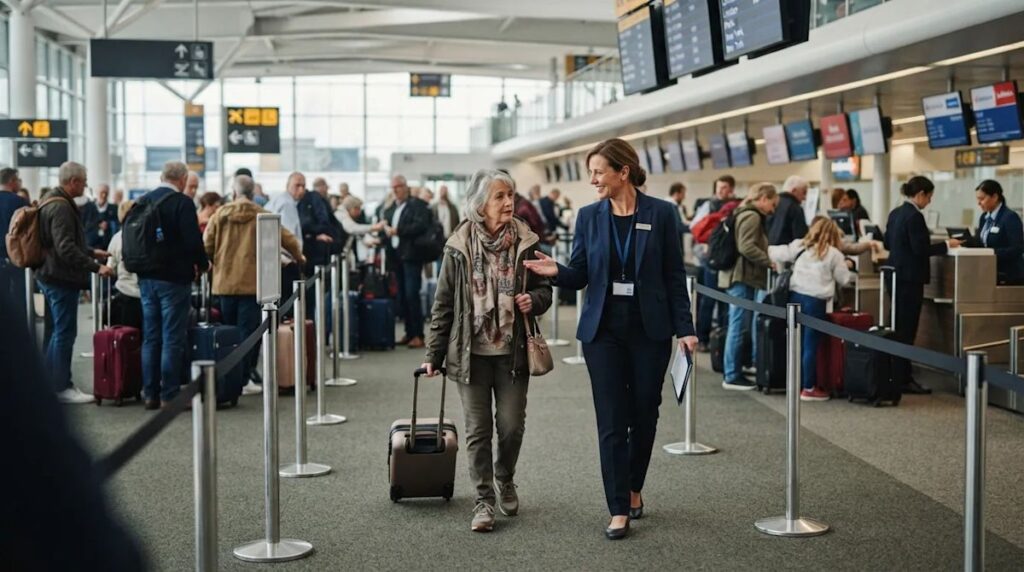
The final morning is where the quiet work shows. A manager confirms airport transfers, checks flight times and, if needed, walks the solo guest to the right check-in line. When the group scatters, it’s easy for a solo traveller to be left standing with a suitcase and a long wait.
Plenty of managers stay until the last guest is through. Some even message later to ask if everyone got home safely. That final check can matter more than any monument on the itinerary. Travellers rarely mention it afterward, and that’s exactly the point.
Much of what makes a trip feel easy for a solo traveller over 70 is invisible by design. Seats, rooms, pacing, meals and emergency plans are often settled before the guest notices. Not every operator does all of this, so the details vary by company.
Next time a trip feels suspiciously smooth, look around. Somebody probably planned it that way. What would you want a tour manager to quietly handle for you?
Source link