

☰Cited 8 sources
For almost two decades, the American checkpoint opened with the same ritual: shoes off, bins out, hop on one foot. The Department of Homeland Security ended the shoes-off requirement in July 2025,1 and you might assume the line got simple. It didn’t. The flyers who glide through still do small things the people behind them never notice.
The cheapest habit on this list costs about as much as a zip-top bag. The costliest mistake is a $45 fee and a possible missed flight, and the fix for it is probably already in your wallet. Start with the shoes, because the rule that changed is narrower than it sounds.
#17 – Slip-On Shoes, Even After the Rule Ended
#17 – Slip-On Shoes, Even After the Rule Ended (Image Credits: Photo)
Since July 2025, travelers can keep their shoes on at U.S. airport checkpoints. The TSA first required most passengers to remove them in August 2006,2 so a generation of flyers learned to unlace their boots before they reached the bin.
Advertisement
Advertisement
The new policy has a back door, though. Travelers no longer have to take off their shoes unless they are selected for additional screening.2 That’s why slip-ons and loose sneakers still make sense: if an officer waves you aside, you’re out of them in seconds while the lace-up crowd kneels on the floor.
Did You Know: The footwear rule traces back to a 2001 incident in which a passenger tried to detonate explosives hidden in his sneakers on an American Airlines flight.
With the shoes settled, the clear toiletry bag is the one item that still has to be ready.
#16 – The Clear Bag Packed on Top, Scanner or Not
#16 – The Clear Bag Packed on Top, Scanner or Not (Image Credits: Picture)
The 3-1-1 rule still sets the limit: containers of 3.4 ounces or less, all in one quart-size resealable bag, one bag per passenger.3 In a standard lane, officers want that bag out of the carry-on and in a separate bin. The flyer who packed it on top isn’t digging past a sweater while the line waits.
Advertisement
Advertisement
CT scanners cause the confusion. At airports with fully operational CT screening, TSA can clear liquids larger than 3.4 ounces without making passengers take them out of the bag. That’s no reason to test a particular checkpoint. Follow 3-1-1 everywhere unless the staff at that checkpoint tell you otherwise, because the price of guessing wrong is losing your liquids.
Try This: Keep a few clear quart bags and a set of small bottles packed in your carry-on between trips, so there is nothing to assemble the night before.
Packing the bag is simple once you know what counts as a liquid, and that list is longer than a toiletry drawer suggests.
#15 – Peanut Butter and Toothpaste Count as Liquids
#15 – Peanut Butter and Toothpaste Count as Liquids (Image Credits: Image)
TSA’s category covers more than drinks. Aerosols, gels, creams and pastes all count. Toothpaste is a paste, so it has to be 3.4 ounces or less to ride in the quart bag. Food follows the same logic, and NerdWallet’s guide to the rule lists salsa, honey and peanut butter among the items it covers.4
Advertisement
Advertisement
That’s why a full-size jar from a relative’s pantry can’t ride in the carry-on, even though it’s food. The easy ones to miss hide in odd places: a bottle in a side pocket, perfume clipped to a strap, a sports drink at the bottom of the gym bag.
Why It Works: TSA publishes no separate total-ounce limit. The quart bag itself is the cap, so you can bring as many small containers as fit while it still closes.
#14 – Shampoo Bars That Skip the Quart Bag
#14 – Shampoo Bars That Skip the Quart Bag (Image Credits: Picture)
Anything solid avoids the rule altogether. Shampoo bars, solid deodorant, bar soap and solid perfume all bypass 3-1-1. That matters because the quart bag is fixed space, and every solid you swap in frees room for things that have to be liquid, like sunscreen. Gel and spray deodorants count as liquids, so a stick is the easiest swap.
Long trips are the exception. If you need a lot of product, checking a bag can make more sense than cramming it all into the clear bag. Hotels usually provide basic toiletries, and pharmacies at your destination sell travel sizes.
Quick Compare
Skips the quart bag: shampoo bars, bar soap, solid deodorant and solid perfume.
Counts as a liquid: gel or spray deodorant, toothpaste and lotion-style sunscreen.
Easiest swap: a deodorant stick in place of a gel or spray.
Advertisement
Advertisement
Whatever liquids remain still have to get into small containers, and filling them yourself costs less than buying them pre-filled.
#13 – Refilled Bottles Instead of Drugstore Minis
#13 – Refilled Bottles Instead of Drugstore Minis (Image Credits: Editorial photo)
Pouring from bottles you already own into small containers is cheaper than buying pre-filled minis. Refillable silicone tubes pay off over time and let you bring your preferred brands. Drugstore travel sizes are best saved for a pinch, when you’ve run out of time to decant at home.
Judge the container, not the contents. A big bottle that is only partly full is still a big bottle at the checkpoint, so the container itself has to be marked 3.4 ounces or 100 milliliters or less. It’s the same quart bag that holds the toothpaste, just filled for less money.
#12 – One Quart Bag Each, No Borrowing
#12 – One Quart Bag Each, No Borrowing (Image Credits: Accompanying image)
The quart bag belongs to a single traveler. You can’t split your toiletries across two bags or borrow space in a companion’s bag for screening. For a couple, that means two bags and two sets of small bottles. Each person’s toothpaste and decanted shampoo go in the bag of whoever is carrying them.
Advertisement
Advertisement
If you share a checked bag, the full-size bottles can ride there, because anything larger than the limit goes in checked luggage. A small bag each for daily items, with the big bottles in the suitcase, keeps both carry-ons quick to unpack at the bin.
Medicine follows different arithmetic than the quart bag, with its own handling at the bin.
#11 – Medicine Riding Outside the Quart Bag
#11 – Medicine Riding Outside the Quart Bag (Image Credits: Image)
Medically necessary liquids, prescription or over the counter, can exceed 3.4 ounces and stay out of the quart bag, though you must declare them. Keep them in their original packaging, bring a reasonable quantity for the trip, and tell the officer at the checkpoint. The label is what makes a bottle of liquid look like medicine.
Keeping medicine and baby liquids in an outside pocket makes declaring them take seconds. Travelers who need liquid nutrition or dialysis supplies can call TSA Cares at 855-787-2227 before the trip to arrange screening.
Advertisement
Advertisement
Did You Know: Liquid medication over the 3-1-1 limit can go through TSA lanes, children’s liquid medicine included.
A water bottle is a liquid too, but it follows nearly the opposite rule from medicine.
#10 – An Empty Bottle Through, a Full One After
#10 – An Empty Bottle Through, a Full One After (Image Credits: Picture)
Liquids purchased after the checkpoint, water included, are allowed in any size. So an empty reusable bottle goes through the scanner with nothing in it, and a refill station or a shop on the far side supplies the water. It’s the one place a full-size liquid is welcome in a carry-on, and it keeps the bottle out of the quart bag.
The slip-up is carrying a half-finished drink to the belt. Finish it or pour it out before you reach the bin, because a bottle holding water is still a liquid over the limit until you’re past screening.
Advertisement
Advertisement
The after-checkpoint exception covers shop purchases of every kind, though duty-free bottles come with paperwork on some trips.
#9 – Duty-Free Bottles in a Sealed Bag
#9 – Duty-Free Bottles in a Sealed Bag (Image Credits: Image)
Duty-free liquids are fine in any size, but on international connections they must stay in a sealed, tamper-evident bag with the receipt visible. The seal matters because a connection often means a second security checkpoint, and the intact bag is what shows the bottle came from the shop.
TSA recommends packing duty-free items in checked luggage if you have a connecting flight through another security checkpoint. If that isn’t possible, keep the bag shut until the final stop. Opening it early to admire the bottle is how it ends up on the wrong side of a checkpoint.
Worth Knowing
Duty-free liquids can be any size once you’re past screening.
On international connections, the bag must be sealed and tamper-evident.
The receipt needs to be visible, not buried in a pocket.
A connection through another checkpoint is the riskiest moment for the bottle.
#8 – Spare Batteries Kept in the Cabin
#8 – Spare Batteries Kept in the Cabin (Image Credits: Picture)
Under Federal Aviation Administration rules, spare lithium batteries, power banks included, belong in carry-on bags and not in checked luggage.5 The reasoning is practical. A battery that overheats in the cabin gets noticed and handled by the crew, while one in the cargo hold is out of reach. A phone or tablet with its battery installed is a different matter from a loose spare.
Advertisement
Advertisement
The habit worth adopting is keeping the power bank in a personal item under the seat, with its cable. If the airline gate-checks your carry-on on a full flight, take the power bank out first, since the bag is about to go in the hold.
The Science Behind This: Lithium-ion cells pack a lot of energy into a small case. If one is crushed or short-circuits, it can overheat in a chain reaction known as thermal runaway.
Pockets hold the other small items that send a traveler back through the detector.
#7 – Pockets Emptied Before the Bin
#7 – Pockets Emptied Before the Bin (Image Credits: Image)
Phone, keys, wallet and coins go into the carry-on before you reach the belt, not loose into a bin. Small loose items are what get forgotten once the bag is pushed along, and a pocket with a few coins can mean a second walk through the detector. The flyer who emptied their pockets earlier has nothing to re-sort at the other end.
Advertisement
Advertisement
With shoes no longer going into the bins, pockets and belts are the personal items the lane still asks about. A big metal buckle can set off the detector, so a plain belt, or none, pays off on travel day. Paired with the slip-ons from earlier, the walk through gets close to routine.
Editor’s Note: Which electronics must come out of the bag can differ by lane and airport, especially where newer scanners are installed. The signs and the officers at that checkpoint outrank any habit.
#6 – The PreCheck Mark on the Boarding Pass
#6 – The PreCheck Mark on the Boarding Pass (Image Credits: Editorial photo)
Before choosing a lane, look for the PreCheck mark on the boarding pass. For members, the liquids bag can stay in the carry-on, but its contents must still follow the 3-1-1 rule, according to NerdWallet.4 That’s a real time saver, and it’s also a trap, since the lane doesn’t excuse a full-size bottle.
At a Glance
The PreCheck mark on the boarding pass tells you which lane to use.
The Known Traveler Number has to be attached to the reservation.
The liquids bag can stay put, but 3-1-1 still applies.
Children 12 and under can use the lane with a parent or guardian whose pass carries the indicator.
The mark depends on the Known Traveler Number being attached to the reservation, so enter it when you book. That makes a family trip simpler. Whether the membership is worth buying is a closer call than the lane’s reputation suggests.
#5 – PreCheck at $17 a Year Without the Shoe Perk
#5 – PreCheck at $17 a Year Without the Shoe Perk (Image Credits: Image)
TSA says five years of PreCheck cost $85 or less, which works out to roughly $16 to $17 a year.6 Axios reports the program puts its average wait at under 10 minutes. Some travel credit cards cover the fee, so check the cards you already carry before paying.
The case got weaker in July 2025, when keeping shoes on became free for everyone. If you fly several times a year through a big airport, $17 a year is easy to justify for the dedicated lane and the liquids bag staying put. If you fly once a year from a small airport with a short standard line, skip it and put the money toward a REAL ID.
By The Numbers: PreCheck members have been able to keep their shoes on since 2013, about twelve years before the rule changed for everyone else.
For anyone who does enroll, a renewal date is easy to miss and costs more when it’s missed.
#4 – A Renewal Window That Opens Six Months Early
#4 – A Renewal Window That Opens Six Months Early (Image Credits: Photo)
TSA emails members about six months before expiration with renewal instructions. Renewal is cheaper than a new enrollment, and TSA’s FAQ says the cost varies by enrollment provider, so a few minutes of comparison can matter. The saving is small next to the price mentioned above, but a lapsed membership costs more than money.
Online renewal usually skips a new appointment, although some applicants are randomly selected for a re-fingerprinting visit. Starting when the email arrives leaves room for that. Otherwise the first sign of trouble is a boarding pass with no PreCheck mark on the day of the flight, when nothing can be fixed.
Insider Tip: Renewal prices differ by enrollment provider, so look at each provider’s renewal page before accepting whichever link appears first in the email.
A valid membership still depends on the name on the ticket matching the name on the ID, and the two don’t always agree.
#3 – A Ticket Name That Matches the ID
#3 – A Ticket Name That Matches the ID (Image Credits: Image)
The end of the shoe rule changed nothing about identity checks. Passengers must still clear identity verification, Secure Flight vetting and other processes. Secure Flight works from the details given to the airline at booking, which is why the name on the reservation should match the ID. A nickname or an old surname on the ticket is exactly the kind of mismatch to fix early.
Fixing it is a call to the airline, made days before the trip rather than at the counter. If you changed your name and renewed your license under the new one, check that the reservation uses the license name. The airline can correct a booking far more easily from your kitchen than from the check-in line.
Fast Facts
Secure Flight works from the details you gave the airline at booking.
The name on the reservation should match the name on your ID.
Nicknames and old surnames are the classic mismatches.
The easiest fix is a phone call to the airline days before the trip.
#2 – A $45 Receipt Saved on the Phone
#2 – A $45 Receipt Saved on the Phone (Image Credits: Picture)
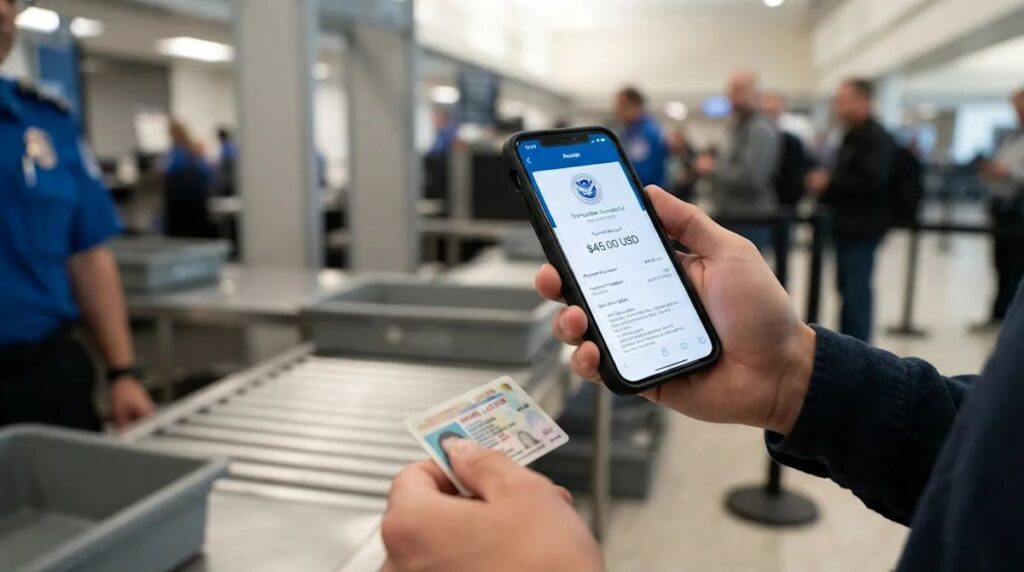
On February 1, 2026, TSA began offering ConfirmID to adults 18 and older who lack an acceptable travel document. It costs $45 and covers a 10-day travel period.7 Even then, verification of identity is not guaranteed, so the fee buys an attempt, not a pass.7
TSA suggests paying at TSA.gov/ConfirmID before the trip, then showing the pay.gov receipt, printed or as a screenshot, along with any government-issued ID. Expect a slower line, since passengers without an approved ID should expect increased wait times. ConfirmID is a rescue for a lost wallet and not a plan, because the cheaper fix can be arranged months ahead.
Try This: The pay.gov receipt arrives by email. Take a screenshot before you leave home, so a weak airport signal can’t hold up the line.
The cheaper fix is the card itself, and checking it takes less time than filling out the receipt form.
#1 – The Card in the Wallet, Checked Months Ahead
#1 – The Card in the Wallet, Checked Months Ahead (Image Credits: Image)
U.S. travelers have been required to present a REAL ID or another acceptable form of identification to board commercial flights since 2025. A license that isn’t compliant is what sends a traveler toward the $45 option. A passport also works, so anyone with an unexpired one already has a fix. If a license is your only ID, check with your state Department of Motor Vehicles whether it complies.
The price of a compliant card depends on your state. In Oklahoma, for example, a new REAL ID card costs $42.50 and lasts four years, which is close to one ConfirmID payment. The card works on every trip for years, while the fee covers a single trip window. TSA encourages travelers to make an appointment at their local DMV as soon as possible, because the appointment is the part that takes time.8
By The Numbers: TSA’s early data after ConfirmID launched showed 95 to 99 percent of travelers presenting a REAL ID or another acceptable ID. That leaves a small group facing the fee and the slower line.
The rules at the checkpoint have loosened in some places and tightened in others since 2025. The shoe rule eased, and the ID rule got a price tag. Both reward whoever sorted things out before leaving the house.
The people who look effortless at security aren’t faster or luckier. They did the boring part at home, so nothing was left to go wrong at the belt.
Sources:
Source link