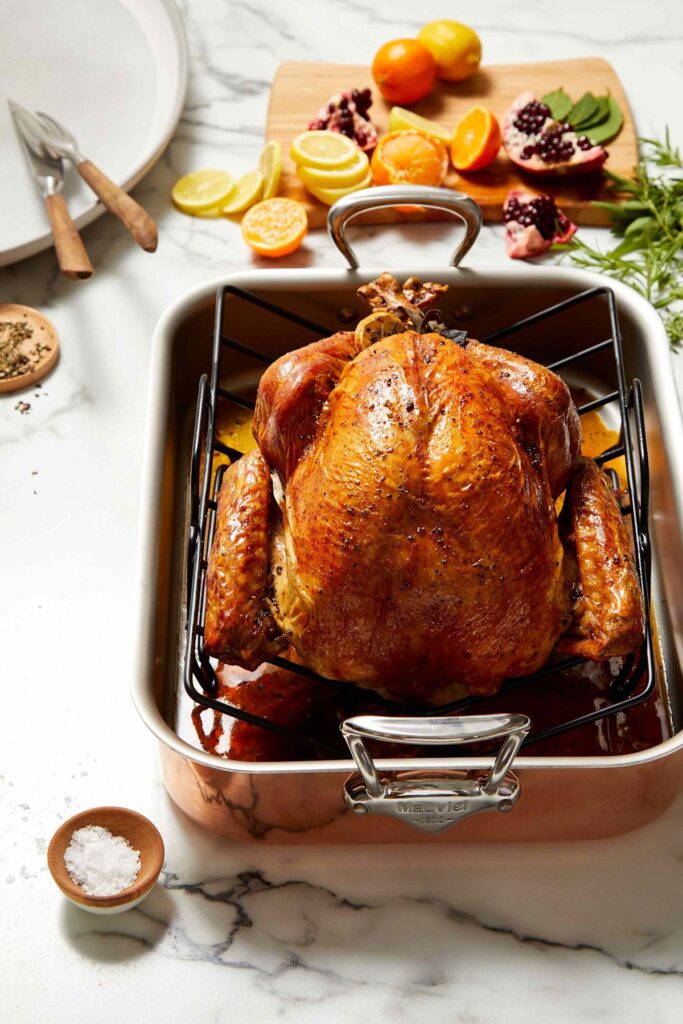
Whether this is the first time you cook a whole turkey or you are a seasoned Thanksgiving host, things can go wrong with the holiday bird. In this Thanksgiving survival guide, our Test Kitchen is sharing answers to your common turkey questions, including our best tips for salvaging your bird if things don’t go as planned. Dry turkey? Undercooked meat? All the solutions you need are right here.
1. You Forgot to Thaw the Turkey
It is possible to cook a frozen turkey, but you need to increase the cooking time by 50 percent.
The following is for a turkey weighing 12 to 13 pounds. Place the turkey on a rack in a roasting pan. Roast, uncovered, for 1 1⁄2 hours. If possible, use tongs to retrieve the giblet pouch at this point. If it’s still too frozen, continue roasting. Brush with oil; cover loosely with foil. Roast 2 more hours; remove foil. If giblets are still inside, using tongs, pull neck from body cavity. Cut near neck cavity to remove giblet pouch. Return turkey to oven. Roast, uncovered, 1 to 1 1⁄2 hours more or until done (meat thermometer reads 175°F in thigh muscle). Let stand at room temperature for 15 minutes.
Related: How To Thaw A Turkey In Time For Thanksgiving
2. The Turkey Is Still a Little Icy Inside After Thawing
Place the turkey in a sink filled with cool water for 1 hour. If you don’t have time for this, try running water inside the cavity until you can loosen the giblet bag. If that doesn’t work, follow the method for roasting turkey from a frozen state, as mentioned above.
3. You Cannot Find a Rack for Your Roasting Pan
Line the roasting pan with foil, or place cut-up carrots and celery under the turkey so the juices run underneath.
4. Oven Stopped Working With the Turkey in It
It sounds like a disaster, but as long as the turkey did not sit in a cool oven for more than 2 hours, it’s OK to transfer it to an electric roaster or grill to finish cooking.
5. Turkey Breast Is Done, But Stuffing Isn’t Up to Temperature Yet
To fix this, scoop the stuffing out of the turkey and into a casserole dish to finish cooking. If dark meat on the turkey is not done, cover the breast with foil and continue roasting until done.
Tips
Test Kitchen Tip: Be sure the stuffing reaches 165°F, the safe temperature for serving.
6. Turkey Is Done Two Hours Early
Here’s the easy answer: Since cooked turkey should not stand more than 2 hours at room temperature, keep it warm, covered, in a 200°F oven until serving time. Or you can carve it, chill it, and reheat it in a roasting pan, covered, in a 350°F oven, adding some chicken broth to keep it moist.
7. Guests Have Arrived, But Turkey Still Isn’t Done
Tightly cover all your finished hot side dishes with foil to keep them warm. Cover the turkey with foil (or keep it covered with foil if it is already covered). Increase the oven temperature to 400°F and check it every 30 minutes. Or you can carve the turkey before it is finished (thoroughly clean your knives, cutting boards, and work surfaces afterwards). Place the carved pieces in a large baking dish, drizzle with chicken broth, cover with foil, and finish roasting.
In the meantime, set out some cheese and crackers to keep your guests’ hunger at bay.
8. You Left the Bag of Giblets in the Turkey During Roasting
If the giblets were wrapped in paper or parchment material, you can remove them after cooking, and it is generally considered safe. If giblets were in a plastic pouch, inspect the pouch to see if it’s melted or split. If the pouch is intact, the meat is considered safe. If the pouch is altered in any way, chemicals may have contaminated your meat, and sadly, you’ll need to discard the turkey because it’s no longer safe to eat.
9. Turkey Breast Is Too Dry
Because the turkey breast is meat that contains less fat and is exposed to more direct heat, it may dry out more. Covering the bird with foil during much of the roasting time will help. After carving, drizzle some hot chicken broth over breast slices to moisten them before serving. Don’t use too much broth or the slices may get soggy.
10. You Butchered Your Turkey During Carving
Choose a smaller platter. You don’t need to present ALL of the turkey on the platter, so set aside the smallest scraps (if you don’t end up needing them later, cover and refrigerate). Place larger scraps and pieces on the bottom of the platter. Top with your best-looking slices or cuts. Line the platter with herbs.
Related: Carving Turkey Breast Into Perfect Slices Like a Pro
Add Better Homes & Gardens as a preferred source on Google to see more of our stories on Google news and search results.
Read the original article on Better Homes & Gardens